Tag: Poetry

House Martin at home

photo: Cornell Lab of Ornothology

My friend, Gill Henwood, has sent me a poem she has written about House Martin’s. I want to share it with you.

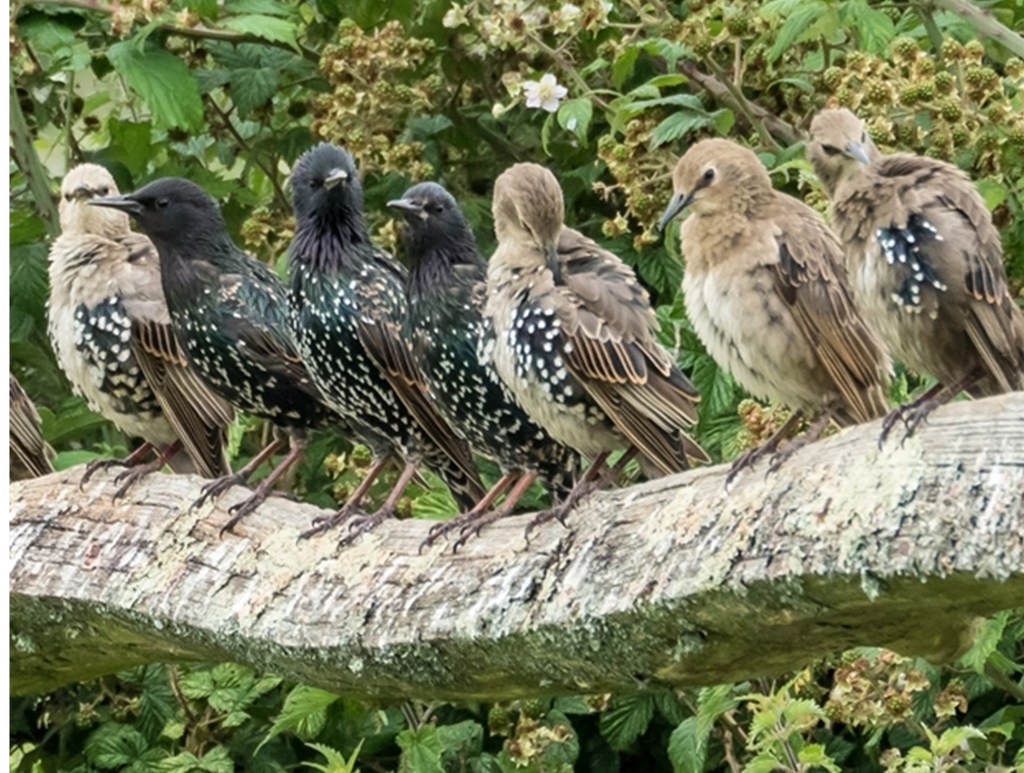
The house martin is a small bird with glossy blue-black upper parts and pure white under parts. It has a distinctive white rump with a forked tail and, on close inspection, white feathers covering its legs and toes. It spends much of its time on the wing collecting insect prey. The bird’s mud nest is usually sited below the eaves of buildings. They are summer migrants and spend their winters in Africa. Although still numerous and widespread, recent moderate declines earn them a place on the Red List.

To find out more go to the website of the RSPB (Royal Society for the Protection of Birds) and the website of : House Martin Conservation UK & Ireland.

House Martin

Martins, skimming

village churchyard

slicing greensward,

ancient slate stones.

Low under mist

clouds cloaking fell tops

air heavy, moist slate.

Martins twittering,

high above, weaving

open patterns

crossing, three-D.

Warm currents

explosive turning

free to rise

timeless,

mystical magical

summer soaring

ecstasy, flight.

Gill Henwood
Hawkshead
9th August 2023

At home.

Only what is most important

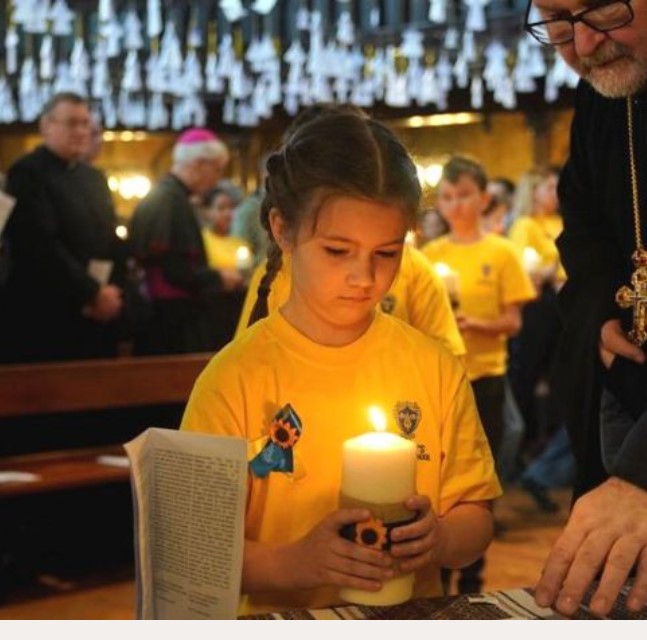
A candle for Ukraine, lit in the Ukrainian Catholic Cathedral in London on Friday February 24th.

Take Only What Is Most Important

Take only what is most important. Take the letters.
Take only what you can carry.
Take the icons and the embroidery, take the silver,
Take the wooden crucifix and the golden replicas.

Take some bread, the vegetables from the garden, then leave.
We will never return again.
We will never see our city again.
Take the letters, all of them, every last piece of bad news.

We will never see our corner store again.
We will never drink from that dry well again.
We will never see familiar faces again.
We are refugees. We’ll run all night.

We will run past fields of sunflowers.
We will run from dogs, rest with cows.
We’ll scoop up water with our bare hands,
sit waiting in camps, annoying the dragons of war.

You will not return and friends will never come back.
There will be no smoky kitchens, no usual jobs,
There will be no dreamy lights in sleepy towns,
no green valleys, no suburban wastelands.

The sun will be a smudge on the window of a cheap train,
rushing past cholera pits covered with lime.
There will be blood on women’s heels,
tired guards on borderlands covered with snow,

a postman with empty bags shot down,
a priest with a hapless smile hung by his ribs,
the quiet of a cemetery, the noise of a command post,
and unedited lists of the dead,

so long that there won’t be enough time
to check them for your own name.

Serhiy Zhadan

Translated from the Ukrainian by Virlana Tkacz and Wanda Phipps

This poem by Serhiy Zhadan, an internationally acclaimed poet and novelist, from Ukraine,
was read by actress, Dame Helen Mirren, at a Vigil in London. She ended her recitation with tears in her eyes and calling for ‘Freedom ‘ for Ukraine. The poem was written in 2015. It details the turmoil of war and the plight of refugees. Zhadan makes a reference to sunflowers, the national symbol of the Ukraine.
Totally relevant to what has been the experience of so many in the present war in the Ukraine, it speaks powerfully about what being driven from ones homeland means. Maybe it will also move the hearts who have a negative view of what receiving refugees is really about.

for I was hugry and you did not feed me, thirsty and you gave me nothing to drink……

February Carpet

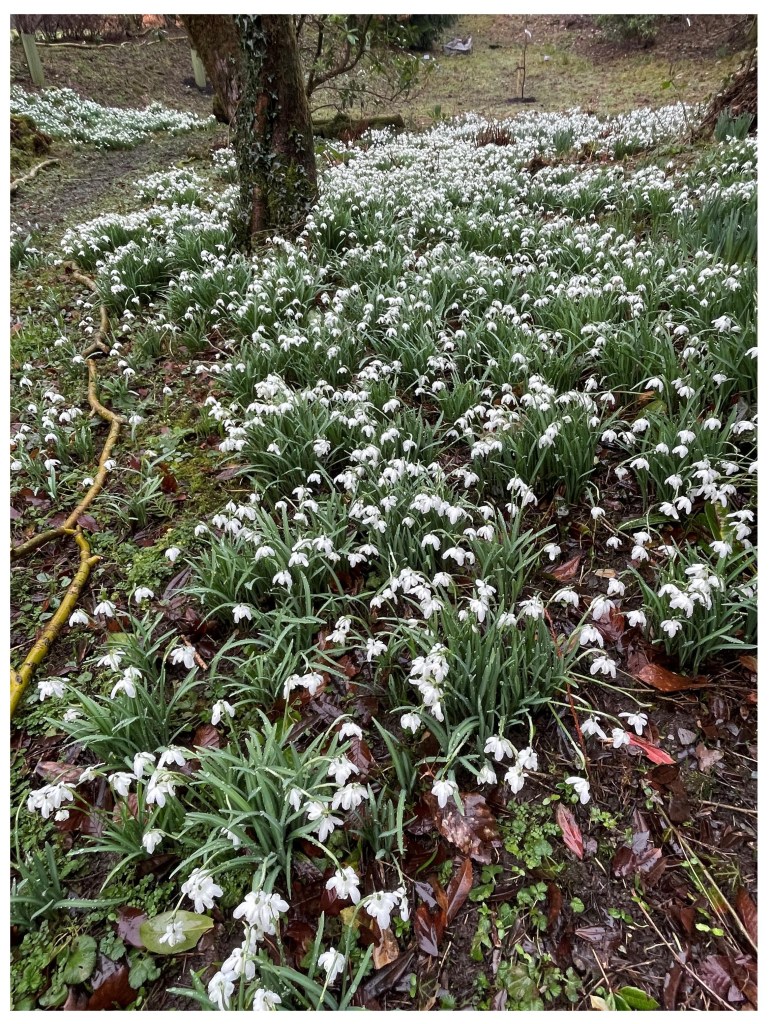
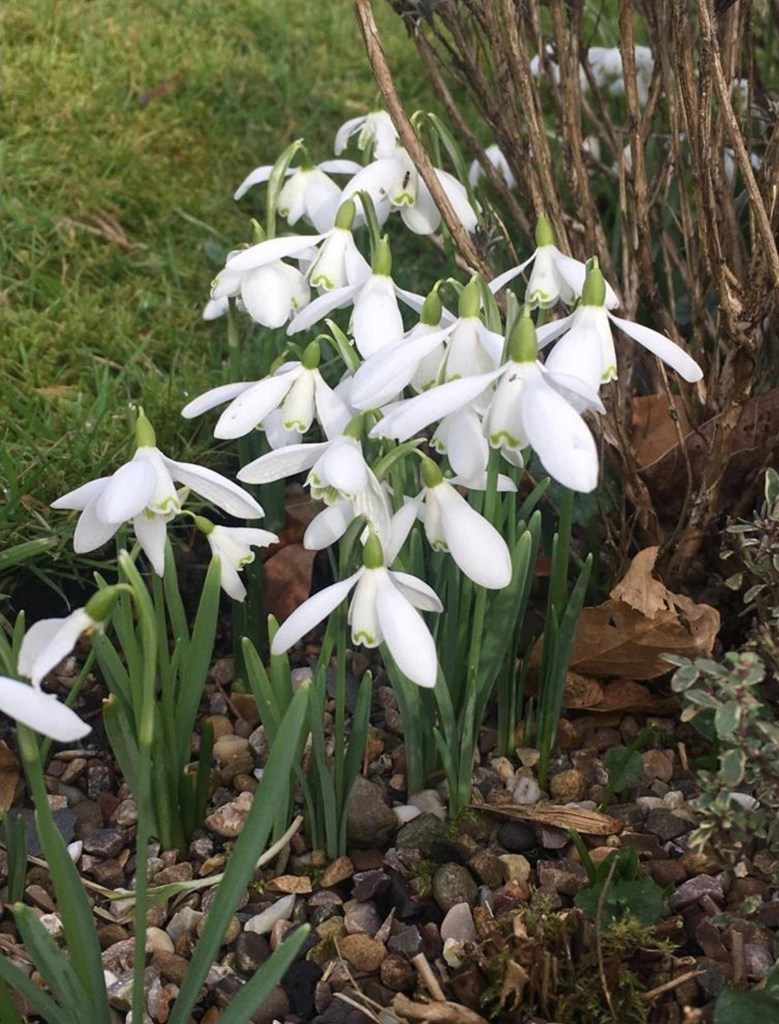
Snowdrop carpet photographed by my friend, Gill Henwood

Lakeland carpet thoughts :

Seven years on… the old snowdrops have drifted for a hundred years or more. Now cleared of overgrowth (though brambles will keep growing due to the seeds in the ground), they are a dancing carpet – here in the gentle February rain.

The sticks mark an edge so we don’t tread on the shoots…

In the dell meadow beyond, we’ve planted a black walnut tree and a hornbeam, both native. The grass is full of old wood anemones running through it (creeping a little further each year, now they have some light).

Joy in wet mid February!

Gill.

February
tiptoes across a winter landscape,
dressed in white array,
luring us away from cold depression 
of dark, dank January,
with dazzling brightness;
promising the hope of
Spring beyond.

Ah! What trembling beauty
lays a carpet of expectant joy!

[Mr G. February 22nd 2023]

The Difficult Journey

Difficult Journey is a painting by the German artist, Fritz von UHDE. Its original title was Transition to Bethlehem which locates the scene and therefore the subject. It is the journey of Joseph and Mary to Bethlehem for the Census. It depicts something of the difficulties they had in bringing Jesus into the world.

Many paintings of this journey and arrival are much more sentimental but this has a realism which roots it into a more contemporary interpretation. It isn’t located in the desert or the climate of the Middle East. This is Northern Europe. The road is muddy and uneven. There are no other people around and there is none of the bustle and crowded feel of a city where there is no room at an inn. There is, however, a sense of isolation and desolation. There are no people and no sense that the couple are welcome. They are dressed as outcasts, he carries the sign of his trade, a saw over his shoulder and she, a cooking pot. They could be refugees today, unwanted and uncared about.

There is  a sign that  Mary and Joseph are exhausted. No donkey carries them as in some accounts, though not in St. Luke’s Gospel. What is strongly portrayed is Joseph’s role as protector of Mary and therefore of Jesus. She leans into him and he holds her. He is concerned and caring. His love is obvious.

It is this which set me thinking again about Joseph’s role in the Nativity and a partial possible answer is in the poem below which I have written about this.

Difficult Journey

Against all judgement,
honourable, obedient Joseph
took Mary to be his wife.

It would be difficult
stepping into God’s shoes.
Overshadowed by an angel,
Joseph was appointed
to watch over the God-bearer;
the gentle, honest, open, faithful maid
who had conquered his heart.

It would be hard to fulfil God’s hopes,
God’s plan, worked out with angels
who were centre-stage of a sacred drama
played out on earth.
Joseph could see where Mary fitted in,  
but what of himself?

Legitimate descendant of David,
the sling-thrower warrior,
Joseph threw only wood on a lathe –
turning, shaping, forming,
revealing what was there;
allowing the inner core of wood
to show itself – its soul.

Joseph, gentle, watchful carpenter,
who strokes the grain,
and feels the beauty within,
holds Mary and the babe in her womb,
on the difficult road to Bethlehem
with its uncertain future.

He draws her carefully into the folds of his caress,
exhausted woman, with kicking  inner child,
who needs him.

The dawning realization:
he knew why God had called –
and that He held him too.

[Mr G. Christmas Eve 2022]