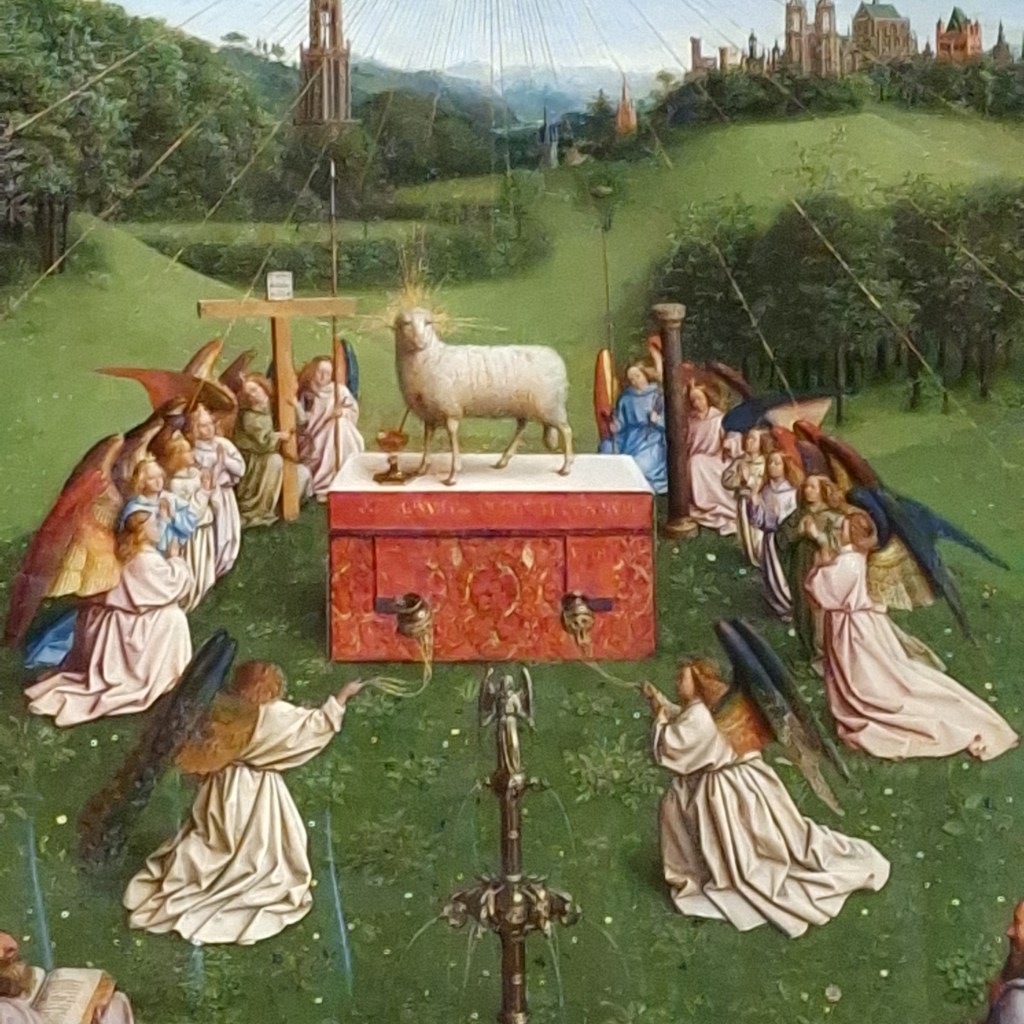
detail from : Adoration of the mystic lamb, from the altar-piece of Ghent Cathedral
Belgium. [photographed by Mr G.
The Ghent Altarpiece
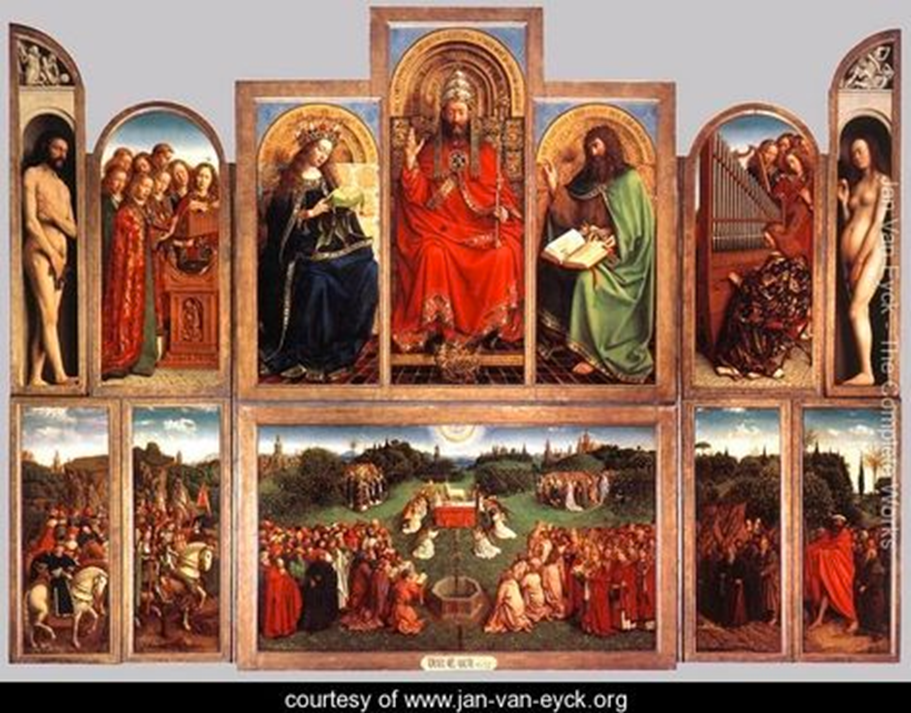
In the early 15 century two Flemish brothers, Hubert and Jan van Eyck produced one of the great masterpieces of western art: the Ghent altarpiece known as The Adoration of the Mystic Lamb. It is a multi-panel painting that can be displayed both open and closed, revealing different scenes and levels of detail. When closed, the altarpiece primarily displays the Annunciation, while opening it reveals the intricate and vibrant “Adoration of the Mystic Lamb” scene.
Although of outstanding artistic and religious significance it is surrounded by controversy and speculation, not only from art historians but theologians as well. It is currently undergoing a time of restoration and research which is scheduled to be completed in 2026.
In total the altar piece is constructed from 18 separate panels. Its main panel depicts the Lamb of God on an altar set in an expansive landscape surrounded by figures in various groups. These include Old Testament judges, Knights of Christ, holy pilgrims and holy hermits; saints of both the Old and New Testaments. Above this lower central panel there is a depiction of God, with Mary to the left and John the Baptist to the right. In turn, they are flanked by the figures of Adam and Eve.
The Altarpiece was completed in 1432 and it is a truly great work of art; one of the most influential paintings ever painted.
The panels depict biblical scenes as well as a portrait of Joos Vijd who commissioned it and his wife Elisabeth Borluut.
At the heart of the painting is the Mystic Lamb, seen on the central altar. It symbolizes Jesus Christ and the sacrifice he made for humanity. From a wound on its chest, blood pours into a chalice which represents Christ’s sacrifice and its commemoration in the Eucharist.
Around the altar, in various groups are gathered those who gaze on the Lamb in adoration. The Virgin Mary and St. John the Baptist are contrasted with the figures of Adam and Eve with a depiction of God in the panel above that of the Lamb.
The painting has had quite a difficult life and has been described as the most stolen piece of art in history. It has also been hidden when iconoclasts and others would have preferred to destroy it.
On the morning of 11 April 1934, Ghent woke up to news of a disaster. Two panels of the Altarpiece, ‘The Just Judges’ and ‘John the Baptist’ had been stolen from St Bavo’s Cathedral! This daring theft has grown to become one of the most fascinating art robberies of the 20th century. It remains unsolved. The panel of John the Baptist was returned later anonymously but that of the ‘Just Judges’ remains at large! There is a hope that it will be found in due course, meanwhile a copy takes its place.
As if that wasn’t enough the painting was stolen by the Nazi’s in 1940. Hitler wanted to establish a museum of culture in his home town of Linz. Whilst plans for the building were completed, the painting, along with many others, was kept safely in a salt mine in Austria, which also guaranteed its preservation.
When the Allied troops were getting near, there was a plan to dynamite the salt mine but such a disaster for the art heritage of the world was averted by the residents who lived near the mine.
Today, the Altarpiece has its own chapel in the Cathedral where it can be viewed freely. It is an amazing work of art but it is much more.
For the believer, there is a strong sense of being led into adoration not just of the painting itself but of the resurrection it signifies.~The Lamb is one of the powerful symbols of Easter not only because lambs are themselves signs of new life at this time of year, but also because in Christian art, the Lamb depicts Christ Jesus, risen from the dead and glorified.
As I sat before the painting, in contemplation, the only response I could make was to be still and pray, giving thanks for all that God in the Risen Jesus has given to me – and the unstoppable and unconditional love through which He saves and redeems me and you.
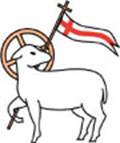
In Christian symbolism, the lamb represents Jesus, “the lamb of God” (agnus Dei). (Jn 1:29, Rev 5:12) Standing with a banner, the lamb represents the risen Christ triumphant over death. Standing with a cross and a gash in its side, it symbolizes the passion of Christ. Seated on a throne or a book, the lamb represents the judgment of Christ. Because the lamb is humble, gentle, and innocent, lambs are often engraved on the tombstones of children.

Paschal triumph, Easter joy,
Only sin can this destroy;
From sin’s death do thou set free,
Souls re-born, dear Lord, in thee.
Hymns of glory, songs of praise,
Father, unto thee we raise.
Risen Lord, all praise to thee,
Ever with the Spirit be.
{final verse of the hymn : At the Lamb’s High Feast we sing}
[Mr G] Easter Friday 2025
 Mr G's Ponderings