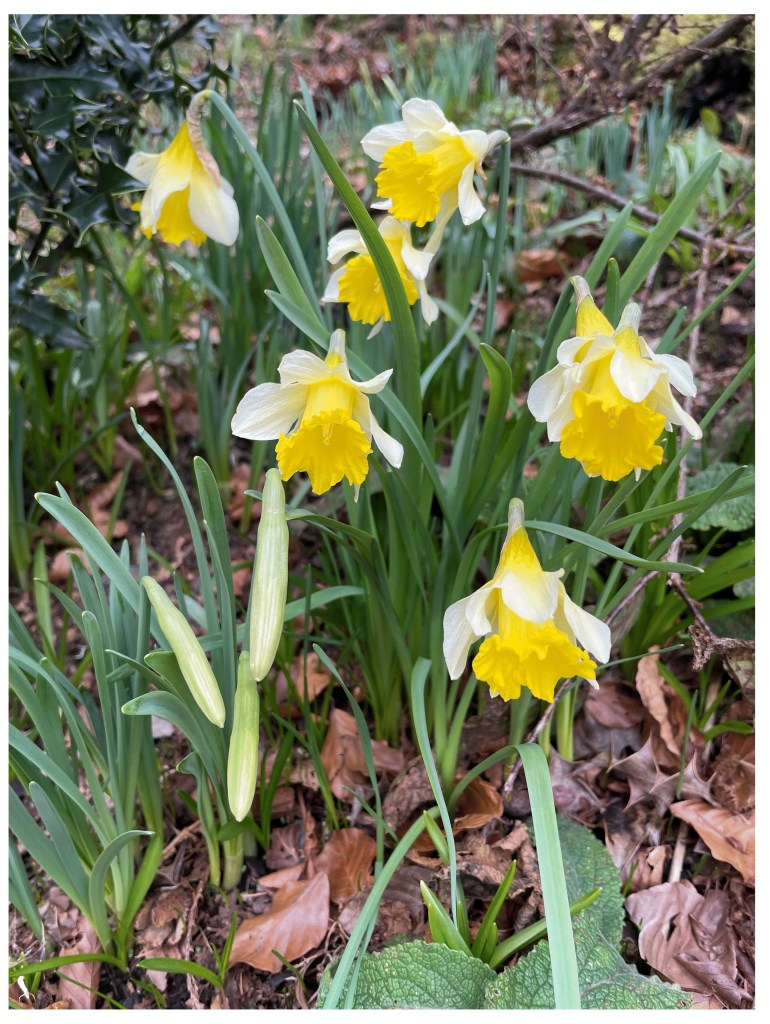
Photo of Daffodils in the Lake District by Gill Henwood
These Daffodils were ready to greet Spring when the weather changed. As in North America and Canada and in much of Europe it has not been a great week for the weather here in the United Kingdom, especially in the West and North of England, Wales and Scotland.This photo by my friend Gill should help to keep us focussed on the Spring to come.
Meanwhile, I’ve written a short poem:
Slight delay
There will be a slight delay. Swirling gyre of wild, wind -tossed storm, Angry voices demand a hearing. You prefer not to be silenced !
You were unexpected. Our hospitality was found wanting. We were dressed for other visitors, our spring-like colours, green, yellow, crisp white a tinge of orange, were wasted on you.
As we hurriedly tried to close our door, and fold our petals, you crashed your wild cacophany into us. We feared the worst, but fretful snow, landing shakily in the turbulence of a temper-tantrum of whirling sound , came hastily, flake by flake, until we were safe and warm and waiting for that moment soon when we will trumpet joyful Spring.
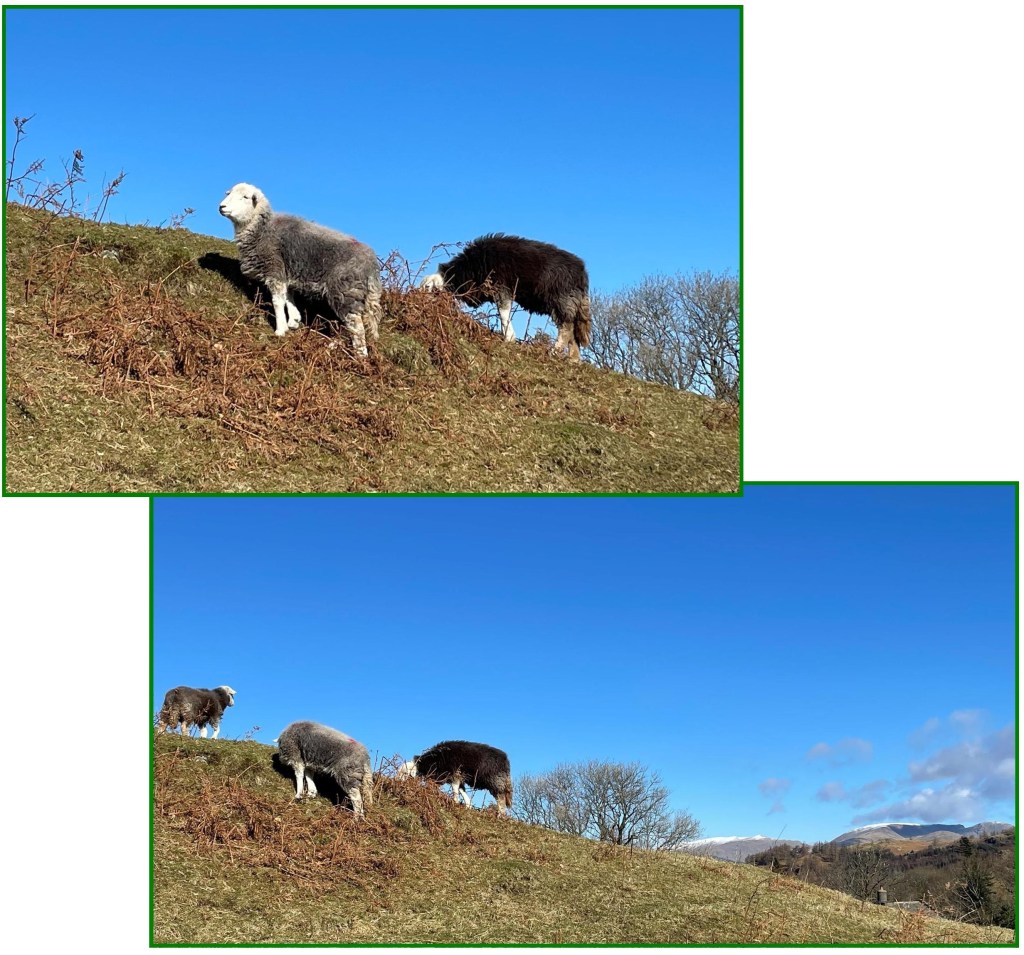
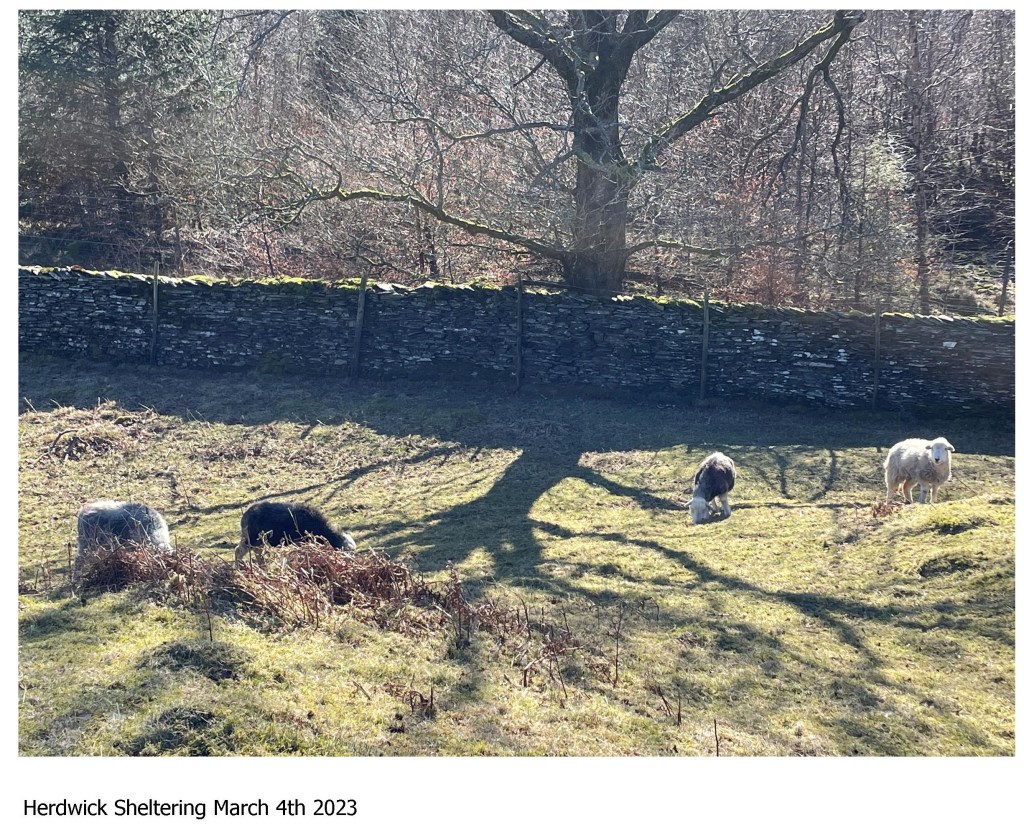
Herdwick Sheep in the Lake District enjoying the sun before more snow fell in the last few days. The blue skies will be back soon! Photos by my friend Gill.plus the photo below.
A Reflection from the Lake District by Gill Henwood.
When you witness the care a shepherd has for his or her flock, the 23rd Psalm comes to mind:
The Lord’s my shepherd and The King of Love my shepherd is.
The young farmer below our window is only 24, and has been building up his own flock for two years. He’s here by dawn and returns in the evenings at dusk to check his expectant ewes who wait in the long sheep shed that belongs to his retired grandfather. They baa when they hear his 4×4 coming up the track, knowing he will bring hay. He’s working his way to a farm tenancy of his own – there is no farmhouse on this small acreage of land.
Upland fell farmers are part of the countryside and community here, and this area was cherished by Beatrix Potter a century ago, who, with the National Trust, bought and saved farms for the nation. She too was a breeder of Herdwick sheep and a show judge. Her shepherds, and the shepherds of today, care for their flocks and seeing them brings to mind, Jesus, the Good Shepherd.
Gill Henwood
Here is a version of Psalm 23 written by my friend,Joyce Smith in her Reflections for Lent in 2021.
Bible Reading: Psalm 23 “I will dwell in the house of the Lord,my whole life long.“
The Lord is my Shepherd; who guides, nourishes, and protects me.
My Shepherd, who looks for me when I lose my way. and carries me safely home.
My Shepherd, who longs for me, and for ‘sheep from many different flocks’, to dwell in his house, both now and for all eternity.
Jesus, my Shepherd, help me to fix my eyes on you and follow where you lead.
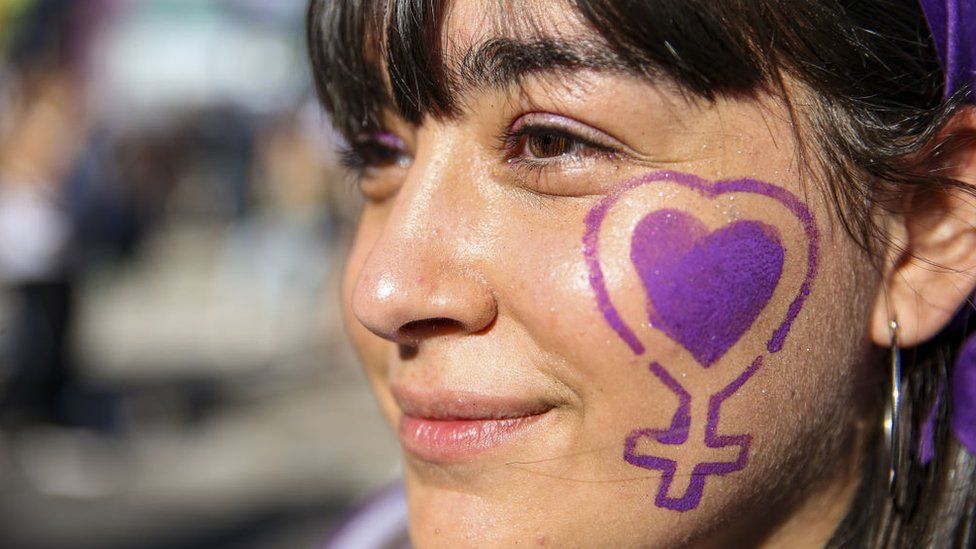
Imagine a gender equal world. A world free of bias, stereotypes, and discrimination. A world that’s diverse, equitable, and inclusive. A world where difference is valued and celebrated. Together we can forge women’s equality. Collectively we can all #EmbraceEquity.
A PRAYER FOR INTERNATIONAL WOMEN’S DAY
Lord, make me an instrument of peace:
Bless all women who daily strive to bring peace to their communities, their homes and their hearts. Give them strength to continue to turn swords into ploughshares.
Where there is hatred, let me sow love:
We pray for all women who face prejudice, inequality and gender disparities. Help us to see and to face the discrimination against women in all the many forms it may take.
Where there is injury, pardon:
Comfort all women who suffer from the pain of war, violence, and abuse. Help them to become instruments of their own reconciliation and peace.
Where there is division, unity:
Forgive all women and men who let differences breed hate and discrimination. Let your example of valuing all of creation help us to see that we are equal partners in the stewardship of your world.
Where there is darkness, light; where there is untruth, truth:
Comfort all women who struggle in the darkness of abuse, poverty, and loneliness. May we stand with them in light to acknowledge their suffering and strive to remove the burdens of shame or embarrassment.
Where there is doubt, true faith:
We pray for all women who live in fear of their husbands, fathers, and forces that control their lives. Help them to be empowered to be their true selves through your everlasting love and faith.
Where there is despair, hope:
We pray for all women who live in the despair of poverty, violence, trafficking, slavery, and abuse. May the light of your love bring them hope.
Where there is sadness, new joy:
Help us to see the strength and goodness in all women and men. Transform our hearts to celebrate the love and grace of all people.
Purim is the Jewish Festival, also known as a ‘Carnival of Happiness’ and it begins this evening (March 6th) until tomorrow evening (March 7th.)
It is based on the event in the Book of Esther and to understand it fully, a reading of that book would help you. There are only 10 chapters, none of them very long.It is set in the Persian Empire in the 4th century BCE. The Empire extended over 127 lands and Jewish people were spread across most of it.
The story goes that when King Achashverosh was disobeyed by his wife, Queen Vashti, he decided to replace her. He ordered that the beautiful girls of the Empire should parade before him. The new Queen he chose was Esther but she was a Jew so she had to hide her nationality. At this time, the new Prime Minister of the Empire, Haman, began to exercise his power. All in the land bowed to him by order, except the Jewish Leader Mordechai. (He was the guardian of the new Queen, Esther but this wasn’t known.) Haman was so furious and angry with Mordechai that he persuaded the King, on some pretence, to have all Jews in the Empire destroyed.He cast lots to decide the date and this became the origin of the feast because Purim means ‘lots’ in ancient Persian. (They cast lots) In the face of widespread destruction, Mordechai persuaded Queen Esther to enlist the aid of the King. It transpired that Mordechia had already been influential in foiling a plot against the King by two rebels. So the King wanted to reward, rather than kill Mordechia. Esther told him to gather all the Jews in the city of Shushan, where the Royal Palace was, and spend three days together, repenting, fasting and praying to God. Then Esther invited the King and Hanam to a feast. During the festivities, she revealed that she was a Jew and accused Hanam of attempting to destroy her people. Mordechia was feted by the King and Hanam was hung on gallows he had built to get rid of Mordechia. He was appointed Prime Minister in place of Hanam.
It’s a marvellous story and you can ‘read all about it’ in the Book of Esther.
Purim is the Festival at which the Jewish People celebrate this and they do it particularly in 4 ways.
The reading of the Book of Esther (the Megillah), once on the night of Purim and once the following day.
By giving money gifts to at least two poor people.
Sending gifts of two kinds of ready-to eat-foods to at least one person (who may be in need)
And to have a festive meal
The atmosphere is lively and full of fun. It is customary for children especially (but adults also if they desire) to dress up in costumes. This is because the role of God is hidden in the story of Purim (and in fact even the name of God is missing from the Megillah).’
There are special foods including a three-cornered pastry stuffed with sweetmeats and poppy seeds. It is called Hamantaschen after Haman’s favourite three-cornered hat though in Yiddish,it is called ‘Haman’s ears” Central to the feast is Joy. It is based on deliverance from death and evil intent and that is something to be joyful about.
The late Jonathan Sachs pondered on this. They had escaped an act of genoside, the first one of more to come. Was the appropriate emotion joy? Ought it to have been relief? How does this festivity sit with future persecutions of the Jewish people? How does Purim seem against the background of the holocaust? This is what Jonathan Sacks has to say:
“We who live after the Holocaust, who have met survivors, heard their testimony, seen the photographs and documentaries and memorials, know the answer to that question. On Purim, the Final Solution was averted. But it had been pronounced. Ever afterward, Jews knew their vulnerability. The very existence of Purim in our historical memory is traumatic. The Jewish response to trauma is counter-intuitive and extraordinary. You defeat fear by joy. You conquer terror by collective celebration. You prepare a festive meal, invite guests, give gifts to friends. While the story is being told, you make an unruly noise as if not only to blot out the memory but to make a joke out of the whole episode. You wear masks. You drink a little too much. You make a Purim spiel. Precisely because the threat was so serious, you refuse to be serious – and in that refusal you are doing something very serious indeed. You are denying your enemies a victory. You are declaring that you will not be intimidated. As the date of the scheduled destruction approaches, you surround yourself with the single most effective antidote to fear: joy in life itself. As the three-sentence summary of Jewish history puts it: “They tried to destroy us. We survived. Let’s eat.”
Humour is the Jewish way of defeating hate. What you can laugh at, you cannot be held captive by.”
In our present world, where so much tragedy is befalling so many people, in Ukraine, Turkey, Syria, even the Holy Land, and so many other places, perhaps there is a vital message here for all of us.
Jonathan Sacks again:
How do joy and humour help us deal with tragedies, both in our personal and national life?
I learned this from a Holocaust survivor. Some years ago, I wrote a book called Celebrating Life. It was a cheer-you-up book, and it became a favourite of the Holocaust survivors. One of them, however, told me that a particular passage in the book was incorrect. Commenting on Roberto Begnini’s comedy film about the Holocaust, Life is Beautiful, I had said that though I agreed with his thesis – a sense of humour keeps you sane – that was not enough in Auschwitz to keep you alive.
“On that, you are wrong,” the survivor said, and then told me his story. He had been in Auschwitz, and he soon realised that if he failed to keep his spirits up, he would die. So he made a pact with another young man, that they would both look out, each day, for some occurrence they found amusing. At the end of each day they would tell one another their story and they would laugh together. “That sense of humour saved my life,” he said. I stood corrected. He was right.
How can humour be the ultimate defence against those who wish to take away our freedom and destroy us? That is what we do on Purim. The joy, the merrymaking, the food, the drink, the whole carnival atmosphere, are there to allow us to live with the risks of being a Jew – in the past, and tragically in the present also – without being terrified, traumatised or intimidated. It is the most counter-intuitive response to terror, and the most effective. Terrorists aim to terrify. To be a Jew is to refuse to be terrified.
A people that can know the full darkness of history and yet rejoice is a people whose spirit no power on Earth can ever break.
Terror, hatred, and violence are always ultimately self-destructive. Those who use these tactics are always, as was Haman, destroyed by their very will to destruct. And yes, we as Jews must fight antisemitism, the demonisation of Israel, and the intimidation of Jewish students on campus. But we must never let ourselves be intimidated – and the Jewish way to avoid this is marbim be-simcha, to increase our joy. A people that can know the full darkness of history and yet rejoice is a people whose spirit no power on Earth can ever break.”
There is so much about this that we can learn to good and powerful effect. It touches so much on the events in our world today. It is also central to the Christian Lent and Holy Week journey . There, too, joy comes out of seeming destruction and yet love triumphs through Cross & Resurrection which is itself the epitome of joy, deliverance and celebration. It reminds us that by whatever religion we pray to God, the joke is always on Satan and those who follow evil.


 Mr G's Ponderings