Month: April 2023

Waymarks of Faith

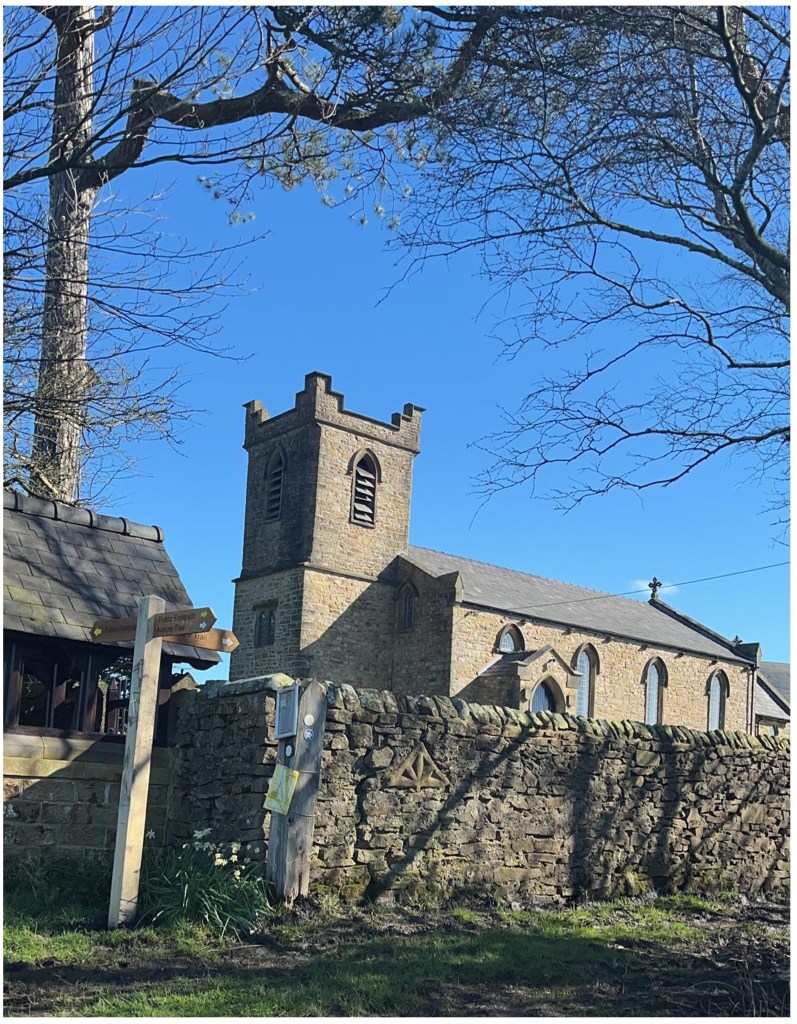
St Eadmer, Admarsh-in-Bleasdale. Photo: Helen Smith

This delightful church at Bleasdale (or to be correct, Admarsh-in-Bleasdale) is overlooked by Parlick and Fairsnape Fells in North Lancashire. Both are in the Bowland Area of Natural Beauty. The Church has a unique dedication – that of St Eadmer.

It has baffled many as to who he was and for a long time it was thought that he was the secretary to St. Anselm of Canterbury.( An Eadmer wrote Anselm’s biography.)
Investigations proved inconclusive until another Eadmer was discovered.
When the Body of St. Cuthbert was carried by the monks of Lindisfarne to safety from the Vikings, the journey was long and arduous. Indeed, with rests it took a very long time. It involved a stay in Chester-le-Street and a journey over the Cleveland Hills now known as the Lyke Wake Walk or Coffin Walk.

The final part of the journey is to be found in a ‘History of the Church in Durham’ by a medieval monk, Symeon.
He describes the arrival of the shrine at a place on the east side of what is now the city of Durham. The vehicle on which it rested could not be moved and the bishop directed his monks “that they should solicit an explanation of this sign from heaven by a fast of three days, which should be spent in watching and prayer, in order that they might discover where they should take their abode along with the holy body of the father”. This was done and Simeon goes on to relate that “a revelation was made to a certain religious person named Eadmer, to the purport that they were required to remove the body to Durham and prepare a suitable resting place for it”.
This was done and as a result, ultimately, one of the greatest Norman Cathedrals in the world was built.

What all this has to do with the Church in Bleasdale is sheer conjecture. It may well be bound up with the fortunes of a local family, the Parkinson’s, who came to live at Fairsnape Fell and who were Christian folk. The Chapel at Admarsh fell into decay and it was rescued and restored by the Parkinson family. It was my conjecture that linked Bleasdale with Northumbria and Durham.
The Fairsnape Parkinsons claimed descent from the Featherstonehaughs of Featherstone Castle in Northumberland then in the diocese of Durham. When they were looking for a dedication for their renewed church, it is reasonable to suggest that they looked to their Mother Church of Durham which was the last resting place of the remains of St. Cuthbert of Lindisfarne.
Possibly the Parkinson family felt that they shared the vision of Eadmer to build a church albeit a small and modest one.

Like so much of our history as a nation, facts are often shrouded in the mists of time and our stories are a mixture of truths, myths, poetic license and reasonable conjecture after sifting and weighing up the evidence.
What we do know is that in this beautiful corner of Lancashire, there has stood a church which has been cared for and used for a long time and has fed people with the nourishment of the Gospel.
An agricultural community works what is often a harsh land and with a changing lifestyle. Farming is not what it was nor is church life. The local Church of England School which provided an amazing education to children from the area sadly closed its doors in 2019. The village hall, however, still caters for a quaint but satisfying social life. Lancashire Hot Pot Suppers were, in my 10 years ministering there, a treat beyond measure and where else could you end each evening’s entertainment with a rousing rendition of the National Anthem, played lustily on the hall piano!

Worship still takes place in the serene church and placing oneself in God’s hands means lives continue to be consecrated.
This morning, my friend Helen send me the photo along with others of the fells. It opened up memories but also I was reading about the state of the Church of England as recorded in The Guardian  newspaper. It’s radicalism often tries to engage its readers with negativity about Christianity, when it isn’t busy with its other preoccupation, that of undermining the Monarchy!
This isn’t an easy time to keep churches going in small, rural places and logic might well suggest that we should close more of them down and reorganise ourselves into bigger and more manageable units. A large local Scout camp often uses St Eadmer’s as a shelter when their night hikes are interrupted by rain. Where would they go?

For the faithful Christians who find faith and God’s love in their little church, this is more than an act of survival. It is an act of belief and a witness in a God who converted a world with a motley crew and goes on doing so still.
Each of our churches are ‘waymarks’ – cairns- on our way to heaven.
We lose those pointers and the sharing of discipleship at our peril.
We may say that we have to be realistic but thankfully, the Parkinson family of Bleasdale and other places like them,  including, and especially, today, didn’t understand a realism which was fatalistic and devoid of hope and determination to claim divine footsteps to heaven. Cairns are built when wayfarers add a stone or a pebble. The Way to Heaven needs not so much stones as visionary people.

Father, as you gave Eadmer the vision to build a church to your glory:
and kindled that vision anew in the hearts of those
who built the Church in this land,
so guide all who meet you in our places of worship,  
to go on building your Church in the hearts and lives
which are wholly dedicated to you. Amen

[Thank you to Helen Smith for sending me the photographs
and thus reminding me of the importance of the waymarks of faith in our journey of life]
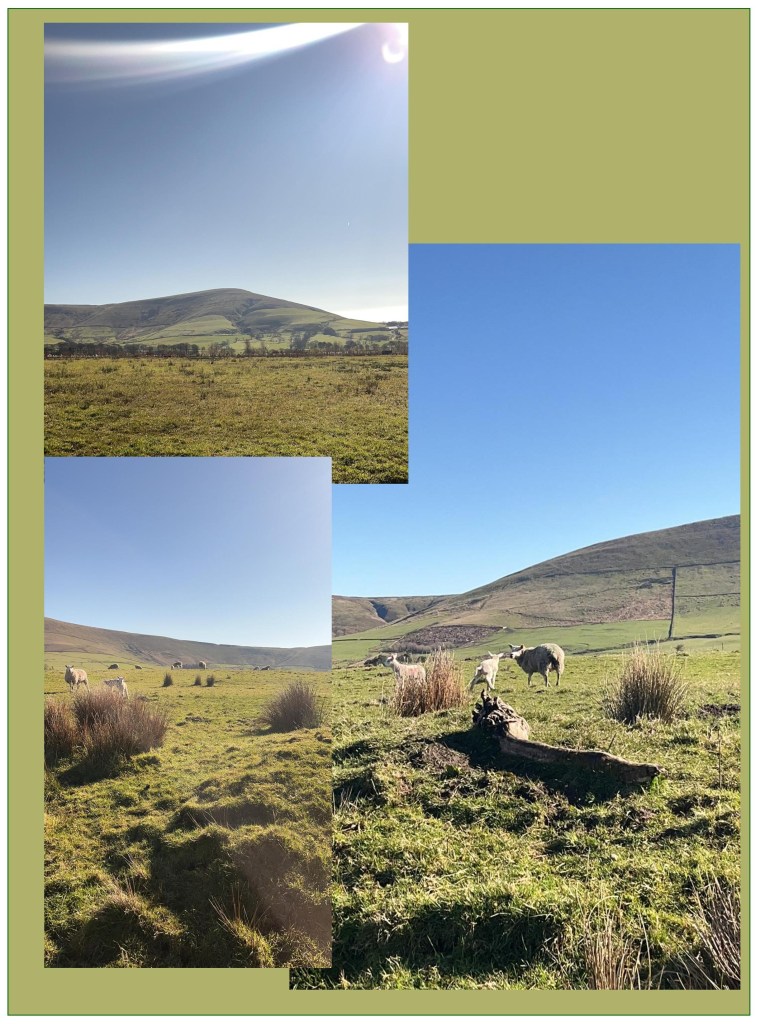

Parlick & Fairsnape Fells – photos by Helen Smith

For Ireland and for us.

GOOD FRIDAY AGREEMENT PRAYERS

Almighty God, you call us into a common fellowship of solidarity and love;
as we remember the signing of the Belfast / Good Friday Agreement twenty five years ago,
and reflect on the hopes and disappointments of the intervening years;
draw near to us, and move us to work for peace and justice in the world around us;
in the name of him who is the Prince of Peace,
Jesus Christ our Lord. Amen.

Almighty God, we long for the time when your kingdom shall come on
earth: when people and nations shall acknowledge your sovereignty,
seek your glory, and serve your good and righteous will.
Help us not only to pray but also to work for that new day;
and enable us by your grace to promote the cause of justice and peace,
truth and freedom, both in our own society and in the life of the world;
for the honour of Christ, our Saviour and our Lord.
Amen.

Christ in the heart of the wounded,
Christ in the hands of the comforter,
Christ in our forgiveness,
Christ in our love for the enemy
Christ in our carrying for those who harm us
Christ in how we live day to day.

Enter then into Joy

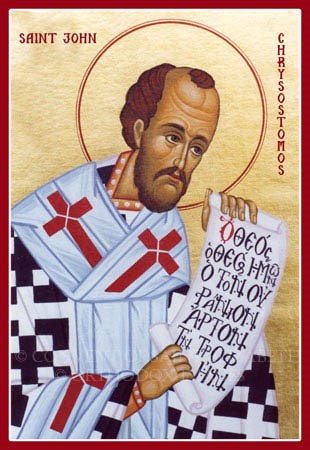
The Paschal homily of St John Chrysostom
(Archbishop of Constantinople)

This sermon is read on Easter Day in the Orthodox Churches but it has a universal application. It was written circa 400 AD
The Paschal Homily of St. John Chrysostom is read at the end of Eastern Orthodox Matins (Morning Prayer) at Pascha, the feast of the Resurrection of Jesus Christ, universally throughout the Orthodox Church. It was composed sometime during his ministry in the late 4th or early 5th century.

If any be a devout lover of God,
  let him partake with gladness from this fair and radiant feast.

If any be a faithful servant,
  let him enter rejoicing into the joy of his Lord
.
If any have wearied himself with fasting,
  let him now enjoy his reward.
If any have laboured from the first hour,
  let him receive today his rightful due.
If any have come after the third,
  let him celebrate the feast with thankfulness.
If any have come after the sixth,
  let him not be in doubt, for he will suffer no loss.
If any have delayed until the ninth,
  let him not hesitate but draw near.
If any have arrived only at the eleventh,
  let him not be afraid because he comes so late.

For the Master is generous and accepts the last even as the first.
He gives rest to him who comes at the eleventh hour
  in the same was as him who has laboured from the first.
He accepts the deed, and commends the intention.

Enter then, all of you, into the joy of our Lord.
First and last, receive alike your reward.
Rich and poor, dance together.
You who fasted and you who have not fasted, rejoice together.
The table is fully laden: let all enjoy it.
The calf is fatted: let none go away hungry.

Let none lament his poverty;
  for the universal Kingdom is revealed.
Let none bewail his transgressions;
  for the light of forgiveness has risen from the tomb.
Let none fear death;
  for death of the Saviour has set us free.

He has destroyed death by undergoing death.
He has despoiled hell by descending into hell.
He vexed it even as it tasted of His flesh.
Isaiah foretold this when he cried:
Hell was filled with bitterness when it met Thee face to face below;
  filled with bitterness, for it was brought to nothing;
  filled with bitterness, for it was mocked;
  filled with bitterness, for it was overthrown;
  filled with bitterness, for it was put in chains.
Hell received a body, and encountered God. It received earth, and confronted heaven.
O death, where is your sting?
O hell, where is your victory?

Christ is risen! And you, o death, are annihilated!
Christ is risen! And the evil ones are cast down!
Christ is risen! And the angels rejoice!
Christ is risen! And life is liberated!
Christ is risen! And the tomb is emptied of its dead;
for Christ having risen from the dead,
is become the first-fruits of those who have fallen asleep.

To Him be Glory and Power, now and forever, and from all ages to all ages.
Amen!

Easter blessings to all!

Work in Progress

‘Work in Progress’ by Kay Gibbons: a Good Friday reflection in glass

My artist friend Kay sent me photos of an arrangement she produced today, created with pieces of glass remnants.
Glass is one of her particular mediums.

They were placed slightly haphazardly but Kay saw that, as they sat in pieces on her work table a shape formed which was deeply suggestive to her of the Crucifixion.  She commented,

“I wasn’t sure how to refine them but as they sat in pieces on my work table, I actually like the way they are, symbolic of the jagged edge of the crucifixion …”

There are two images, one unedited and quite raw and the other more presentational surrounded with traditional purple edging, a bit likea greetings card of sorts.

She is a fan of T S Eliot and so a line from East Coker (Four Quartets) came to mind:

“And they called this Friday good …

The art is still evolving and revealing its meaning so Kay calls it a Work in Progress.

She reflects that this is true of the Crucifixion too.
As people discover for themselves its meaning and  how it challenges, shapes and changes lives, so they are part of a ‘work in progress’. Each of us who engages with Jesus and with the immense and unconditional love of God pouring from the Cross, become caught up more and more in a life of joy, purposefulness and glory. So , Work in Progress’ is also a way of describing the Work of God in drawing all of us into His Kingdom.

and Jesus said, “Do not be afraid, little flock, for it is your Father’s good pleasure to give you the kingdom. Luke 12: 32

[Mr. G.]