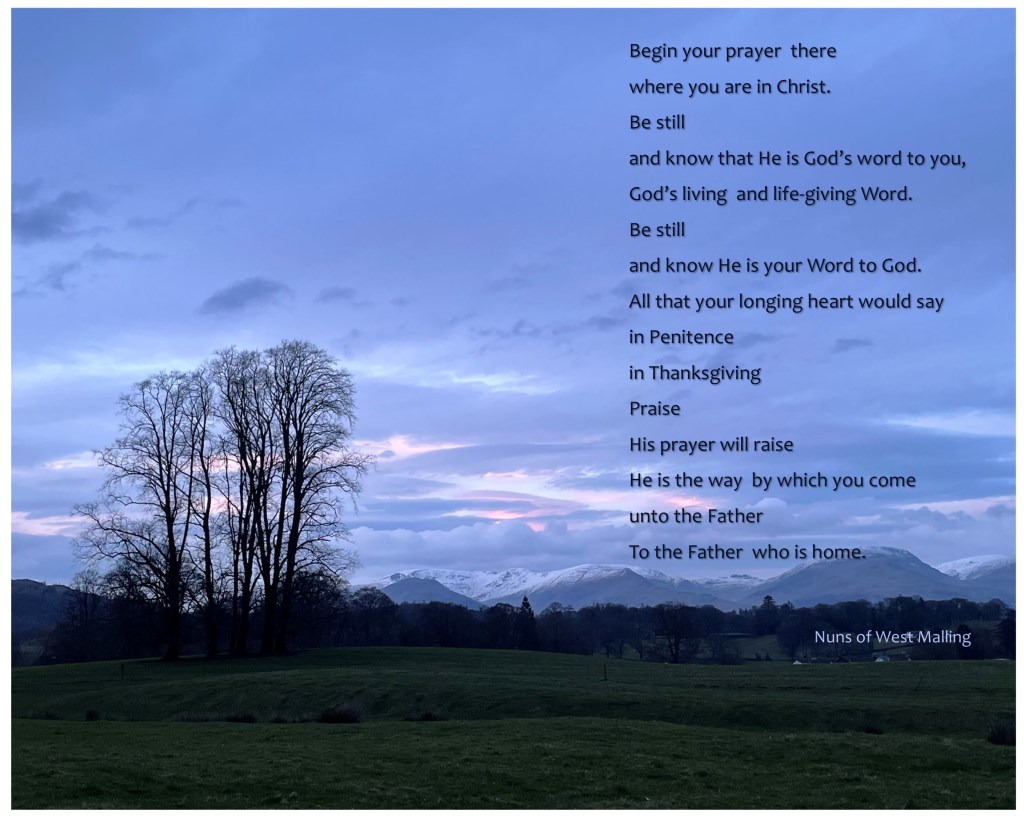
Photo evening calm in the Lake District. Gill Henwood
Begin your prayer there… these words were written some years ago from the Nuns of West Malling in a little book of meditations. They are both simple and profound.
When my friend, Gill Henwood, sent me the photograph from the Lake District which she named, ‘Evening Calm’, I thought the words from West Malling `fitted the view.
Both the photograph and the words are a reminder that whatever the world appears to be right now, it is not all that it is! Gill comments, “I am finding that ‘communing’ with nature gives an eternal perspective in these dark days. The rhythms of light and dark, stars, moon and sun, budding flowers and trees all speak of a deeper creating. Love embedded in this world of human failure and violence reminds me that there are millions of fellow travellers who are people of good heart and faithful service and deep kindness ~ and of course that includes all creatures, like my lovely dogs!!” (Gill)
PS – not forgetting Mr G’s cat Pagli, the sponsor of this Blog.
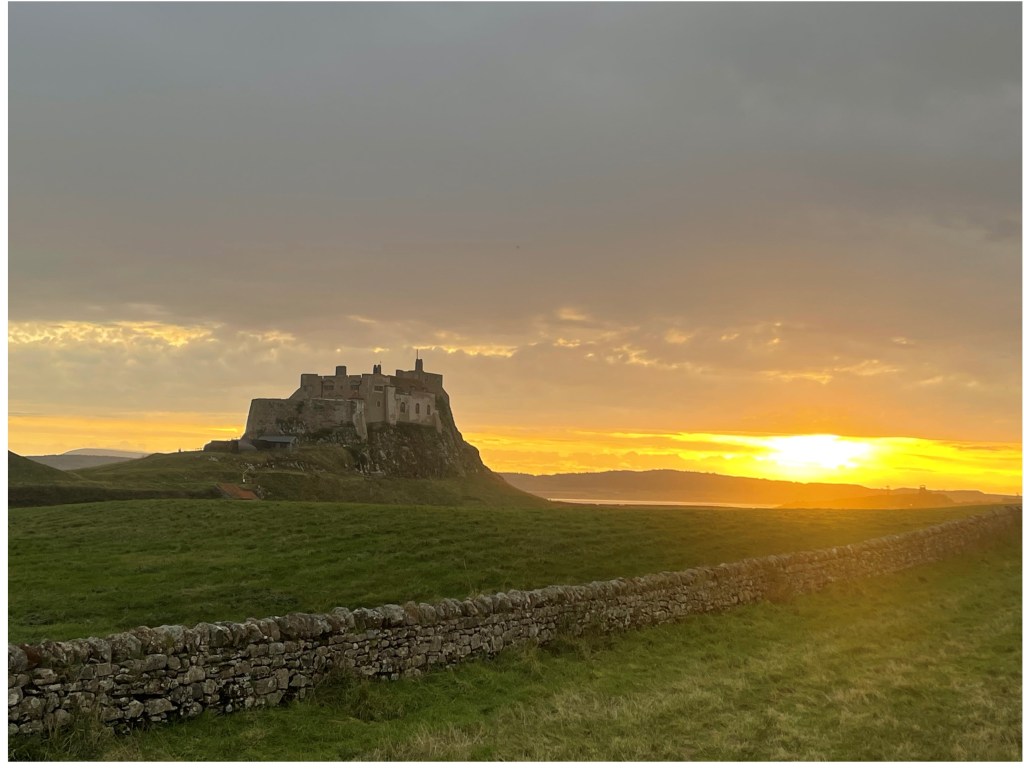
Lindisfarne, Evening Sun. Photograph by Gill Henwood.
St Cædda (St Chad) is commemorated on March 2nd. When St Oswald sent to Iona for a monk to open up his people to the love of God in Jesus Christ, the community ultimately sent Aidan (the first monk they sent turned out to be rather disappointing!) Aidan established his monastery on Lindisfarne, in Northumberland, known today as Holy Island. It was made holy, consecrated to God, by the mission St Aidan began. He first trained up 12 Anglo-Saxon boys in the faith, in prayer and in the ways of God. Of these, four were brothers. Two we know of because of their missionary work and because the Venerable Bede wrote of them. St Chad, after a time in the North-East of England, took the Gospel to the Midlands, establishing a church in Mercia at what is now Lichfield. His brother Cedd took the Gospel to Essex and then Lastingham in North Yorkshire. When Cedd died, Chad continued his work there.
Today Chad’s mission and ministry lives on in Lichfield Cathedral and Diocese, in the Roman Catholic Cathedral in Birmingham, in parishes and schools dedicated to him and in the College which bears his name in the University of Durham.
I couldn’t find a poem about him, so I wrote this one in honour of his saint’s day today.
Cædda (St Chad)
He found his place of Resurrection deep in the Mercian woods, near the church he founded. Here, angels sang prayers of preparation, bringing joyful messages from on high. He heard his Lord, quietly whispering to him. “Cædda, it is time. You must come home now.”
It had been a great adventure, beginning on that far off day when, with Cedd and Cynbil and Caelin, he crossed the Northumbrian water following the calling Cross, the hymns of birds and seals, and the lapping mantra of waves, to a place of welcome and warmth and the great man who waited for them.
There were twelve in the end, a band of brothers learning to get on together. Celtic words taught to Anglo-Saxon minds, merging with the language of Love. Excitement and joy, as slowly, but wonderfully, they heard the words of God swirling across the headland: eddying Gospel syllables bringing holiness to Cædda’s soul.
It was there, on that far shore, that he found the dawn of his Resurrection.
St Non’s Well where St David is said to have been baptized near St. David’s. Photo Mr G
‘Gwnewch y pethau bychai’ – do the little things.These are the famous last words of St. DAVID (Dewi Sant). We remember them especially today, the 1st March) which is his feast day.
Not far from St. David’s Cathedral in Wales, there is a lovely scenic walk along the coastal headlands to a place where St. David is reputed to have been born in the 6th century. It is said that David’s mother, Saint Non, gave birth to David in a house on the site of an ancient chapel and nearby there is a small well bubbling up from the ground and forming a little pool before cascading away. Today it is known as St. Non’s Well because tradition says that it first sprung up at the time David was born. The water is said to have healing and miraculous powers. It is regarded as one of the most sacred Wells in Wales. It certainly feels a holy place – one of those spots where you sense that God’s grace has been specially dispensed. Visitors to the well strew garlands of flowers and herbs in the pool of water and some, like me, fill water bottles with the crystal clear spring water. Cupping one’s hand and letting the water trickle through the fingers is a delicious sensation.
David himself was very fond of water – the only liquid he drank, except the wine of the Eucharist. He and his followers were known as the Aquati because of this. Perhaps, too, David’s affinity with water stems from the legend which surrounds his birth. He is said to have been born in the midst of a terrific thunderstorm!
St. Non, David’s mother, was the daughter of a local chieftain and she is said to have been made pregnant (perhaps even by force) by Prince Sant of the royal house of Ceredigion. Some say he was King. Whatever the circumstance of the pregnancy, Sant seems to have tried to make amends by renouncing his kingdom after David’s birth and following the life of a hermit.
David himself eventually became a monk and a scholar. He is said to have founded 12 monasteries and certainly many came to him to learn the Christian faith. Of those, quite a few went on missionary journeys to Cornwall and to Brittany. There they established the faith and proclaimed the Gospel. David continued to live in Wales but his reputation for holiness and scholarship, as a spiritual warrior, spread throughout Europe.
He and his monks lived a simple life of prayer, worship and study. They ate frugally on a diet of vegetables with water. Not all his monks approved of this and it is said that a group of them were so fed up that they tried to poison him! Hagiography is not always noted for its accuracy!
It was as death approached that David prepared himself for his final words to his monks and nuns. According to his chief biographer, Rhgyfarch, himself a son of a later Bishop of St. David’s, David gathered his loved ones to his side and spoke these words:
Be joyful and keep the faith and do the little things that you saw and heard from me.
The little things which David taught included prayer, being present for the breaking of bread at the Eucharist; reading scripture; speaking only when necessary and helping the poor. He believed also that we should have a deep respect for others. Learning to listen to each other with real love is a way towards greater understanding but it also leads to godliness. We are encouraged to be lowly, possessing a humility which never expresses itself arrogantly and which steers us away from pride. He also set great store on hospitality – always being ‘at home’ for others and for God – having time for both. There are so many big, dark things happening in our world today and we might wonder what doing some little things can make such a difference. You would be amazed – in fact do be amazed!
It is the little things we do in Christ’s name which matter most. Mother Teresa of Calcutta expressed much the same thing when she said that she and her sisters didn’t do great things but rather little things with a great love. St. David would have approved of that. Mother Teresa points us to one particular thing we can do more than anything else and it is suggested by the lovely Saint John of the Cross.
Where there is no love, put love in, and then you will draw love out!
That will change everything in a world of great sorrow and need.
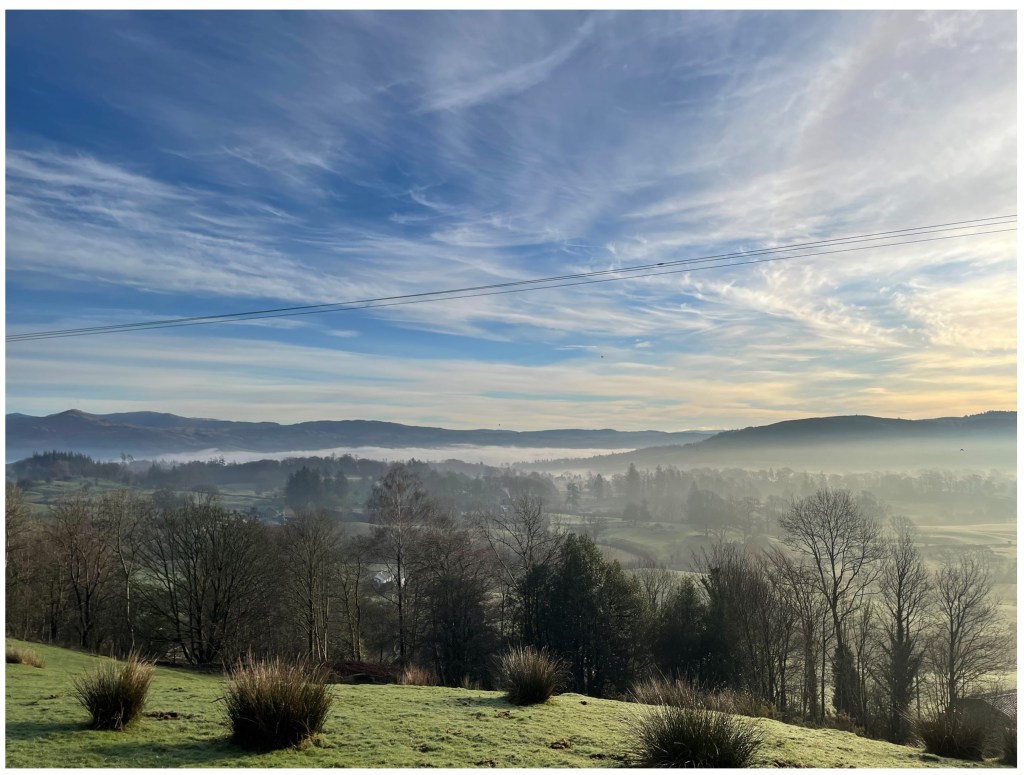
Mist over Lake Windermere photographed by Gill Henwood.
My friend Gill sent me this photo of Late February mist over Lake Windermere in the Cumbrian Lake District. It breathes an air of hope and expectation at this very complex time in the world’s life. So much hate, divisiveness and pain is often hard to bear. So this photograph reminds us that there is another earth, a different view. If you study the photo the predominant colour is green,the colour of nature and new life Now in late-February in the Western Hemisphere, as the sun grows stronger, we are beginning to sense a change of mood in Nature. We receive a new joy. May it change the inner heart of humanity.
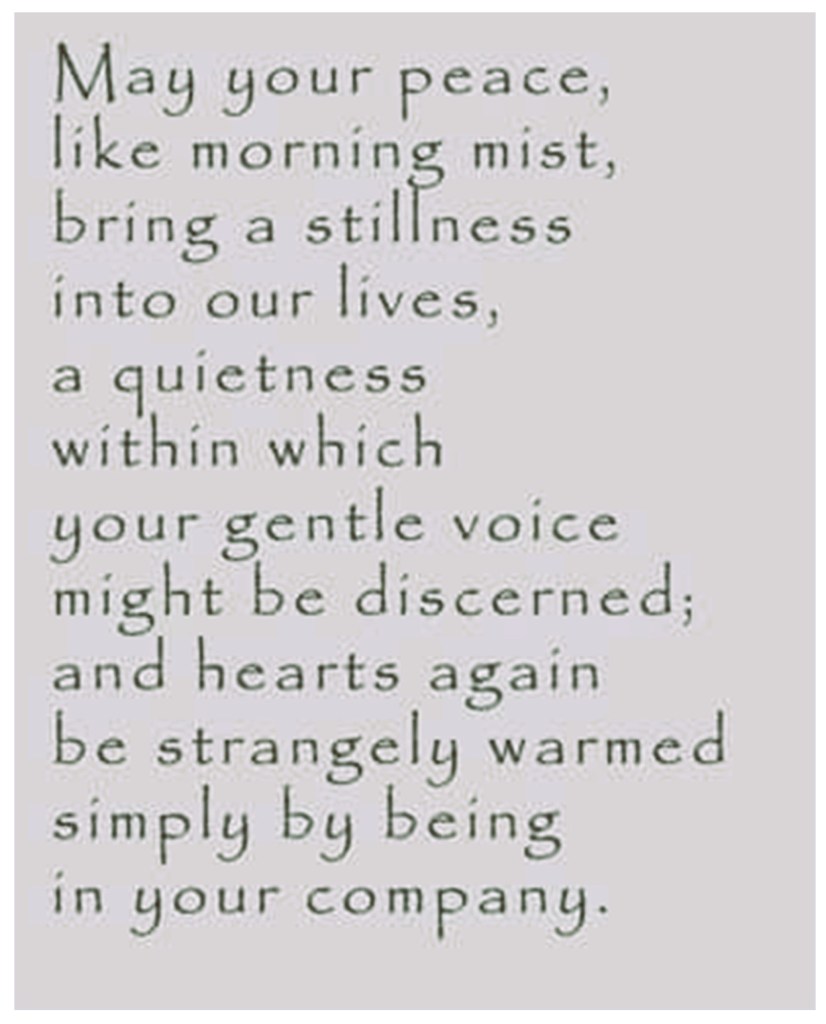
A prayer of hope by John Birch.
This prayer thought is by John Birch. He is a Methodist Local Preacher and writer who lives on the beautiful South Wales coastline. He is a prolific writer of prayers, some of which he has collected into books such as Sunshine & Storm, prayers for hope and justice in a fragile world. His collections are printed by Amazon and can be purchased from them. You can read more from him on his website, Faith & Worship. I find his prayers an inspiration and a comfort. His words open me to the nearer presence of God.
I am also grateful to Gill for her photographs and thoughts which together also speak to me of God. In these present times I am needing to hear God more and more and to see the divine reflections in Nature.


 Mr G's Ponderings