I lit you, bloodied and wet, the Virgin’s arms shaping your first cradle
I lit you as, late evening, the chisels work you strove to perfect
I lit you, clear nights lakeside, bringing vocation to hairy fish men
I lit you, days end, crowd-pressed, healing-weary, and word spent
I lit you, late nights hillside, your Father’s love, your bed
I lit you, early on that palm-strewn path destined for faux glory
I light you now, here, through olive shade, cool light mirrored blue on beaded brow, shadowed terror, and gold glimpses of angels’ arms shaping your last cradle.
The old earthquake damaged Cathedral at Christchurch, New Zealand and below The vista looking east, of the temporary cardboard Cathedral [G H]
Thoughts in Holy Week from the Revd Dr Gill Henwood
My phone chose a Christchurch photo this morning for me. Herewith the damaged cathedral (Photo taken 2020) and the temporary one made with cardboard roof struts I believe.
The white chairs installation (see below) is for the 185 who died in the earthquake- all different chairs, all unique people. Freshly repainted and evocative, in the cleared wasteland around the temporary cathedral.
Loss, hope, death, resurrection, darkness, bright sunlight and blue sky. Juxtaposed. Past. And now….
Nearby was a war memorial for NZ troops in the world wars. Next to it was a smaller memorial for people lost in 1919 by the Spanish Flu epi/pandemic. Today, all these losses resonate in Europe and also globally, keenly, acutely, in the present.
As we approach Jerusalem in Holy Week once more, may God give strength to all who are suffering and bereaved in our world now – through natural disasters, war and pandemic – to endure and trust that in Love there is a better way. We are ‘keening’ (mourning and lamenting) worldwide, drawn into the reality of suffering and death in the timeless journey of Holy Week.
May each one – in time, with others, together – find hope and, as the Light of Christ comes in the darkness of Easter Eve. May each glimpse even the possibility of solace and, one day, the renewing recreating joy of resurrection.
As our world continues along the path of darkness and despair, we all need to spend more time and energy in working for peace.
Christians are now meditating on the Passion of Jesus Christ on the Cross in what we call Holy Week.. Muslims are half way through their holy season of Ramadan. Jews begin their season of Passover on April 15th. At the heart of all three Abrahamic religions is Salvation and peace; deliverance and love; penitence and renewal. Never more than now are we called to grow peace in our hearts because that is always where conflict begins. The International prayer of Peace ends with that thought.
Lead us from Death to Life from Falsehood to Truth Lead us from Despair to Hope from Fear to Trust Lead us from Hate to Love from War to Peace Let Peace fill our Hearts our World, our Universe Peace Peace Peace
For us Christians, as we go through Holy Week, we are reminded of what Jesus said to his disciples before his arrest which led to his crucifixion. After speaking to them (and therefore us) of love in which we are held by God. This love is linked with living our lives in peace.
“Peace I leave with you; my peace I give to you. I do not give to you as the world gives. Do not let your hearts be troubled, neither let them be afraid.”
The other day I was reminded of a beautiful hymn written by Edward Bickersteth who was both a priest and a poet. After a ministry as a parish priest he became Bishop of Exeter. He wrote this hymn in 1875. It was in response to a sermon he heard whilst on holiday in Harrogate. The text of this sermon was “Thou wilt keep him in perfect peace whose mind is stayed on Thee,” The hymn Bickersteth wrote contains lines with four Question Marks followed by four answers. The final stanza where everything is drawn up into the perfect peace which Jesus gives us in the gift of heaven.
It is best sung to Orlando Gibbons tune, Song 46
Though often used as a personal hymn of comfort it also has a universal challenge. The hope and comfort it speaks of has its own Question Mark to us all. During this special week it can be a meditation on the peace which we all must work for in ourselves and equally importantly in our world.
Peace, perfect peace, in this dark world of sin? The blood of Jesus whispers peace within.
Peace, perfect peace, by thronging duties pressed? To do the will of Jesus, this is rest.
Peace, perfect peace, death shadowing us and ours? Jesus has vanquished death and all its powers.
Peace, perfect peace, our future all unknown? Jesus we know, and he is on the throne.
It is enough: earth’s struggles soon shall cease, and Jesus call to heaven’s perfect peace.
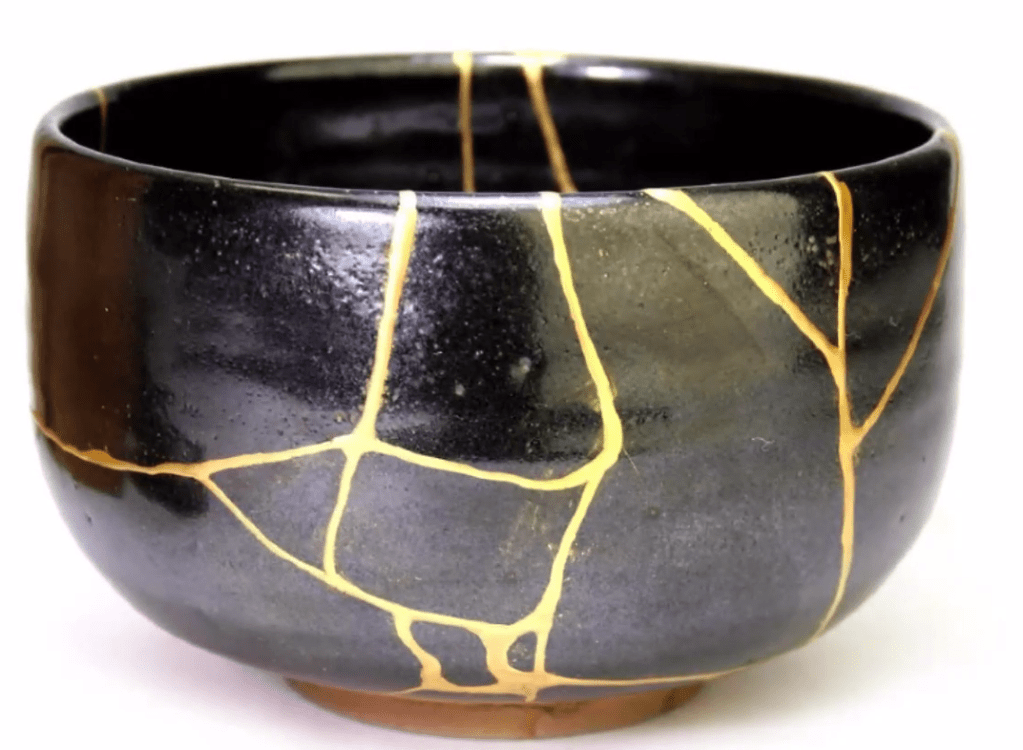
We come as broken shards to be pieced together – our sharp edges, patiently softened and held by the glowing flux which traces what has gone before, transforming regret into strength and beauty.
Not mending but creating anew…
[Piers Northam]
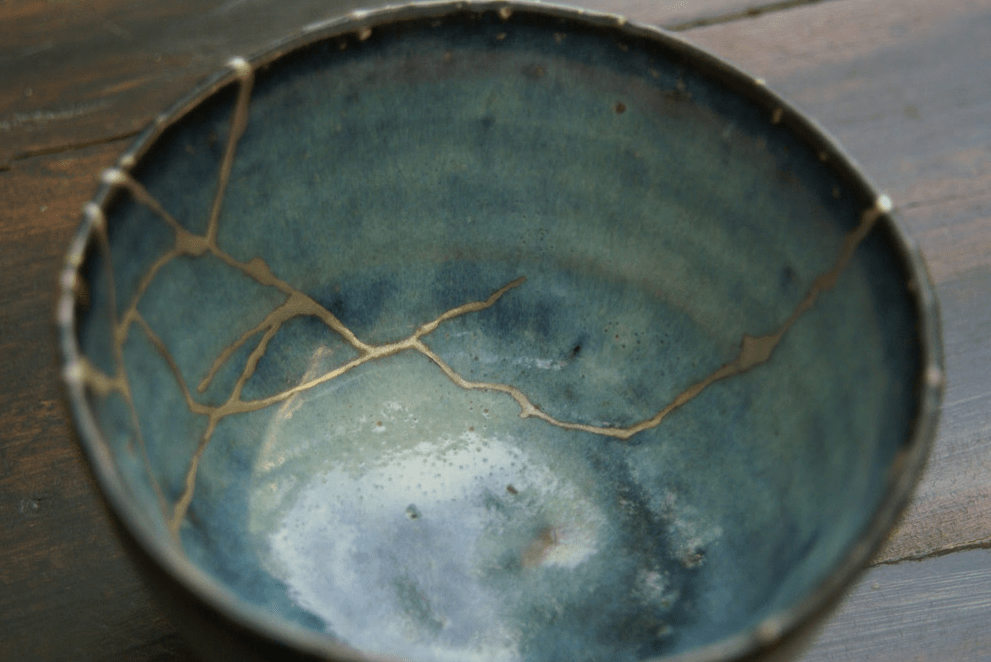
Kintsugi is the ancient Japanese art of repairing broken pottery with seams of gold. When the brokenness is repaired, the object becomes more beautiful and unique than it was before. Instead of hiding the scars, it makes a feature of them. The word Kintsugi means Gold (Kint) and to Mend (Sugi)
One of the leading artists promoting and teaching Kintsugi is Makoto Fijimura. He gives his insight into the meaning of Kintsugi in a video he recorded as part of his programme known as Culture Care Creative, of which he is the founder.
In seeking to mend what is broken, this is the opposite to our prevailing disposable culture. Instead of throwing away and buying new, it is about valuing what you have. Makoto describes the mending not as ‘fixing’ but as a redemptive journey which leads to a new creation. He tells of the aftermath of an earthquake in Japan. Homes were destroyed but the concern of many was to mend their bowls. Bowls were all that was left the mending became a ‘safe zone’ which has the power to heal people. In the mending you stand between repairing and creating. The imperfect becomes a symbol of the beauty of broken things.
We live with trauma, he says, and we are looking for healing in the midst of all that.Never more true than in our own times of conflict and destructive brokeness.
There is a physical process but it belies a kind of spiritual meaning. At a popular level, the British TV Programme, Repair Shop´ in which people bring favourite broken objects which are steeped in memory, involves a kind of Kintsugi. The Team restore and renew what is presented to them because they are skilled in particular crafts. However, it is a work of love which is fed by the stories behind the damaged objects. Old memories are reshaped and recreated into a new ones. Often we can be moved to tears, and certainly the ones seeking repairs are, because this is the real renewal.
In Kingsugi, the bowl or object seems just like a broken bowl but the cracks are filled with gold – what Makoto calls a gold river running through it. Makoto emphasises healing and he draws from that a Gospel message.
Christ, he says, came not just to fix us but to restore us to create something new, which is more valuable than what we began with.
Redemption is re-making us in the image of Christ and the result of that is the river of Gold that reconnects us is God Himself holding us.



 Mr G's Ponderings