Famous last words

St Non’s Well where St David is said to have been baptized near St. David’s. Photo Mr G

Not far from St. David’s Cathedral in Wales, there is a lovely scenic walk along the coastal headlands to a place where St. David is reputed to have been born in the 6th century.
It is said that David’s mother, Saint Non, gave birth to David in a house on the site of an ancient chapel and nearby there is a small well bubbling up from the ground and forming a little pool before cascading away. Today it is known as  St. Non’s Well  because tradition says that it first sprung up at the time David was born. The water is said to have healing and miraculous powers. It is regarded as one of the most sacred Wells in Wales. It certainly feels a holy place – one of those spots where you sense that God’s grace has been specially dispensed. Visitors to the well strew garlands of flowers and herbs in the pool of water and some, like me, fill water bottles with the crystal clear spring water. Cupping one’s hand and letting the water trickle through the fingers is a delicious sensation.

David himself was very fond of water – the only liquid he drank, except the wine of the Eucharist. He and his followers were known as the Aquati because of this.  Perhaps, too, David’s affinity with water stems from the legend which surrounds his birth. He is said to have been born in the midst of a terrific thunderstorm!

St. Non, David’s mother, was the daughter of a local chieftain and she is said to have been made pregnant (perhaps even by force) by Prince Sant of the royal house of Ceredigion. Some say he was King. Whatever the circumstance of the pregnancy, Sant seems to have tried to make amends by renouncing his kingdom after David’s birth and following the life of a hermit.

David himself eventually became a monk and a scholar. He is said to have founded 12 monasteries and certainly many came to him to learn the Christian faith. Of those, quite a few went on missionary journeys to Cornwall and to Brittany. There they established the faith and proclaimed the Gospel. David continued to live in Wales but his reputation for holiness and scholarship, as a spiritual warrior,  spread throughout Europe.

He and his monks lived a simple life of prayer, worship and study. They ate frugally on a diet of vegetables with water. Not all his monks approved of this and it is said that a group of them were so fed up that they tried to poison him! Hagiography is not always noted for its accuracy!

It was as death approached that David prepared himself for his final words to his monks and nuns. According to his chief biographer, Rhgyfarch, himself a son of a later Bishop of St. David’s, David gathered his loved ones to his side and spoke these words:

The little things which David taught included prayer, being present for the breaking of bread at the Eucharist; reading scripture; speaking only when necessary and helping the poor. He believed also that we should have a deep respect for others. Learning to listen to each other with real love is a way towards greater understanding but it also leads to godliness. We are encouraged to be lowly, possessing a humility which never expresses itself arrogantly and which steers us away from pride. He also set great store on hospitality – always being ‘at home’ for others and for God – having time for both.
There are so many big, dark things happening in our world today and we might wonder what doing some little things can make such a difference. You would be amazed – in fact do be amazed!

It is the little things we do in Christ’s name which matter most. Mother Teresa of Calcutta expressed much the same thing when she said that she and her sisters didn’t do great things but rather little things with a great love. St. David would have approved of that.
Mother Teresa points us to one particular thing we can do more than anything else and it is suggested by the lovely Saint John of the Cross.

That will change everything in a world of great sorrow and need.

[Mr G]
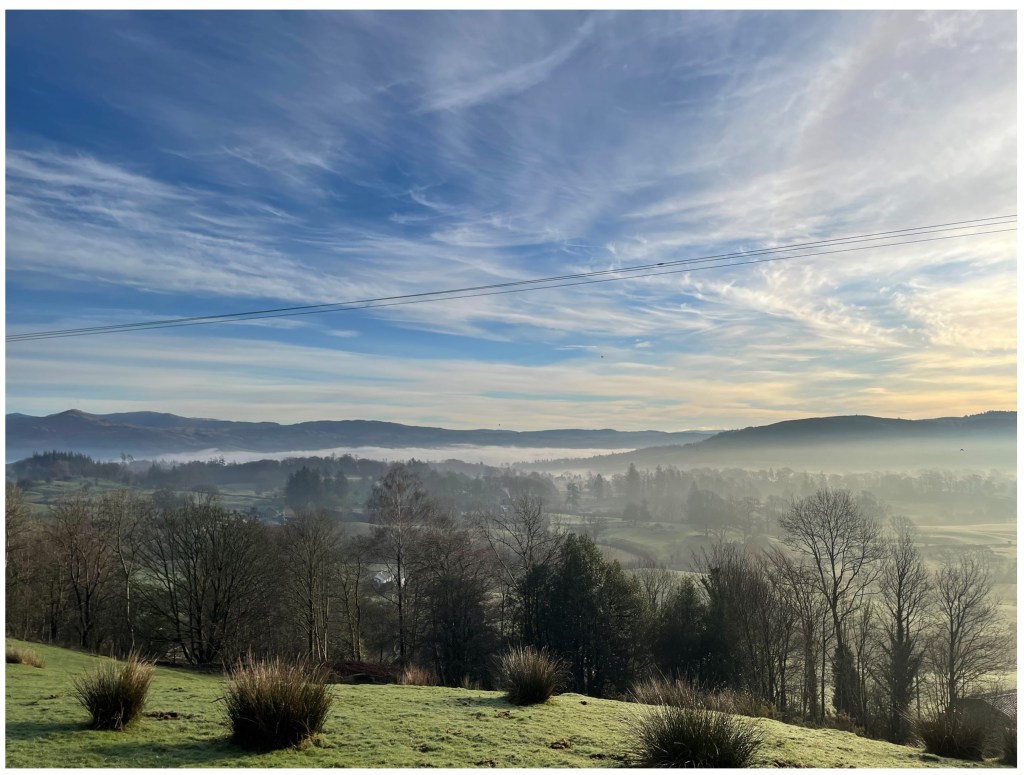
Late February Mist

Mist over Lake Windermere photographed by Gill Henwood.

Отче наш, що єси на небесах, Our Father….

Shamsia Hassani

If humanity does not rid the world of war;it will be war that will throw humanity out of history.

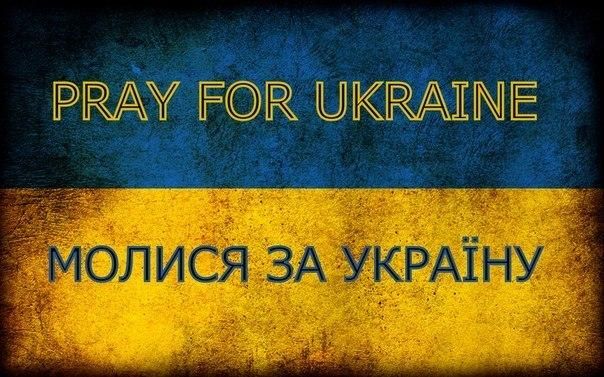
February 24th marks the beginning of the 3rd year of the War that Putin of Russia is waging against Ukraine.
There is a growing sense of weariness amongst Ukraine’s western allies and a preoccupation with other conflicts.
How easy to would be to abandon the people of Ukraine to a fate that is unthinkable. Above is artwork by Shamsai Hassani, the artist from Afghanistan who continues to draw our thoughts and prayers to the plight of our world and therefore of each other.
I have given the title of this piece, Our Father..the beginning of the Lord’s Prayer. It begins in Ukranian. If you are able, please pray it in your own language.

The prayer below is a response to a request by the United Reform Church (UK) made to young people who are refugees in the UK. They were asked what we should pray for on the second anniversary of the war in Ukraine.

Отче наш, що єси на небесах,
Нехай святиться Ім’я Твоє.
Хай прийде Царство Твоє,
нехай буде воля Твоя
Як на небі, так і на землі
Хліб наш насущний дай нам сьогодні.
І прости нам провини наші,
як і ми прощаємо винуватцям нашим.
І не введи нас у спокусу,
але визволи нас від лукавого.
Бо Твоє є Царство, і сила, і слава
навіки.
Амінь

[Lord’s Prayer in Ukranian checked by Tania Andrienko of Taras Shevchenko National University of Kyiv]

MR.G.

The Poet who couldn’t be silent.

Osip Mandelstam was one of the most important and inspiring Russian poets in the 20th century. He was born in Poland but moved to St Petersburg where he was educated.
He was introduced to me in one of Bishop Richard Holloway’s books. He was writing about how ideas for sermons develop and he likened the process to the way Osip approached his poetry. According to Nadezhda Mandelstam, Osip’s wife, in her memoirs Hope against Hope and Hope Abandoned, Mandelstam he began his poetry process by listening to the ether and the words came to him. He acted as a midwife bringing those words to birth. Quite often, he didn’t write them down. He recited the poems to his wife who acted ‘like a Dictaphone.’ This Process , minus the dictaphone, is not dissimilar to that of writing a sermon, hence the illustration by Richard Holloway.

As well as learning that insight, I brushed against the poetry itself and the revelation of his life. It has been written of him that he had a prophetic understanding of the suffering  of the twentieth century ‘which he transformed into luminous poetry. The same commentator said of him that he was, ‘childish and wise, joyous and angry, complex and simple. He was outspoken and brave which bordered on foolishness. He was unhappy about the way Russian Society was developing under Stalin and he felt a prophetic need to use his poetry to warn people of how dangerous it all was.
Needless to say, he became a person of interest to the authorities and he suffered persecution at a time when the dictator, Stalin, was growing in power.
In view of this, it was probably unwise to write a poem, a lampoon about the dictator. In  May 1934 he wrote, of Stalin,

It was, of course, the most dangerous thing he wrote. When he chanced to meet his fellow poet, Boris Pasternak, he recited the poem to him. Pasternak was filled with dread and fear. Stalinism had eyes and ears everywhere. It was even suggested that the very pavements had ears! Russia was fast becoming a heinous dictatorship. Pasternack immediately told Mandelstam, “I heard nothing, Strange and terrible things are happening right now, You said nothing!”

Though the poem remained unpublished, the authorities, proving Pasternack right, got wind of it.
Stalin began to play with Mandelstam as a cat plays with a mouse.
He was arrested, interrogated, tortured and labelled a subversive to the State.
He was imprisoned in Moscow and then exiled to the provincial city of Voronezh. Here and previously in Moscow, he was at his most creative. The Voronezh and Moscow notebooks, published still today are the outpourings of the poetic genius of a man who perhaps sensed he had little time but with much to say.

Eventually Stalin’s insecurity got the better of him. Like so many dictators,  he fed only on hatred, fear, lust and an inner weakness which needed power to sustain it. It is hard to get into the inner being of such a person. Perhaps poets manage it because so many who challenge society do so through the medium of poetry (alongside art and music). A generalization, I know!
At the age of 48, in a transit camp in the east, he died of a ‘heart attack’, His body was dumped in an open grave, identified only by a tag marked on his big toe with his prison number. Stalin could rest, at last. easy in his bed! Or could he?Nadezhda took up her pen. Osip would be remembered. His words would be read, quoted, pondered over. His creativity would be celebrated. His desire for justice, light and peace would be struggled for.
Stalin? Only the suffering he inflicted is remembered. Who he was as a human being was never fully known whilst he was alive and certainly is not of interest now.

This week, along with many, I am thinking of another Russian. He was 47 when he died. There are similarities in his story and that of Osip Mandelstam. Not least that what he stood for lives on through his wife, Yulia.  Osip Mandelstam / Alexei Navalny cannot be silent and nor  must we.

One day people will forget Putin. Dictators fade away but those who stand up against them for goodness, kindness, generosity and love. They will always matter. So Mandelstam wrote:

Having deprived me of seas, of running and flying away,
and allowed me only to walk upon the violent earth,
what have you achieved? A splendid result:  
you could not stop my lips from moving.

[Osip Mandelstam. May 1935]

Maya Angelou said that birds sing because they have a song. Mandelstam & Navalny have much still to sing to us.

[Mr G]

From Mr G: There are quite a number of translations of the poem, the Stalin Epigram. The one here is from Against Forgetting, edited by Carolyn Forché, translated by W.S. Merwin and Clarence Brown, published by W.W. Norton & Co. Copyright © 1989 by W.S. Merwin.

The photo of the Robin is from the collection left to us by my friend Joyce Smith. A remembrance that she was one of those who never failed to sing of God’s love.