Soul-warming

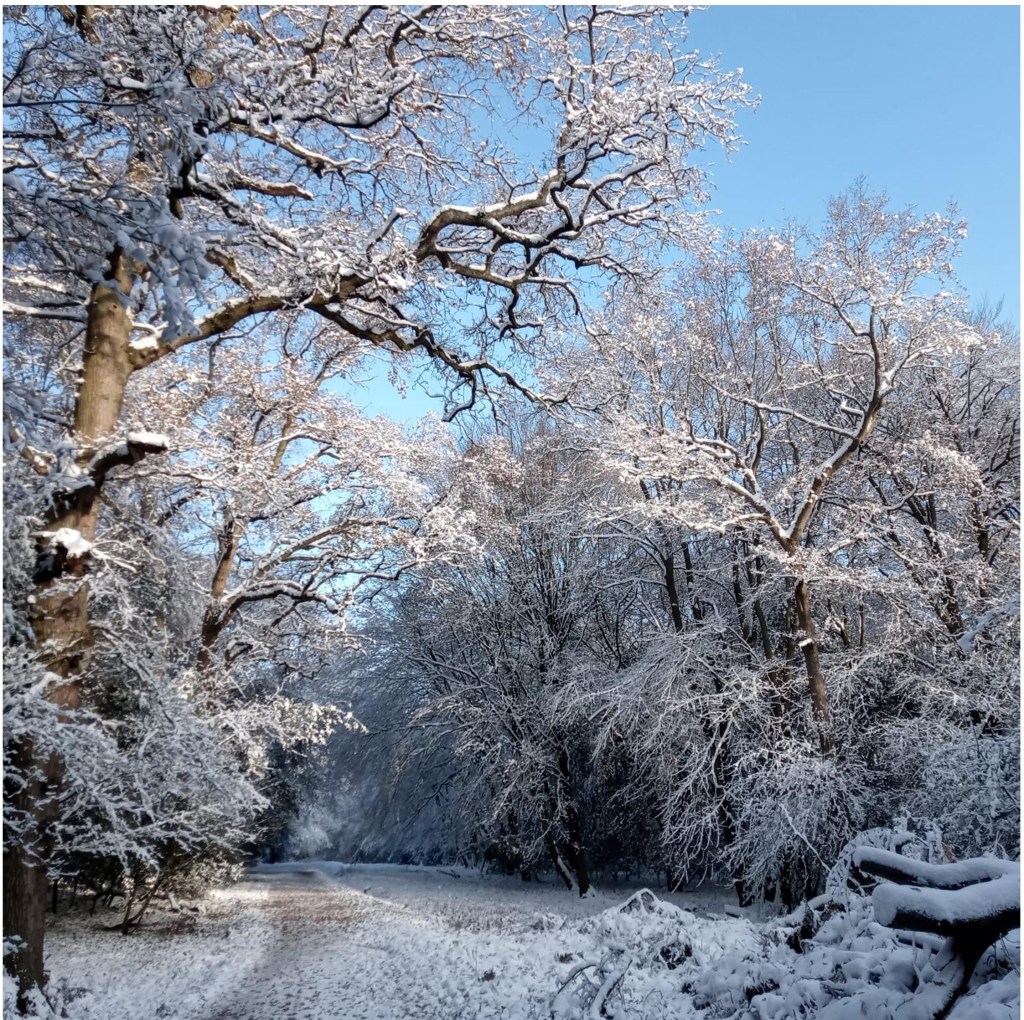
Winter Scene, Epping Forest. Photo by my friend, Shanne Woodhouse.

SOUL-WARMING

This headline, in the Guardian newspaper last week, caught my eye.
It appeared on a day which was markedly cold and at a time of year when the weather in the UK included floods, ice, snow, bitter winds and all those elements which would encourage humans to join the animal kingdom in hibernation. (if only!)

It was also a time when yet more headlines drew our attention to a time when the darkness of humanity seems to be at its deepest. The Middle East is a tinder box of conflict; Ukrainian people are struggling against an evil foe, and bitterness in politics all over the Globe add to our woes. Even the Planet is angry with us. Earthquakes, Tsunamis, Volcanic eruptions, famine would, in earlier Biblical times have been attributed to an angry God (or earlier, gods).

So, the headline, ‘Soul-Warming’, grabbed my attention.
The sub text gave a clue. ‘the mystery man who chops wood to keep his neighbours from freezing.’

The article told a story by an American journalist, David Wallis, about a Woodsman in upstate New York who, in the midst of a harsh winter, went about quietly easing the suffering of others.
The man had once been involved as a director, writer and producer of films and TV programmes but has now given that up to help his struggling neighbours, especially the elderly trying to cope with freezing weather conditions.
He believes firmly that heat in winter is a human right but in a part of America where many are wealthy there are equally those who are poor and really suffering.

So, the woodsman has been quietly doing something about this over the past few years.
His mother was suffering from Cancer and later Covid, so he moved to look after her. He stocked a stand outside her home with bundles of wood which people could buy to fuel their fires. The proceeds were donated to local charities. Over time, the Woodsman noticed that bundles of wood vanished. He was sad that people were stealing. After a conversation with a friend, he thought of putting up a sign outside inviting people who needed wood but couldn’t afford it, to let him know and he would deliver some.

This led to a free firewood programme.
Alongside two local Librarians, who knew about people living in reduced circumstances, he joined forces with them in supplying wood to people in need. He drew upon financial support from those in his former career as things developed.  For him, it all really began to take off when one of the librarians called for his help. There had been a power cut and an old couple had burned their last stick of wood, could he help? Within hours, the Woodsman came to the rescue and went to their home. When he arrived, he found them huddled under a blanket with the fire long gone out. They were freezing cold. He brought wood and lit a fire for them. He continued to keep them supplied until power was restored. The journalist, David Wallis, called  it a Soul-Warming  action.

After that beginning, things just grew. The number of those he helped each winter were, he thought, a sign of increasing economic struggle. He not only supplies wood for them but also acts as one who listens and cares. He says that what he is doing is a ‘cheap form of therapy’ ~ for himself.
“I’m sort of a quiet guy. Giving away wood does draw me out, pushes me out. When you interact with people, and I listen a lot, you do learn their stories. And I’m moved by every one of them.”

He meets real, genuine people, who are not only suffering from poverty but also need people to touch their lives and souls. Some are ill and need compassion and care. Often, they just need someone to talk to. Life hits them hard, trips them up, and they need someone who treats them not as a case to be helped but as a human being who needs a friend. In his own quiet pragmatic and determined way he is being just such a friend.

We often think of a Soul Friend, as a kind of Spiritual Director, and of Saints who show us holiness. Yet the Woodsman is being a Soul Friend to the people he helps. There is both a physical and spiritual friendship and it is often hard to see where one ends and the other begins.
St Aelred of Rievaulx speaking of Martha & Mary drew on the distinction between Mary who sat at Jesus’s feet and listened to him and Martha who rushed around preparing a meal for him. Aelred made the point that both needed each other. Who would listen to Jesus if Mary didn’t sit with him and how would he be fed if Martha didn’t do it.
It seems to me that that the Woodsman in this story did both.

As he said, anyone can do something – right?

In times such as now, I need stories like this because they warm my soul too.

[Mr G] 16th January 2024

I said to the man….

Tarn How Gate, Lake District. Photo by Gill Henwood

Gill Henwood has drawn the poem to my attention and has supplied a rather lovely photo  of Gate to Tarn Hows from the woods above Coniston. Looking towards Fairfield Horseshoe on the Helvellyn range. English Lakes UNESCO World Heritage Site (The Lake District).

Gate to Tarn Hows from the woods above Coniston. Looking towards Fairfield Horseshoe on the Helvellyn range.
English Lakes UNESCO World Heritage Site (The Lake District).

Love Poem

Father God,

Your poem spoke creation into being
telling us of our origins,
our companions,
the light and darkness of our existence,
the moments of our being;
your gift, which is the earth.

You appoint us custodians
of all that you have made
and go on making,
stamping your image on us and
all that we receive;
showing us how good it is.

Help us to hear your poem
and fulfill its meaning
of who and where and what we are,
of all that you have given us to cherish
~ a poem spoken out of pure love.

[GC . 8th January 2024]

Making a difference

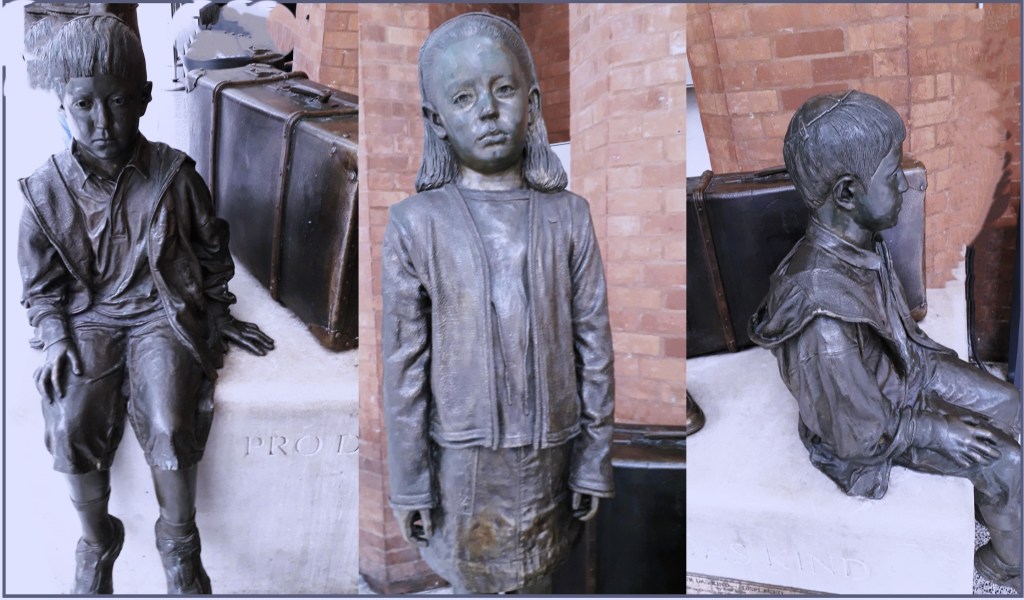
Kindertransport memorial, Concourse at Liverpool Street Station, London. detail of the two children on the plinth. Statue
by Flor Kent. Another statue is on the upper level of the station. Photos taken & arranged by Mr G.

There has been quite a lot in the media this weekend about a new film which opened on New Year’s Day.
It’s called One Life and it’s a kind of biopic about Sir Nicholas Winton. I’m sure that many of you will know who he was (he died in 2015) and what made him so special.

The film tells the story of something that happened when, as a businessman,  he visited Prague in December 1938. There he found families who had fled their homes, as it was becoming clear about the imminent danger to the Jews in Central Europe, posed by the Nazi Government in Germany.
Nicholas Winton, himself a Jew, decided to do something to help them. He determined to rescue as many Jews as possible and bring them safely to Britain. He was especially concerned about the children and together with others, both in what was then Czechoslovakia, and in Britain, he set up what was to be known as the Kinder transport.
He set about chartering special trains and returned to London to raise money and find host families who would accept the children. It was a race against time because, at any moment, the Nazis would close the border. In fact, right at the end of the evacuation, 251 children were trapped in Prague. The train they were on was in Prague Station when Germany declared war and closed the borders. By then, 669 children had been brought to safety but Nicholas never forgot the 251 who didn’t make it. Among those who did escape were the mother and uncle of a friend of mine, Dr Diana Lowry.

All those rescued were cared for by people whom Nicholas and those working with him, arranged. Most were given , security and love as Britain and her Allies took up the fight against Nazi-ism. Sadly, for many of the children rescued, it was a different story for their parents, many of whom were killed in the Concentration camps. Their story would not come to light until 1945 and for the children in Britain it would have been a most painful and sad time of loss.

Nicholas Winton never spoke of what he did, even to his wife, but she found documents on the Kindertransport by chance 50 years later in their attic.  When his papers were discovered he received many honours but for a lot of the children, the story of the man behind their rescue was unknown. That changed when in 1988 he was the subject of the BBC Television programme, That’s Life.  Unknown to Sir Nicholas, the BBC had invited some very special guests. At a point in the programme, Esther Rantzen, asked the audience, “Is there anyone in our audience tonight who owes their life to Nicholas Winton?” Most of the audience stood up. Visibly shocked, Nicholas met the children he had rescued, for the first time.

Their story has become his legacy, increasingly being carried by the children and grandchildren of those rescued.
Now it is being told in a biopic which will have a feelgood trait. It will be something that celebrates the goodness of a man who saw a need and did what he could. He was a kind, modest and humanitarian person and he would probably agree with a friend who said of him, “If there was something that needed doing and nobody was doing it, Nicholas would step in. That was the motto for his life.”  The friend, was The Revd, John Fielsden, one of the children brought to safety.

Today, as we remember what one man and a few of his friends achieved, we might place it against what is happening in many parts of our world, not least the Ukraine and Gaza. There are so many similarities and it is easy to despair, give up and turn our back on those in genuine and deep need, including in our own countries.
But Nicholas Winton has a message for us if we but hear it.

My friend, Dr Diana Lowry, whose mother and uncle were brought to safety by  Nicholas Winton, has reflected on this and on what it might mean for us today. This is what she says….

The Gospels are full of examples of Jesus helping others: healing, supporting and loving them into the Kingdom.  He told us to love our neighbours as ourselves and Mr Winton followed this principle.  He did not parade his altruism but settled down to the job in hand, concentrating his efforts on making a difference.  Nicholas Winton’ssmall, but important, part saved others from the anti-Semitism of Nazi Germany.

Sir Nicholas Winton,
(Photo by Graeme Robertson/Getty Images)