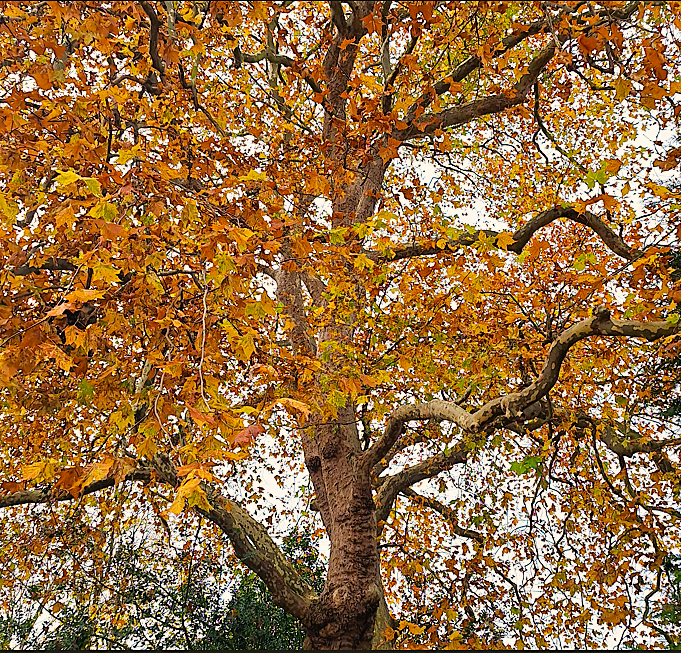
God told the angels, “Go, paint the trees in autumn hues, dress the leaves for a final dance upon the earth, before winter’s trance stills them into hibernation.
Yet, do not forget how skeletal branches hold the buds tender and warm until verdant Spring comes again.”
Today, September 22nd, the Earth’s axis and its orbit line up so that both halves of the planet get an equal amount of sunshine. From today, in the Northern Hemisphere, the nights will be longer than the days. This is the opposite case in the Southern Hemisphere The seasons change. We in the Northern Hemisphere enter officially into the season of Autumn whilst in the South, Spring begins. Both seasons are festivals of Creation.God paints his Earth with colour and beauty ~ Gold and Red in the North and Radiant Green in the South.
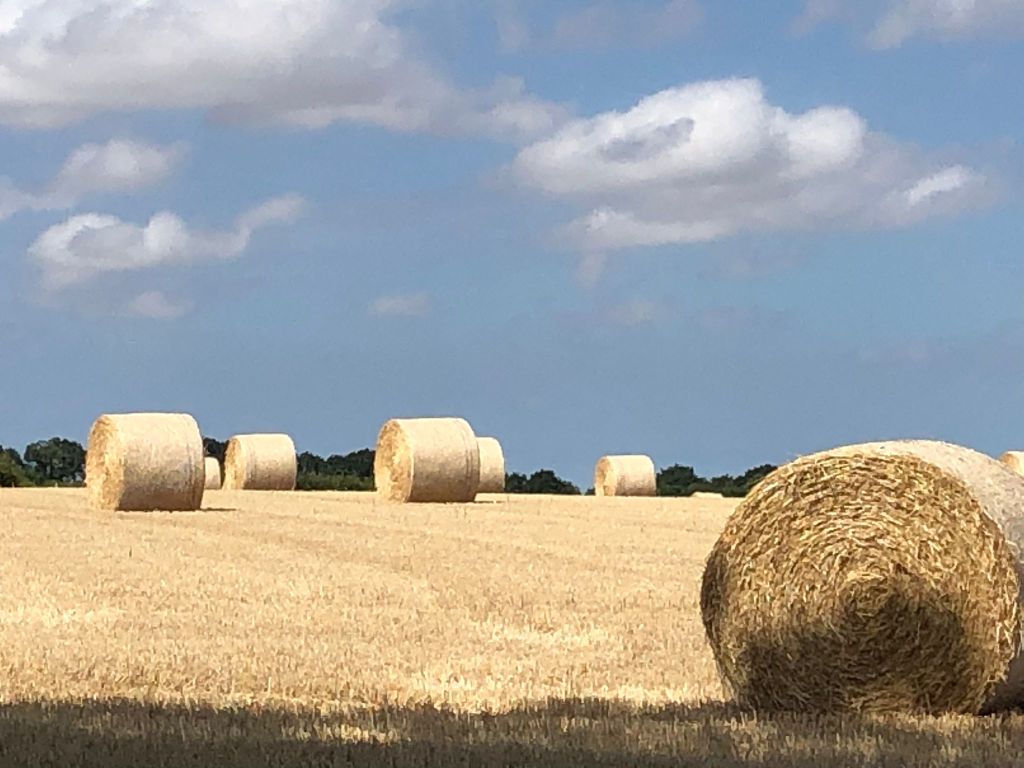
The season of Autumn is often associated with the gathering in of the Harvest, when the fruits of the earth are garnished and the fields are mown. The poet Keats called this the season of mellow fruitfulness. He was writing at a different time when the festivals of the Countryside marked the stages of the year, each with its own characteristics of Nature. Today, it is less marked and food production is taken for granted. It is less about the movement of Creation and more about the packing of supermarket shelves! Quite often, in these days of globalization it is hard to take on board the seasons. Blueberries look about the same and are available for much of the year but their point of origin can be from almost anywhere in the world ~ well. Maybe not the Arctic or its southern equivalent!
Equinox, Autumn, Harvest are ‘Earth Festivals’ through which we can be led to celebrate the gift of Creation and the bountiful goodness of God. At a time when all across the globe humanity is hell-bent on self-destruction and with it ,the destruction of the earth, it is good to remind ourselves that God’s provision for our life on earth is all Gift.
Maybe that’s why I like the poem by John Keble, from his anthology of payer poems, The Christian Year, now sung as a hymn, which centres our praying on God, His Creation, His gifts of nature, and His year-long provision for our needs. Lord, in Thy Name Thy servants plead, is not sung very often these days but it remains my absolutely favourite hymn for this season.
Lord, in Thy Name Thy servants plead, And Thou hast sworn to hear; Thine is the harvest, Thine the seed, The fresh and fading year.
Our hope, when autumn winds blew wild, We trusted, Lord, with Thee: And still, now spring has on us smiled We wait on Thy decree.
The former and the latter rain, The summer sun and air, The green ear and the golden grain, All Thine, are ours by prayer.
Thine too by right and ours by grace, The wondrous growth unseen, The hopes that soothe, the fears that brace, The love that shines serene.
So grant the precious things brought forth By sun and moon below, That Thee in Thy new heav’n and earth We never may forgo.
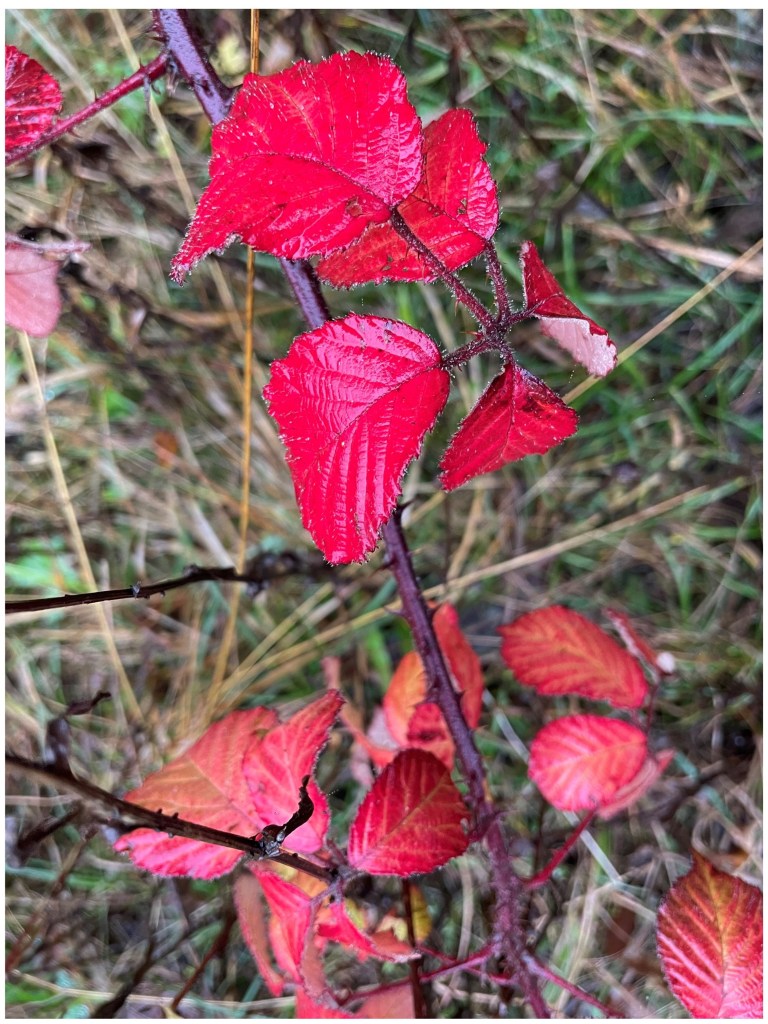
Autumn brambles photographed by my friend, Gill Henwood
In the clouds atop Grizedale Forest ridge, among the russet chestnut bracken and old gold grasses, a bright scarlet bramble runner. Startling in the soft misty mizzle.
Sometimes murky weather shows up astonishing beauty. Sometimes, in sad times, in times of uncertainty, the power of beauty in God’s creation calls out:
They lay where they fell, spine cracked wood, snatched from their roots yet lying on the ground which once fed them. Separated logs, twigs, branches, brushed aside and hidden by the lofty trees which remain swishing their still-leaved branches, a little too haughtily. Mourning or with relief? The fate is not yet theirs. Allowing the wind to jet-stream through the whisper of greens and faded yellows turning gold and red.
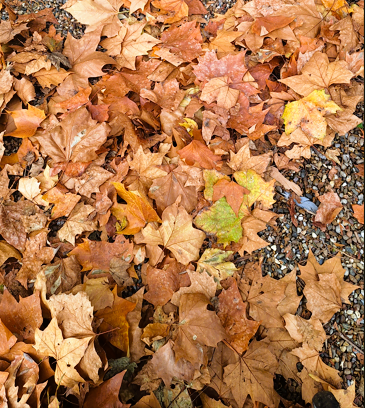
The dying of autumn leaves flutter down like confetti at a wedding where the bride and groom have long since departed. Soon they will be carpets strewn by nature over the dead, hiding what has been lost, grave clothes which will also fade and die.
The Cycle of life and death leaves behind a part of nature that will rot and crumble its way into the earth that bore them, enlivened and sustained them.
Here, in the stillness of the forest, Dying and death, so natural here in the grove, is never Natures final answer. The fallen wood brings hope of life for others. Quiet movement announces that the tenants of the Forest, are seeking shelter from the coming tendrils of frosty winter. They creep into the open veins of broken wood – insects, over-wintering spiders, slugs and beetles already yawning, awaiting hibernation. Late-skipping squirrels pause to rest on upturned benches made by the forest debris, wondering where they buried their winter food. Woodland creatures; birds, rabbits and foxes; bats, worms burrow deeply, nesting bees, beetles and woodlice, millipedes, even snakes, all gather as Nature holds out a welcome to the Winter hotel. So many of nature’s guests book their wintry yet warm rooms, each finding peace and safety and food according to need and station. Rain falls onto wood opening up pools of refreshment in the crevices or intertwine of branches, as fungi steadies itself for growth and roots give up the water so necessary for life.
In Nature nothing is wasted. Nothing is left over, abandoned, discarded. All are part of the creative cycle of life to which we all belong. Only God our Creator is eternally whole and holds everything in love according to His Divine Plan.
Mr G. October 12th 2024
For more information about the importance of dead wood see the presentation under ‘Deadwood’ on the Woodland Trust site.
Hatfield Forest is under the care of the National Trust.


 Mr G's Ponderings