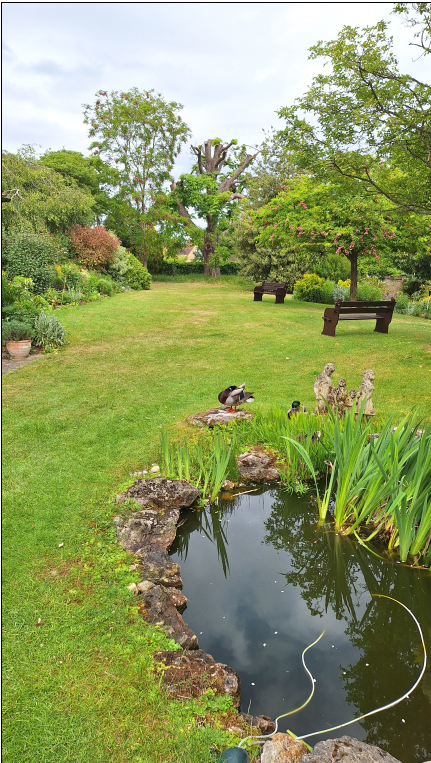
Rosemary’s Quiet Garden at Dunmow, Essex. photo by Mr G.
Quiet Garden
In the Quiet Garden birds sing antiphonally in the monastery of the air.
Ducks murmur gossip across the pond informing prayer[!], as a bee hovers lazily over new mown grass.
Carefully manicured borders teem with joyful colour as plants flower, gratefully supping May-time air fuelling their thirst for new life.
Nearby, a church bell, a single, insistent chime, repeating, marking the moment; calling to prayer. Insects of varying kind respond, their plainchant lifting our souls.
Nature speaks to nature nurturing all Creation within, where God waits to draw us into the Divine heart.
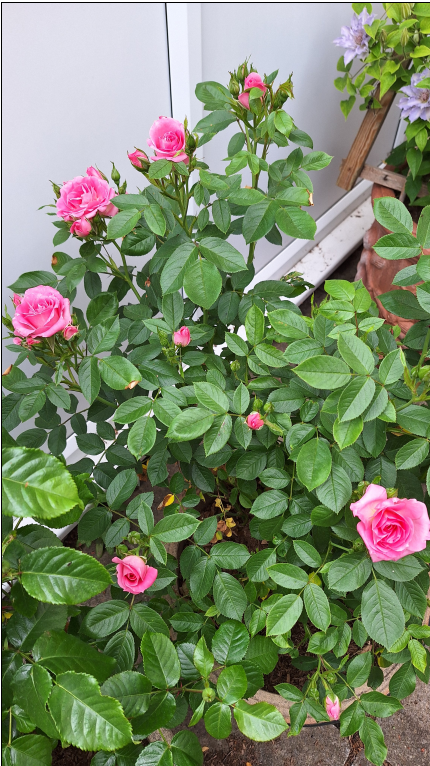
Roses in the Garden at Dunmow. Photo by Mr G.
Mr G. 24th May 2025. [inspired by Rosemary’ Drew’s Garden at Dunmow, Essex, offered as part of the Quiet Garden movement, as a place of spiritual refreshment and re-creation]
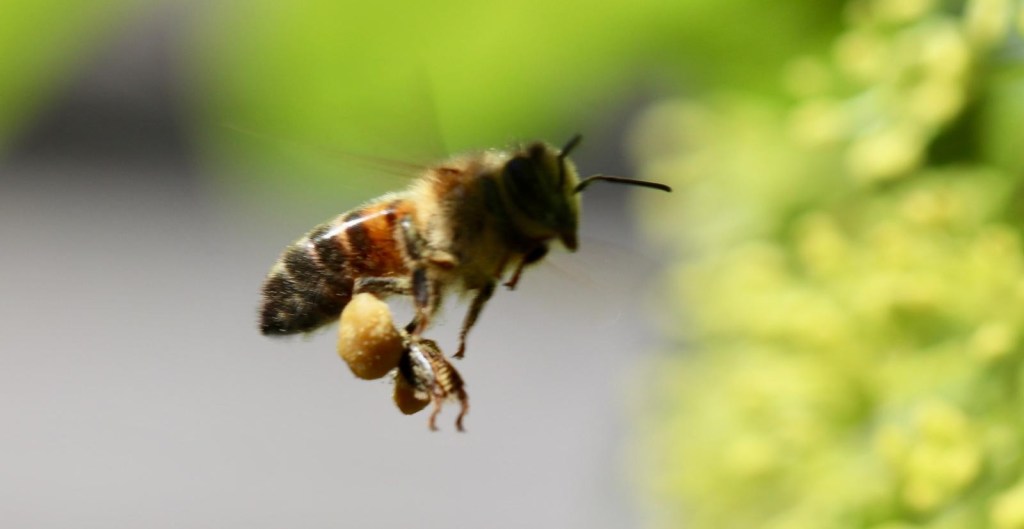
Bee and flower kiss and make nectar. Photo : Lynn Hurry
World Bee Day
According to all known laws of aviation, there is no way that a Bumble Bee should be able to fly. Its wings are too small to get its fat little body off the ground. It’s something to do with its body mass in relation to its wing span. It’s all been tested out, using the science of aerodynamics and a wind tunnel. The Bumble Bee is, however, blissfully ignorant of this scientific fact and, possessing considerable determination, and refusing to accept a low expectation of its capabilities, it not only does fly, but it makes a little honey too.
[Perhaps we can bear that in mind when we are faced with difficulties about things we can or can’t do. Even more important when others tell us what we can’t do. Think of the bee and don’t let others put you down.]
Despite possessing determination, the bee population needs our help at present.
This week, the United Nations led us in the observance of a World Bee Day. It is generally held on May 20th. The date was chosen to honour Anton Jans̆a, a pioneer of modern beekeeping who was born on May 20th, 1734.The main purpose of the Day is to raise awareness about the essential role that bees and other pollinators play in “in maintaining healthy ecosystems and ensuring food security.” (UN). By encouraging the observance of this day, it is hoped that actions might be promoted to protect and enhance bees and other pollinators and their habitats which are threatened increasingly by human activities such as habitat loss, increasing and indiscriminate use of pesticides and the effects of climate change. Pollinators, which include bees and also endangered butterflies, are responsible for a staggering reproduction of over 75% of the world’s food crops BUT 40% of them are currently at risk of extinction.
The United Kingdom Government has issued suggestions how gardeners and other’s involved in the growth of plants, might help to nurture nature and help our pollinators to thrive:
Grow more nectar rich flowers, shrubs, and trees. Using window or balcony boxes are good options if you don’t have a garden;
Let patches of garden and land grow wild;
Cut grass less often;
Do not disturb insect nests and hibernation spots; and
Think carefully about whether to use pesticides.
In addition you could build abee hoteland make a bee watering station. Bees and butterflies, wasps and other pollinators need water and bowls placed around your garden or window box can be a real lifeline.
Don’t forget to commit this action to prayer: In Ecclesiasticus Chapter 11, verse 3, we can read: The bee is small among flying creatures, but what it produces is the best of sweet things.
Here’s a prayer inspired by this:
O God, Creator of the earth, We pray for tiny, buzzing bees who work so hard and true to pollinate and bring life anew. May we protect them from harm and wrong and cherish the gifts they bring along. All creation speaks of Your divine glory. May we honour and protect it, in Your divine name. Amen.
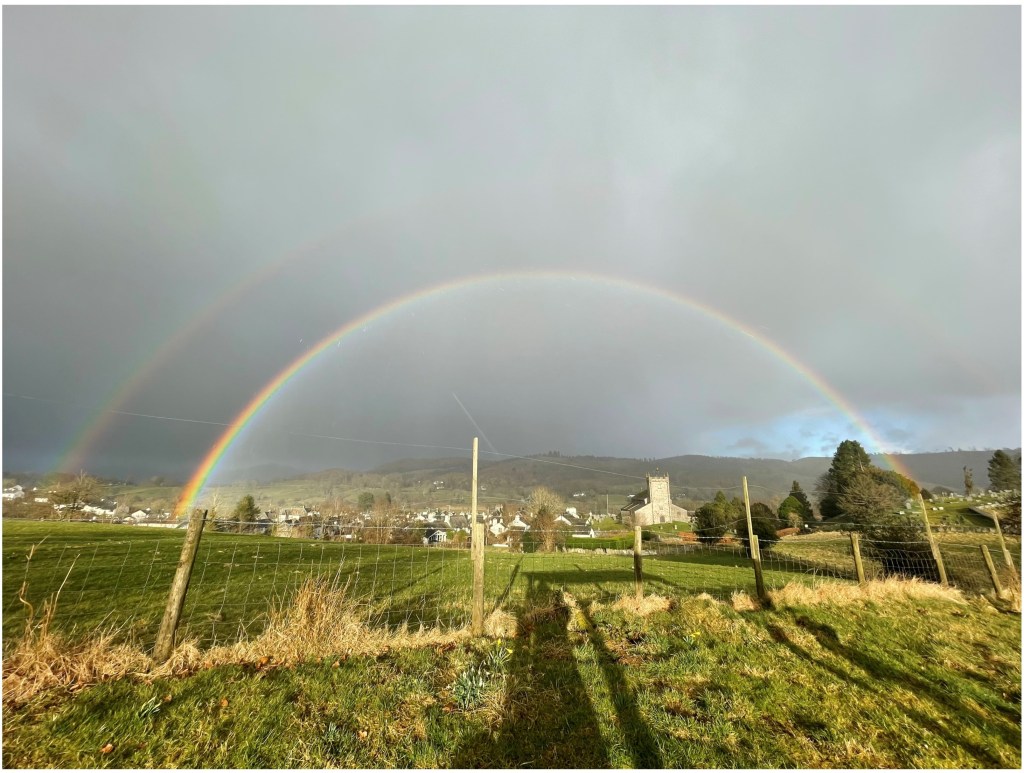
My friend Gill Henwood sent me this photograph today of a double rainbow over Hawkshead in the Lake District. It brought to mind a Lenten Prayer which tells of the mystery of God and the revelation of creative power. The rainbow is an amazing example of that! There is another message which is pertinent to the season of Lent which is a contrasting of the beautiful awakening of Spring and the celebration of new life with the negativity of human life right now. Though we are a key part of creation (though by no means all of it!), there is a wonder and breathtaking beauty all around us of which we could so easily miss. It is only when we recognize and pay homage to God our creator that the hope of the earth springing to vibrant life becomes new joy for us. The darkness of human deeds is eclipsed when we put our trust and faith in God who re-creates us and the whole world, from within.The whole earth cries ‘Glory!’ We are bidden to join in.
The prayer-poem is by Ruth Burgess and Chris Polhill from their collection of Lent and Easter resources, ‘Eggs and Ashes’, published by Wild Goose Publications (Iona)
[Mr G}
Mysterious God, morning, noon and night reveal your creative power; around us the whole earth cries glory. Your presence beats in our blood, children of creation! Yet we go on our way, deaf to the larks above the track, looking down into the mud and not up into the clear sky. And even then, we miss the myriad small signs of hope: the crocus opening its heart to the sun, colours of sea-washed stones, rainbows in the midst. we despair so easily. We say: ‘where is God in all this?’ and we deny it has any meaning. We say: ‘God is dead.’ We cannot find or feel the pulse of your life in us. We put our shaky faith in things we have made, we give cringing power to the institutions. we give up on ourselves, saying ‘We are no good’. we live in ways that says: ‘There is no God.’ And the song of creation turns to dust and ashes on our lips. Forgive us. Dust we are – and to dust we shall return.
But, in Jesus, you chose to share our human frailty, to enter into our mortality in all its mystery, to redeem this handful of dust. We are yours – and to you we shall return. Amen.
~ Ruth Burgess & Chris Polhill ~
Crocus at No.18. Photo: Mr G
{Wild Goose Publications give permission for non-commercial use of material from ‘Eggs & Ashes’, copyright Ruth Burgess & Chris Polhill. The full collection together with many other excellent resources and publications are available from Wild Goose Publications, the publishing arm of the Iona Community. Please visit their website for further details.]
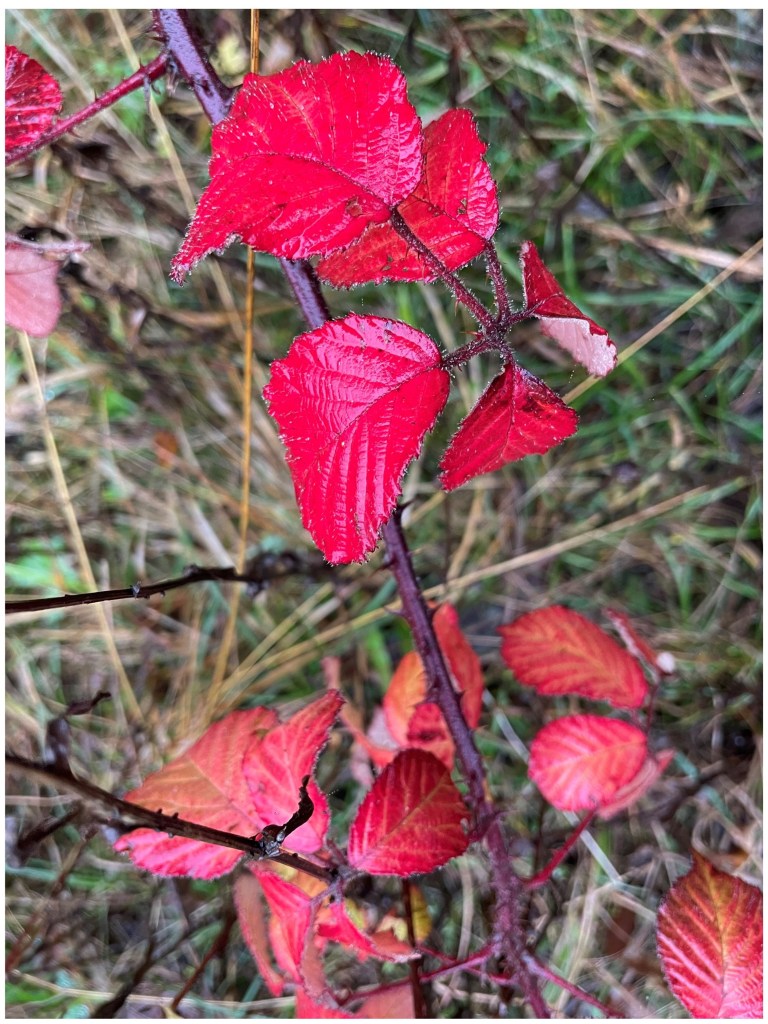
Autumn brambles photographed by my friend, Gill Henwood
In the clouds atop Grizedale Forest ridge, among the russet chestnut bracken and old gold grasses, a bright scarlet bramble runner. Startling in the soft misty mizzle.
Sometimes murky weather shows up astonishing beauty. Sometimes, in sad times, in times of uncertainty, the power of beauty in God’s creation calls out:


 Mr G's Ponderings