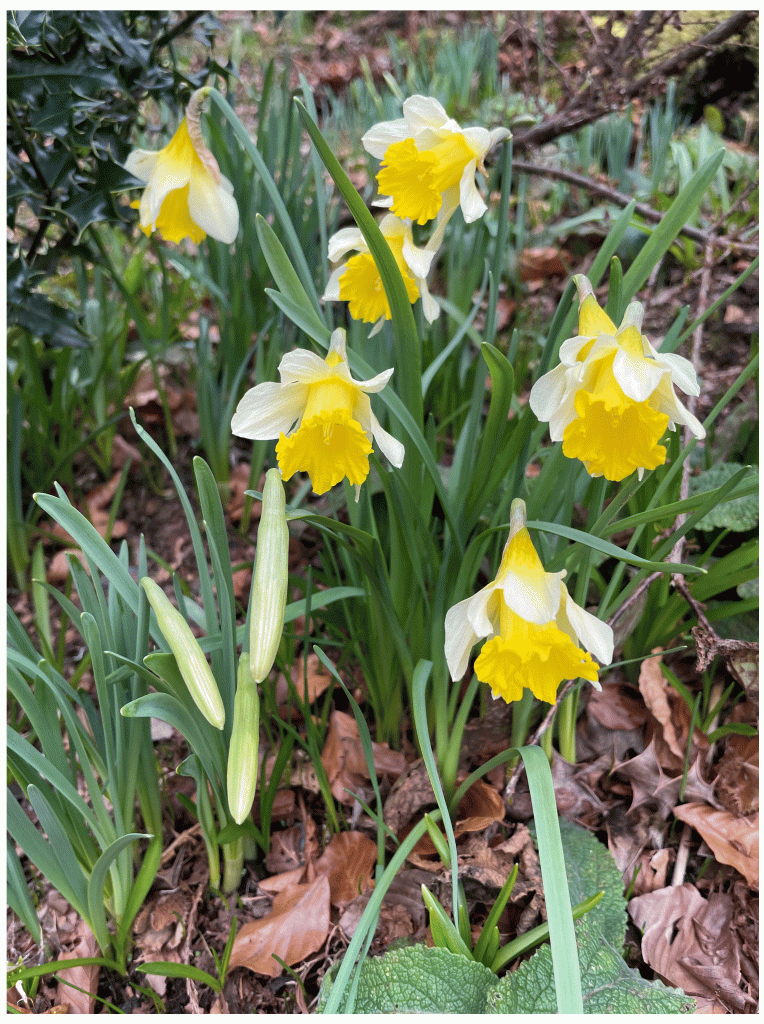
Photographed by Gill Henwood in their natural habit.
Today, March 1st, we celebrate St. David’s day, though perhaps not as boisterously as some Welsh people may do!
I once had a memorable visit to St. Davids in Wales, an highlight of which was a cliff-top walk which led to St. Non’s Well. (St. Non was David’s mother). The well is reputedly where David was baptized and today it is still flowing gently and pilgrims strew flowers on its waters.
David himself was very fond of water – the only liquid he drank, except the wine of the Eucharist.
He and his followers were known by the Latin word Aquati meaning ‘water drinkers’,because of this.
Through living simply with God and teaching of the Love of Jesus, David lay down a pattern of life for his own disciples to follow.
On his deathbed he reminded his monks of this in his final words to them (and therefore, to us):
“Brothers and sisters, be joyful Keep the faith and do the little things that you saw and heard from me.”
The little things which David taught included prayer, being present for the breaking of bread at the Eucharist; reading scripture; speaking only when necessary and helping the poor. He believed also that we should have a deep respect for others; that we should always be lowly, possessing a humility which never expresses itself arrogantly and which steers us away from pride. He also set great store on hospitality – always being ‘at home’ for others and for God – having time for both.
These ‘little’ things are the bedrock on which faith is built.
Neglect of them leads to spiritual deprivation. Attention to them leads to faith expressed joyfully.
It is the little things we do in Christ’s name which matter most.
Mother Teresa of Calcutta expressed much the same thing when she said that she and her sisters didn’t do great things but rather little things with a great love. St. David would have approved of that.
During this season of Lent we might try to improve our understanding of faith and pay more attention to the little things which build it up. The obvious faith-building things of prayer, bible and worship combined with a concern for the poor need our attention as much as anything else. We also should pay more attention to others especially when there is disagreement and difference of opinion between people and groups. Learning to listen to each other with real love is a way towards greater understanding but it also leads to godliness. Allowing our hearts to be open to others is real hospitality, especially because, quite often, whenever we open ourselves to others, God can also slip into our hearts and feel ‘at home’ with us.
This is certainly much more to be desired than trying to impose our opinion and views upon others!
[Mr G. St David’s Day 2026]


 Mr G's Ponderings