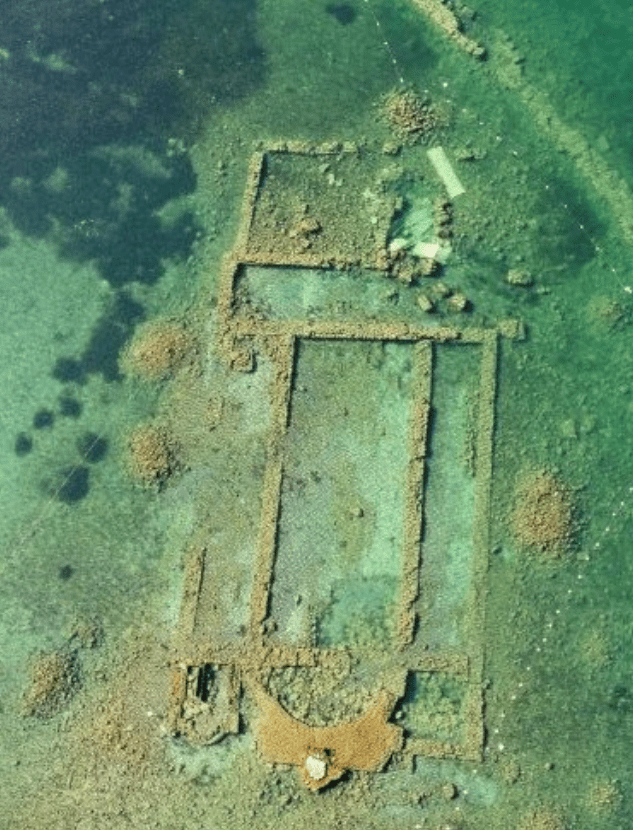
This was where those who gathered for the Council of Nicaea .
The Telling of our Faith.
Over the past weekend, the Christian Church has been celebrating one of the most important anniversaries of our faith, the 1,700 Anniversary of the First Ecumenical Council which was held in Nicaea, (now Iznik) in what is now Turkey. Until 325AD, the Christian Church was established in various centres of mission but, as it grew, it was also dealing with persecution on a large scale from those who did not want the Christian faith, rooted in the life, witness and teaching of Jesus Christ to succeed.
Whilst we have never been free from persecution nor strangers to martyrdom, the period until the 4th century was particularly one where many Christians were put to death or tortured for their faith.
In the 4th Century, under the reign of Emperor Constantine, things changed. His mother, Helen(a) had become a Christian during a time in the Holy Land and her faith influenced her son. Though he did not immediately become a Christian himself, (though he died one), he declared that Christianity would become the official religion of the Roman Empire. Peace and stability came to the Church.
Except, not quite!
When people are up against terrible suffering, persecution and death, there is a unity which concentrates everyone on survival and on being loyal to what they believe. It brings with it its own high level of support for each other. There is no time or freedom to concentrate on anything but holding each other together, caring, loving and sustaining each other in mutual hope and encouragement.
When danger passes, the personal relief can sometimes give people the opportunity to face issues of disagreement which trouble them and can produce division.
That is what happened and the church faced differences in practice and custom caused by not being able to worship and prayer together.
Things like the date when the Church observed Easter and other practices needed to be dealt with but the Church was facing its biggest ever challenge at Nicaea. At this moment in the story of the Church the biggest and most important question of our faith had to be faced: Who is Jesus?
Under its new found peace, Christianity had to face the question about the nature of Jesus. Followers of a theologian called Arius maintained that Jesus was a created being, who whilst a good man and infused with the vision of God, was not God.
More than anything else before or since this view threatened to destroy the church. The fierce debate it created division amongst Christians and everything we stand for was in danger of falling apart.
So concerned was Constantine that the Christian faith he had chosen to bring stability and harmony to his Empire was itself in grave crisis, that he called together Christians leaders at Nicaea.
This was the first Synod or gathering and here the question about who Jesus truly is, was debated.
The Council rejected the teaching of Arius and affirmed the total belief that Jesus is one in substance with his Father; that both are God together with the Trinitarian belief that the Holy Spirit is part of a three-fold God.
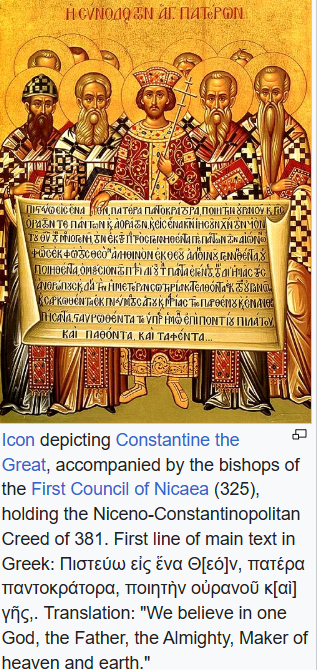
At Nicaea, the Church set out our belief in a ‘Statement’ or ‘Creed which became, at one level the ‘Constitution of the Christian Faith.
Though it was refined and deepened at the Council of Constantinople in 381AD and again at Chalcedon in 451, it has become the ‘foundational statement of the Christian faith’ and it forms an essential part of our expression of personal and corporate belief to be recited by the whole Church, Roman Catholic, Orthodox, Anglian, Methodist, every Sunday.
Essentially it is summarized by the acclamation often made in worship.
This is our faith.
We believe in One God,
Father, Son and Holy Spirit.
Pope Leo gathered last weekend gathered with 27 other Christian leaders to celebrate the 1700th anniversary in Nicaea, modern-day Iznik, Türkiye. Pope Leo thanked Patriarch Bartholomew I, Ecumenical Patriarch of Constantinople, for his “great wisdom and foresight” in calling for Church leaders to celebrate this important anniversary together.
He spoke of the power of the Nicaean Creed to “invite Christians, even today ,to ask ourselves who is Jesus Christ for us personally,“ especially when there is a risk of reducing Jesus Christ, “to a kind of charismatic leader or superman, a misrepresentation that ultimately leads to sadness and confusion.”
The Pope went on to point out that reducing Jesus to an intermediary between God and humanity, and therefore not Divine, ignores the reality of the Incarnation.”“But if God did not become man, how can mortal creatures participate in His immortal life?” asked Pope Leo. “What was at stake at Nicaea, and is at stake today, is our faith in the God who, in Jesus Christ, became like us to make us ‘partakers of the divine nature’.”
He went on to say that, because the Creed was professed by all Christian Churches and Communities, “it is of fundamental importance in the journey that Christians are making towards full communion. Faith in one Lord Jesus Christ, the only Son of God, born of the Father before all ages…consubstantial with the Father (Nicene Creed) is a profound bond uniting all Christians.”
For me, reciting the Creed grounds my faith in Jesus who, in his birth, life, teaching, death and resurrection, speaks to me of the immensity of God’s Love, for me personally; for each other;and of my love for God; and of the power of that love to embrace all. Telling the story of what God, the Holy Trinity has done for us and goes on doing, and speaking it prayerfully at the heart of worship is a tremendous experience of belonging and believing which holds us in a deeply inclusive and profound relationship and so becomes the prayer which speaks from the heart of our living faith in God.
I believe!
[Mr G. 2nd December 2025]
 Mr G's Ponderings