Tag: Piers Northam

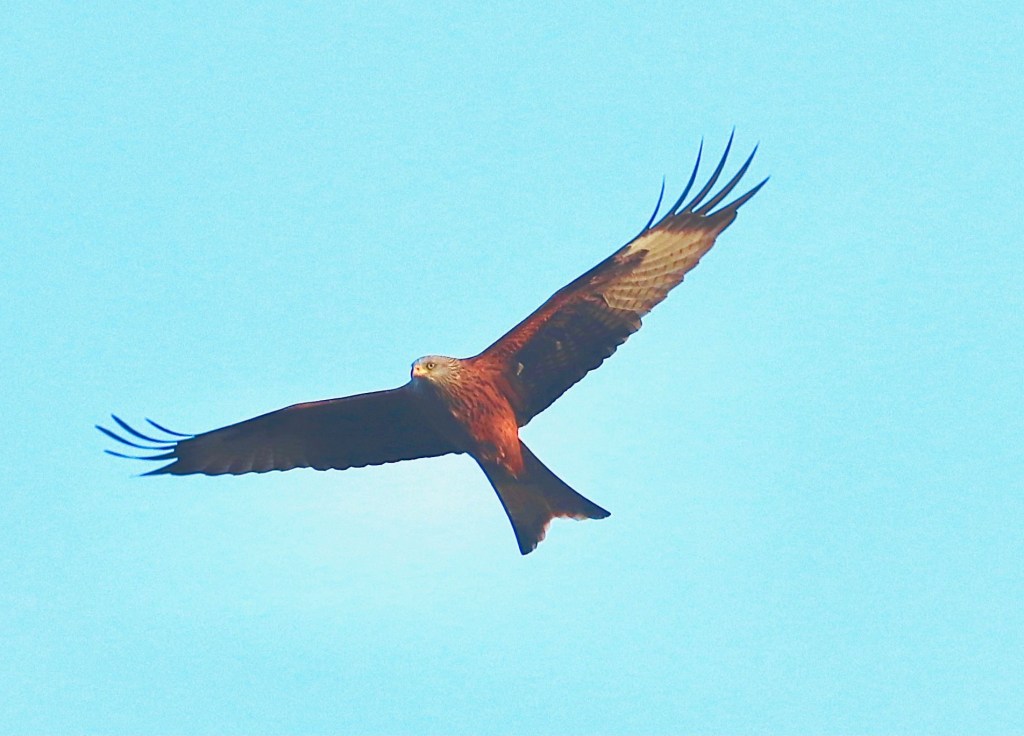
Kite in flight

Phto: Lynn Hurry

This photo of a Kite soaring high in the sky over Norfolk was sent to me by my friend, Lynn Hurry.

It’s majestic  and breathtaking in a seemingly effortless pose as it rides on the wind. Sheer freedom.
Lynn adds this comment:

The Kite resembles our hope and desire to be caught by God’s love and lifted to heights unimaginable.

Quite an exciting January thought when so often our spirits are dampened by the darkness and by the cold.
Here’s a prayer reflection from Piers

God our Creator,
As the kite rides the thermals
soaring high above us,
eyes scanning the vast majesty of creation,
So, by the breath of your Spirit
lift us high to soar heavenward,
our vision wide and expansive
with fresh perspectives.
Help the eyes of our souls
to pierce through the shrouding
mists and troubles of this world
and there see hope and goodness,
and, as the kite stretches wings
to catch the rising warmth,
so help us to stretch our arms wide
with the uplift of your love.
Amen.

[PN]

He has lifted up the lowly

Adapted from an Advent sermon preached by Piers Northam at St Mary-at-Latton.

On this fourth Sunday of Advent we’ve just lit the fourth candle in our Advent Ring – saving the central, white candle for Christmas when we will light it to acknowledge the birth of the Christ-child, the Light of the World. 

Each week through Advent, as we’ve lit the four smaller candles, we’ve remembered figures from Scripture who have pointed to God and to the coming Messiah.  In the first week, we gave thanks for the Patriarchs (the likes of Abraham and Moses) who long ago answered calls from God and drew the people to him.  In the second week it was the Prophets, who point us to God but who also warn us of things to come, who call us to account and have visions and messages for us.  Last week it was the turn of John the Baptist – the voice in the wilderness calling people to prepare the way for the coming Messiah.  And this week it is Mary herself – the God-bearer – who will bring Christ into the world.

As I was thinking about these candles, it struck me that the first two tell us about where we have come from – the heritage that we have in the Patriarchs and the Prophets – whilst the second two, in the persons of John and Mary, point us how we should be. 

John proclaimed the Good News, called people to repent – to turn around so as to come closer to God – and, more than anything else, he pointed to Jesus; led people to Jesus.  Think of this morning’s story of Mary’s visit to her cousin Elizabeth: even before he was born, John was pointing towards Jesus, for didn’t his mother Elizabeth came to understand the importance of the child that Mary was carrying because John leapt in her womb?  And of course we are called to follow John’s example: to share the Good News, to turn ourselves to God and to point people to Jesus…

And then we see Mary, the expectant mother who carried Jesus inside her, filled with the Holy Spirit and speaking prophetically in her great song, the Magnificat.           

But this story is also about two ordinary women called by God to extraordinary things – chosen by God to help play out his plan.  Elizabeth and Zechariah, like Abraham and Sarah so many centuries before, were childless, but in their advancing years, God gives them the surprising gift of a son who is destined for important things.

And then he sends Gabriel to Mary and, in the words of a poem by Denise Levertov,

‘God waited.
She was free to accept or refuse, choice integral to humanness.’  [1]

Mary has the choice – and has sufficient faith and trust in God to say yes.  But for me, the fact that Mary, whilst clearly exceptional, is an ordinary human being – that she’s not some immaculate, semi-divine super-woman – is really important: because it says so much about the way that God involves himself in our lives. God chooses a simple, young girl to be the mother of his Son; to bear God in her womb.  As Mary herself says: ‘The Mighty One has done great things for me, and holy is his name.’ [2]

She affirms that in his Holiness God can do great things for us.  She may be talking of herself, yet what she proclaims can be true for everyone who engages with God.  The Mighty One can do great things for us – and I would want to add that he can do great things, through us…  Mary’s experience is one of working with God so that together they can bring Jesus into the world.  And we see a similar approach in the way that Jesus later entrusts his mission to that motley band of friends and followers: women, tax collectors, fishermen and the like whom he gathers around himself; and how that mission, in turn, is entrusted to us.

Mary’s song begins by telling us how the Mighty Lord has brought blessing on her life, but then she goes on – in the vein of the prophets – to tell us about the nature of God and of his topsy-turvy vision for the world. And this is the radical stuff; the counter-intuitive stuff that normal society wouldn’t recognise as she talks of the values of the Kingdom:
– She speaks of God’s mercy to those who fear him; for those who see their need of God. 
– She speaks of his faithfulness down the generations. 
– She speaks of how he lifts up the lowly, the poor, the dispossessed; the humble and meek – her message is Good News for all those on the margins; those who are excluded and side-lined; but her words are also a warning for those who misuse worldly power; who are proud and rich.  To all those who turn a blind eye to the poverty and struggle that surrounds us.
– She speaks of how he feeds the hungry with good things; and is concerned for those who need protection – this is where his heart is…
– And finally, she speaks of how he keeps his long-held promises; promises made to the people of Israel, but which, in Jesus apply to all humanity…

These powerful, radical words are spoken by a young woman in first century Palestine – not your classic mouthpiece.  I’m guessing that such words, spoken by a young, poor Middle Eastern woman today, wouldn’t get much exposure on the world stage.  Our society seems more set on condemning such people to live in refugee camps or letting them drown in the Channel than listening to what they might have to tell us.  Yet even if they aren’t saying such things in so many words, doesn’t the simple fact that so many live in such fear and misery on our very borders and hidden in our societies shout the message loud and clear?

Mary’s words resonate as an urgent warning:

He has scattered the proud in the thoughts of their hearts.
He has brought down the powerful from their thrones and lifted up the lowly; he has filled the hungry with good things, and sent the rich away empty… [3]

Her words put me in mind of those words from Isaiah which Jesus reads out in the synagogue and which we have taken as our inspiration for the Good News Project here at Latton:

‘The spirit of the Lord God is upon me,
    because the Lord has anointed me;
he has sent me to bring good news to the oppressed,
    to bind up the broken-hearted,
to proclaim liberty to the captives,
    and release to the prisoners’ [4]

This is the promise held in the Christ-child, but also in those who follow him.  These words hold the same challenge to question the values of society and to turn things around.  Powerful stuff…

There’s a danger at Christmas that Mary becomes this sweet, but rather meek, mute, Christmas card figure – all pretty and adoring and dressed in blue; but this morning we see her, filled with the Holy Spirit, proclaiming radical, dangerous, political words… 

This is anything but chocolate-box.  Mary is being both prophet and God-bearer; radical in her speech as she is nurturing in her motherhood. And we need these uncomfortable words to challenge us out of our complacency; to bring us up short and stop us coasting along on autopilot; to help us see beyond our own lives to where God’s concerns lie. 

Mary experienced the mystery of the Incarnation – God becoming human in Jesus – in the most intimate and physical of ways.  But we are each of us called to be God-bearers.  To carry God within ourselves; allowing him to shape our view of the world; giving us the courage to stand up, like Mary, and speak truth to power; to sing her prophetic and radical song and to shine with the light of Christ, so that, with him, we can bring God’s values and vision to bear in the world.

That’s the real challenge – the living gift at the heart of Christmas.

Piers Northam
19 December 2021


[1] Annunciation – Denise Levertov

[2] Luke 1:49

[3] Luke 1:51-52

[4] Isaiah 61:1

Ephphatha – ‘be opened’

Photo: detail ‘Art & Faith Matters’ Lynn Miller

Ephphatha – ‘be opened’

A Meditation by Piers Northam on last Sunday’s readings: Isaiah 35:4-7a James 2: 1-10, 14-17 Mark 7: 24-37

Over the years in my design career I’ve worked on quite a few projects in Kuwait and, along the way, I picked up one or two Arabic phrases – mostly to do with food, numbers or building sites.  One expression – and I can’t remember why I learnt it, though I think we might have been playing games with one of our clients’ children – was the Arabic for ‘Open sesame!’ which is ‘iftah ya simsim!’ [افتح يا سمسم  ]

And of course that word iftah (open) comes from the same root as the word that we hear Jesus say this morning as he opens the ears and loosens the tongue of the man in our story.

Ephphathà!  [’eφφαθά] – be opened!  

I’m drawn to this word because it seems to me to be what God is all about: openness.  Openness to us and to our concerns; arms stretched open on the cross in an embrace for the world and all humanity; a heart never shut to us – always open to welcome us when we turn to him; ready to come running down the road to meet us like the prodigal son’s father.

And it seems to me that it’s what God asks of us too: openness to him, but also openness to each other.

’eφφαθά – be open! 

It’s why I pray the prayer I always pray before my sermons – that our eyes be opened to God’s presence, our ears to his voice and our hearts to his love – because it seems to me that that’s what God is asking of us.  That we are aware of his presence in the world and in each other; that our hearts are open to others just as his is open to us. 

’eφφαθά – open your hearts! 

These last weeks the crisis in Afghanistan has once again highlighted the agony of those who are forced from their countries and livelihoods, their families and familiar surroundings to flee; to undertake dangerous journeys and to leave everything that they’ve ever known behind – to become refugees because the alternative is simply too dangerous or too awful to contemplate.  As the world seems to become ever more troubled – through war, tyranny, oppression, economic collapse and natural disasters brought on by climate change – the  numbers of refugees leaving their homes and seeking asylum and the chance of life elsewhere are on the rise – and this poses a real challenge.  How do we deal with these people?  Where do we put them?  How might they impact on our own lives?  Our instinct is to think of people of different nationalities as ‘other’. 

And yet, as we read in James’s letter, we must beware showing partiality: treating people differently and favouring some whilst disadvantaging others. 

We find it a lot easier to deal with people who are clean and fed than people who are grubby, hungry and needy.  But God is shockingly blind to all of that.  He doesn’t hear their accent or notice the colour of their skin.  He simply sees a beloved child.

Our reading from James last week told us to ‘be doers of the Word, not merely hearers’.  And here he is again, underlining the importance of actions alongside our faith.

Jane Williams sums it up rather well:

‘ “Faith changes the way you live”, James says, in that obnoxiously black and white way of his.  You might feel tempted at this point to turn to that nice St Paul, who really understands the importance of faith, and doesn’t go droning on about having to do things as well.  Dream on.  Try reading Romans 6.  There is no escaping the New Testament conviction that faith is a commitment to a changed way of life because it is a commitment to trying to see the world with the eyes of God.’ 

We have to open our eyes to the world – and to those refugees around us.

’eφφαθά – open your eyes! 

The first half of our Gospel story is interesting though – Jesus is in the region of Tyre when the Syrophoenician woman asks for his help for her daughter.  Remember, she’s a Gentile, not a Jew.   Jesus’ words sound rather like some of the rhetoric that we hear at the moment much closer to home:

‘Let the children be fed first, for it is not fair to take the children’s food and throw it to the dogs.’ 

In other words, he’s suggesting that the Jews should come first and merit his attention and his help before anyone else.  But the woman challenges this, certain that God’s provision is for everyone and that there’s enough to go round. 

I can’t work out whether she really is opening Jesus’ eyes to the breadth of his Father’s love, or whether he draws her on to say this as a test of her faith and so that others might hear it.  But whichever way, she’s unafraid to open her mouth and challenge the view that some are more important and deserving than others in God’s eyes.

And it seems to me that it’s incumbent on us too – that we open our mouths to challenge these attitudes.

’eφφαθά – open your mouths! 

I’ve felt very disturbed by stories I have heard in the news recently – first about RNLI lifeboatmen being abused and criticised and possibly facing the threat of criminal proceedings because they continue to risk their own lives attempting to rescue illegal immigrants in trouble at sea.  And then by the actions of the Government in the last couple of months as they have put the Nationality and Borders Bill through parliament criminalizing people who attempt to seek asylum here and those who help them.  There are plans within the bill to imprison people for 4 years if they arrive illegally by sea in small boats for example – this despite the fact that the cost of housing a prisoner comes it at around £42,000 per year as against around £9,000 per year for putting someone through the asylum system.  People do not get into those boats lightly: it’s a last and desperate resort and our country’s response to this seems heartless in the extreme.  I say I’m disturbed.  I’m not.  I’m appalled and disgusted – and deeply, deeply ashamed that this sort of thing is going on in my name. 

And as Christians we should all be opening our mouths to cry out loudly against this behaviour which speaks of shut minds, shut hearts and the very partiality that James warns against.

’eφφαθά – open your mouths and cry out! 

There is no sense in the Government’s approach – it seems to me plain wicked if I’m honest – evidence shows that where we work to help people and do our best to integrate them into society, they fast begin to build new lives and to contribute to that society, socially, culturally and economically.  But it requires some initial generosity on our part.

In thinking about all of this, I came across a story of another Afghan, Sabir Zazai, who arrived in this country seeking asylum in 1999 in the wake of the troubles in Afghanistan then.  The joke was that he was ‘sent to Coventry’ but he speaks of the warm of welcome that he received there. 

‘I left home in search of peace and reconciliation and I found myself in a city associated with peace and reconciliation. […]  Coventry inspired me and especially its cathedral; both old and new buildings have been a real source of hope for me and many others seeking protection in the city.

One sunny day I sat in the cathedral ruins […]  My eyes were caught by the word ‘Forgive’ engraved behind the cross that was burnt during the [World War II air-]raids.  On reflection I thought forgiving is a gift from God, but only if we use it often to be more forgiving to one another and more welcoming and understanding of others’ needs.  This way, we can build a more welcoming and hospitable society in which people fleeing persecution and human rights violations can rebuild their lives in safety and dignity. 

Wise words.  Sabir – the 23-year-old refugee who came to the UK over 20 years ago in the back of a lorry with not a word of English – is now based in Glasgow where he serves those seeking asylum and refuge as CEO of the Scottish Refugee Council, and as chair of the City of Sanctuary movement. In Coventry, a city rebuilt after the Second World War on peace, reconciliation and sanctuary, he worked tirelessly to make life better for all those in similar situations to himself and became CEO of the Coventry Refugee and Migrant Centre. His drive, energy, compassion and commitment have been extraordinary and were marked by his award of the Civic Prize for his efforts in bringing peace and reconciliation to the City of Coventry. 

The refugee who brought peace and reconciliation…

What would happen to him today?

‘Then, looking up to heaven, Jesus sighed and said ’eφφαθά’
– open your eyes to what is happening…
– open your hearts to the heart-wrenching stories
– open your hands to do what you can
– and open your mouths to speak words of welcome
   but to cry out against injustice! 

’eφφαθά! – be opened!

Amen.

Piers Northam
5 September 2021

Sabir Zazai with his father, after receiving an Honorary Doctorate from the University of Glasgow.

The power of place

A group of us at my church recently shared in a Quiet Day led by our Archdeacon Vanessa.

Her addresses were about different aspects of Prayer – Prayer and silence; Prayer and Place; Prayer and Time; Prayer and the Senses.

Each one has its own way of inspiring and creating reflection. We were encouraged to engage with the gift of silence to ourselves, each other, and especially to God. We were also encouraged to receive the Gift of prayer to us from God and seek the Holy Spirit at work within us. In a beautiful phrase we were to sense ‘God speaking to God from within.’

Looking at Prayer and Place, Vanessa prompted us to think of the places where God has been easily found. She herself, spoke to us of Lastingham in the Cleveland Hills in North Yorkshire. Here the Saxon monk Cedd, pupil of St. Aidan of Lindisfarne, set up a monastery. This same Cedd brought the Gospel to Essex, to Bradwell which was consecrated by his presence and his prayer.

I haven’t been to Lastingham for many years but Vanessa opened up the memory and the experience within me. Below is the poem that I felt encouraged to write.

With it is a poem by Piers who was at the Quiet Day. Inspired, this time by the Abbey of Bec Hellouin in Normandy. Bec in the past supplied us with three Archbishops of Canterbury, Lanfranc, Anselm and Theobald. Bec still has a special relationship with Canterbury Cathedral. Today, only the tower remains of the Norman Abbey but a community of monks live in buildings near the tower. A sister community of nuns live in a convent a short distance away and on Sundays and Feast Days, the monks and nuns worship together. The serene and beautiful worship in their chapel inspired the first of the poems.

Both locations express the essence of what Vanessa spoke of to us. Thin places where heaven touches earth and God feels very near.

l’Abbaye du Bec

In my mind’s eye, I return:
cream quietness…
light bathing ordered stone,
the scent of sung prayer hanging low.

Immanence re-discovered.

Piers Northam
10 July 2021


Lastingham

I come to this place,
deep in the hills,
where silence and conversation
meld into stillness.

God is here,
his sanctuary a stone rainbow
over the seeker after meaning.

What am I looking for in this place,
where the one who drew others to their knees,
poured out his soul?

I sense and seek the company
of the one who prayed here first,
in the shadows of sweeping arches,
pillars and faint light.

Seemingly impermeable rock  
– steeped in suffering and joy;
pain and perfection; faltering hope
and confident determination – 
enfolds me as I kneel with Cedd:

exhaling uncertainty…
…inhaling God’s blessing and his love.

Geoffrey Connor
10 July 2021

Photos:
The Apse Chapel Pennant Melangell Church Mr.G
Abbey Church Bec Hellouin Piers Northam
Crypt, Lastingham Church. Parish of Lastingham