Tag: St Antony of Egypt

A voice from the Desert

Lakeland hills appearing like a desert. photo by Gill Henwood.

A Voice from the Desert ~ St. Antony of Egypt. (f.d. 17th January)

There are significant dates in our lives, which can lead to a change of direction and a new way of living.This was very true of St. Antony of Egypt, also known as ‘the great’.
Antony was born in Egypt in 250AD, the son of a prosperous farmer. His family were Christian and he grew up hearing the Gospel read each Sunday in his local church. His parents died and Antony gained a rich inheritance which he shared with his sister.

The significant day in his life was when he was 20. He went to church one Sunday morning and he heard the Gospel including the words: Go, sell all you have, and give to the poor; and come, follow me.
Antony heard God calling to him through those words and he left the church, made provision for his sister and then sold all his goods and gave the money to the poor. He then left home and, after a time of spiritual preparation, he eventually set up a simple hut in the Desert of Egypt where, for the rest of his long life, he lived in solitude and prayer. He became one of the founders of  the monastic life.

We might think that Antony was rather extreme in his interpretation of the Gospel. After all, how many times have we heard those words and not acted upon them in that way. Yet Antony knew that he had heard God’s voice. For him this was a clear sign of his vocation and he had the courage to respond. He lived a life dedicated to prayer, fasting, daily recitation of the psalms and to combating those forces in the world that are against God, including personal temptations and the battle for true holiness.
Others were attracted to his way of life and communities began to be formed of people who sought a pure prayerful life. Antony became a spiritual guide to many, including streams of Christians living in towns and cities and who came to him for guidance. Some of that guidance was collected as ‘words’  which remain available to us today in collections of sayings’ of the Desert Fathers and Mothers.

Antony died in 356, over 100 years old. By the time he died he had learned the most important thing that every Christian must learn—he learned how to love God and to respond through this love to the immense and unconditional love that God had for him, as God has for all of us.

Few of us today are likely to be called to live in a deserted place, though those who have found time to do so, even for a short while, know just how valuable and precious that time is for communing with God without distraction. Some, of course, are called, like Antony, to live as members of Religious Communities as monks and nuns.
But all of us are called to dedicate our lives to God and to serve him in whatever way is right for us. We can’t get away with saying something like, “it’s all right for Antony and the other desert dwellers.. They had a spiritual greatness that few of us can even get near.”
Actually they wouldn’t claim to be specially great. But they did recognize the greatness of God and they wanted to respond to this in some way.
Saints are important for us simply because they are ordinary Christians like us but who knew the Gospel to be extraordinary. It changes lives. If it doesn’t then we wouldn’t be Christians at all. Because it changed Antony’s life, the Church became more Godly and the world more lovely. That can be just as true for us today.
Listen and let God tell you how.
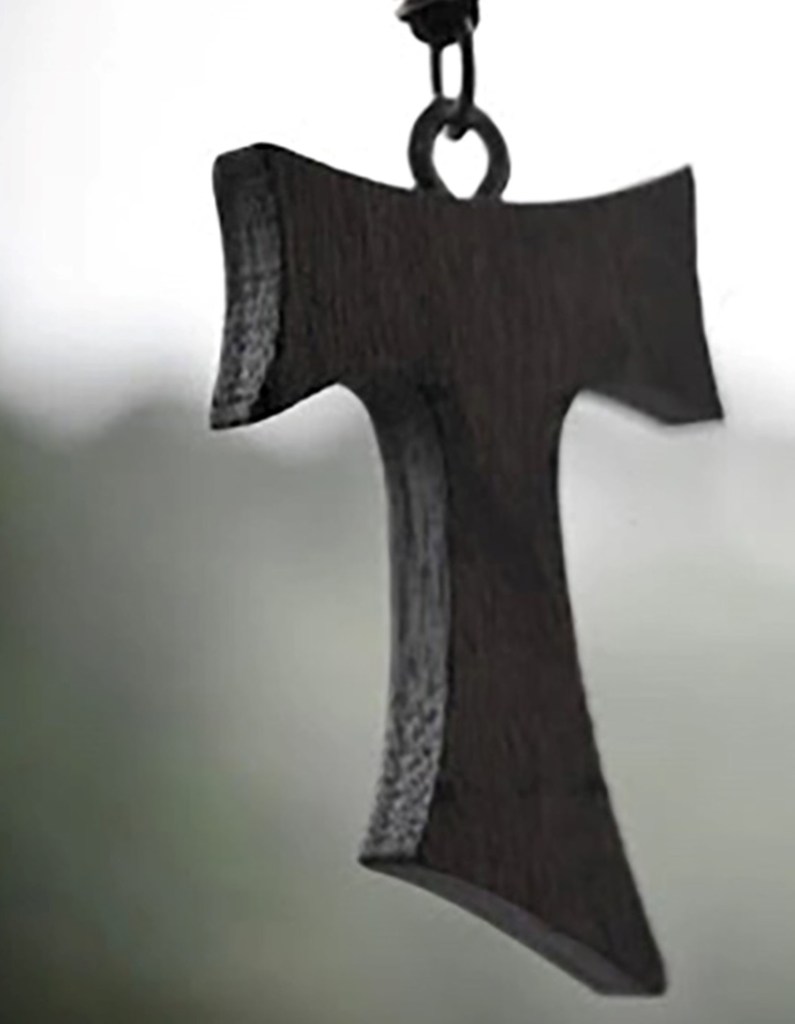
Tau Cross. Symbol of St. Antony of Egypt.

[Mr. G. January 2024]

It is enough

Allowing God to See Us
A thought on St Antony’s Day. (January 17th)

I was having a conversation with somebody recently and we got onto relationships and, in particular, our relationship with God. This led us to thinking about what form our prayer with God takes and how, so often, it’s about just talking and asking, interceding for others and generally verbal. Many of us aren’t all that good about silent praying which takes the form of meditation or contemplation.
In our conversation, we thought that part of the reason why we might shy away from non-verbal prayer is because it involves us in listening rather than talking and we don’t always want to hear what God is saying to us.

In what is known as the Desert Tradition of Prayer there is a lot of wisdom about how we should approach God and about how we develop our relationship with Him.
This wisdom comes to us through stories about the holy men and women who, when Christianity began to be ‘respectable’, took themselves off into the desert to be alone with God. This ‘aloneness wasn’t easy – they weren’t, as it were, getting away from it all for a nice rest or quiet time!
Prayer for them involved struggle – first with self and then with what they knew to be demons or the mischief of the devil. Only through this struggle did they come to recognize the pureness of God’s voice, or presence.

It’s rather like the struggle Elijah had on the mountain after he fled away from King Ahab after his wife Jezebel stirred up trouble for him – (see1 Kings 19). Elijah went into the wilderness, felt sorry for himself, was touched by an angel and then went off to hide in the mountains.
Here God looked for him but there was a cacophony of noise – whirlwind, earthquake fire after which the stillness, the silence through which Elijah heard the voice of God speaking to him.
This was, in a similar way, the experience of the Desert Fathers and Mothers and it is their teaching that can help us to go beyond words in our praying.

An experience I had during a stay at a convent in Oxford is a kind of illustration of this.
I was in my room reading some of the sayings of the Desert Fathers and I read of three men who used to visit St. Antony of Egypt.
They came every year, and two of them used to bombard Antony with spiritual questions. The other, younger man, simply sat in silence.
This went on for a number of years until, eventually, Antony said to the younger man, “How is it that you come with these two every year and they ask me lots of questions but you never ask anything?”
The young man replied, simply, “It is enough for me to see you Father.”

Soon after reading this, I went to the chapel to join the nuns for Compline, the Night prayer of the Church. I was a little early and the place was in complete darkness – I could just make out the dark shape of several nuns kneeling in prayer.
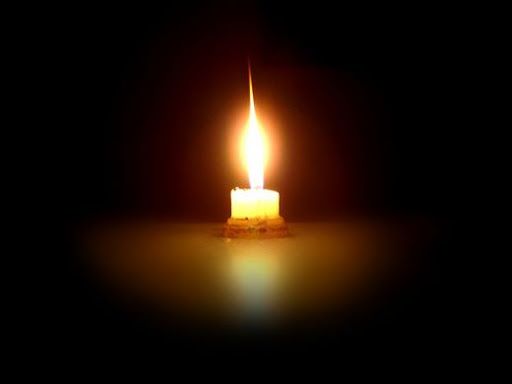
There was just one light – almost a pinprick – the lamp burning in front of the Blessed Sacrament. And as I sat looking at the light the thought kept recurring: “It is enough for me to see you, Father.”

I would like this to be my focus for the year ahead, and maybe yours too – that we must grow in the kind of prayer which is about looking at God and being still, just letting his gaze of love fall on us.
There are too many strident and demonic voices at looses in our world today. Too much talking and acting as if people not God, nor the rest of His beautiful creation matter.

If we listen to God and to each other with generosity and kindness we will slowly change our world and each other. We should place ourselves often in God’s presence so that he can really see us and we Him. .He has things to show us and, as the young man who visited St Antony recognized, ‘it is enough’. .

[Mr G]

Let us enter into the cell which is our hearts,
where God dwells within.
Be still and know that He is God
Enter into the chamber of your heart.
There is the kingdom of God,
in the utter stillness within.
From that depth comes human joy;
human love; human activity.
Relax into the assurance of His love, His care;

He has provided for every moment.
Be still and know that He is God.

Simon Tugwell. O.P.

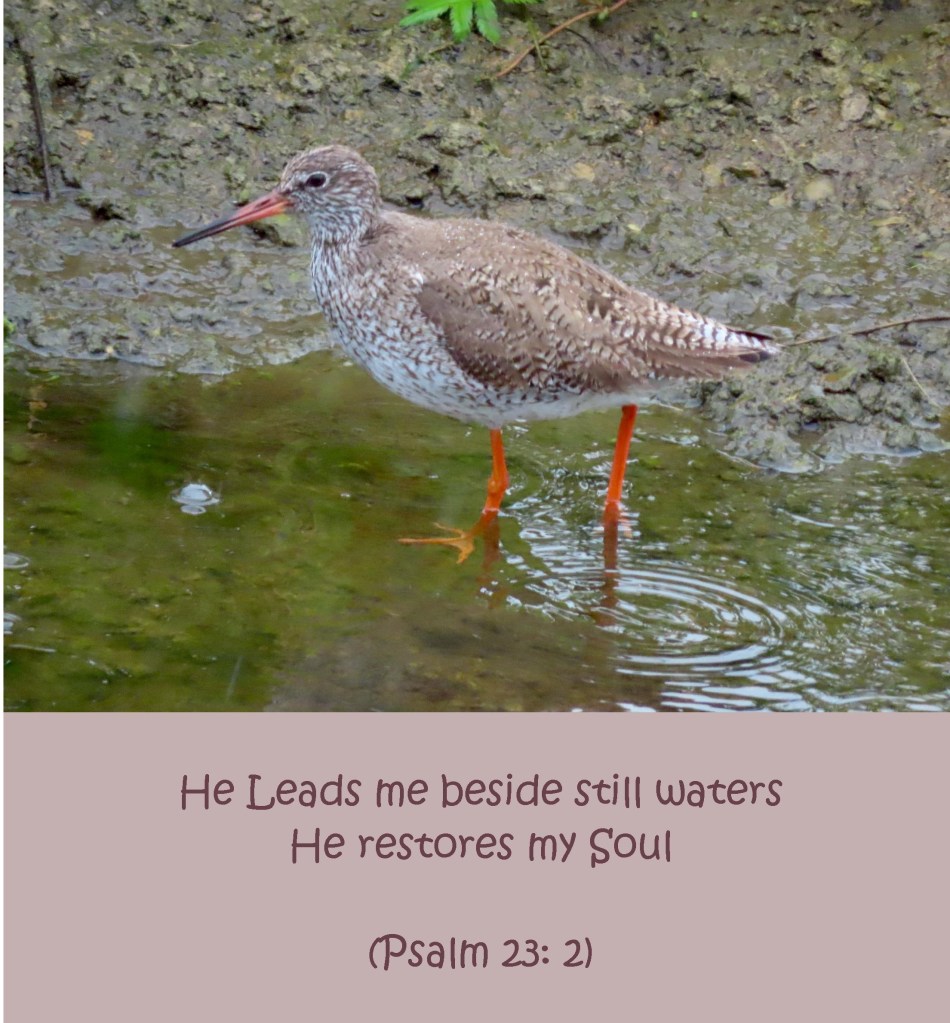
Follow the Redshank

My friend Joyce Smith has sent another Photo prayer for us to contemplate.
It is of a Redshank pausing at Welney.

There’s a story from the Desert Spiritual tradition about St. Antony

St. Antony was one day resting with his disciples when a hunter came upon them.
He berated them for their indolence.
Antony asked him to draw his bow and shoot an arrow. Puzzled, he did so.
Antony asked him to do it again. He did so but when Antony asked him a third time,
the man protested that if he carried on his bow would break with the strain.

Just so, said Antony, as we would if we did not from time to time rest and relax.

When I received Joyce’s latest tweet and photograph, this saying came to mind.

I thought too of something Cardinal Basil Hume once said, initially to novices he was teaching but it is applicable to all.
“When you are busy in the market place, always have a nostalgia for the desert.”

In the midst of busy lives, in order to keep them grounded as well as in lives often filled with distraction, yearn to spent time with God.
We need to pay attention to both the active and passive parts of us and hold them in balance. Jesus could not have done what he did do if he had not constantly gone off to be with his Father.

It’s not an easy thing for us to do which is why Cardinal Hume talked of having nostalgia for quiet.
That is also why, having the Redshank moment is important.
Seize the moment when you can be still (As St Cuthbert did in my blog about Cuddy’s Isle).

The other point, of course is, that you should be careful of using busyness to avoid being alone with God!
He knows how to get round that one, so you can’t fool Him.

As the Hunter was to learn with St Antony, without these moments you simply break.

Think about  how you can, like the Redshank, just pause and allow the water of God’s grace refresh you, flowing around and into you. That is what the Redshank shows us when she stops and allows the waters to flow around her.

Standing in this grace, God will restore your soul.

Thank you Joyce for sharing your photo and its message.

{Mr. G & Joyce Smith}