Tag: St John's Gospel

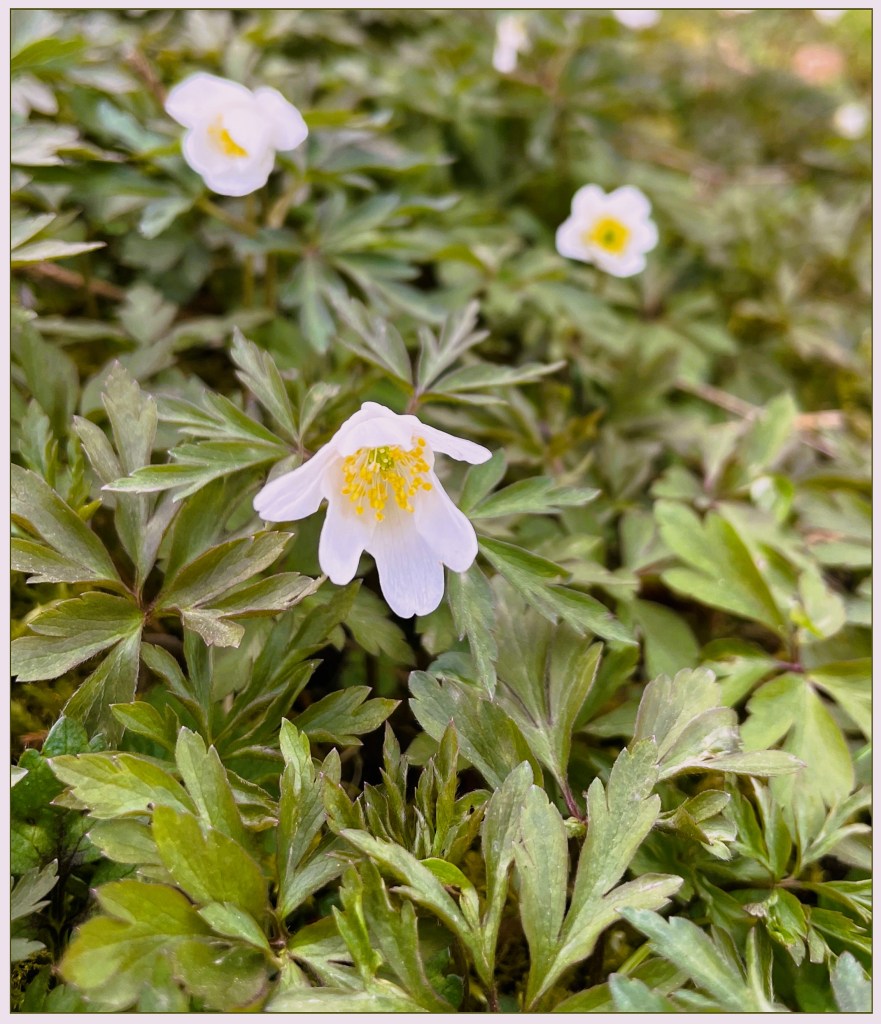
The Windflower speaks to us of change.

Windflowers photographed in the Lake District by Gill Henwood.
Anemone or the windflower. Its name comes from the Greek word ánemos, meaning “wind.”


The Wood Anemone (a.k.a. Windflower),Opens to herald the Spring equinox, the turning of the season from dark to light. This is the time of renewed hope for the world through the Easter journey of Jesus. This journey began when the Angel Gabriel visited God’s chosen Christ-bearer, Mary of Nazareth, in the event the Christian church celebrated earlier this week – The annunciation.
It was a momentous encounter. A new beginning. One which Jesus brought to us from God. It was a journey filled with joy, challenge and a ‘Word’ crafted in the heart of heaven and delivered to us as the Good News (Gospel). This ‘Word’ of God’s supreme and total Love for us and all who inhabit the earth, was not only spoken. It was ‘lived’ by Jesus at the very centre of his being because it is what defines him. He knew the power of darkness and unlove and he entered into the darkness and struggles of human life. He also knew what overcomes it. Sheer love of God which St John reminds us, at the beginning of his Gospel account, is the Light shining in darkness and the darkness did not overcome it” (John 1: v5). Nor can it do so.

Even when the darkness tried to destroy Jesus on the Cross, on Good Friday, it failed because in the Crucifixion of Jesus we see and know and inherit the immense and unquenchable Love of God.   That love will prevail and has continued to do so over two thousand centuries. We have to accept and receive it and be changed by it.
In these globally dark days where some of our number are trying to have absolute power over us and many lives are being destroyed by war or through pain inflicted on them, we need to remind ourselves that it is God who will prevail. He arms us, who are his friends on earth, with simple armour – His Love.  The more we use it, the more hatred and misuse of power will be challenged and will not prevail.

The Windflower tells us the time is coming, the wind of the Spirit is rustling away the winter and soon the Light of the World will shine. The little flower has endured the darkness of Winter but it has prevailed. May that be a message to all of us whatever we believe. We conquer evil with love. There is no other way.
 
 
[Mr G with inspiration and contribution from Gill Henwood]


A Fragment on a Fragment

Today, (October 25th) the Church of England keeps Bible Sunday.
For Christians, hopefully, every day is Bible Day! Yet it’s good to be reminded of the importance of reading God’s story in order to be shaped by it and then to tell it.
The word ‘Gospel’ means Good News. In Greek the word for Gospel is ‘Euangelion’ which can be seen as the root of ‘evangelism.’ The Gospel writers are known, collectively, as the 4 Evangelists.
Quite simply evangelists ‘tell’ the Good News of Jesus Christ, in words but also in deeds and in seeking to live lives shaped by Jesus and therefore to grow in His likeness. St. Paul’s favourite phrase is ‘en Christo’ – ‘in Christ’. I understand he uses it 64 times. The Word of God which is both Jesus and the words of and about him are what move people to grow in prayer (relationship with God) and holiness (growing in God’s likeness).

Every Christian is called to be an evangelist – one who, in the words of 1 Peter 2:9, proclaims the mighty acts of him (God) who called you out of darkness into his marvellous light.

We discover these mighty acts of God in the Bible which is why Bible Sunday is such an important day. We become part of God’s mighty acts when the Bible infuses our lives with God’s love. It is the story of that love.

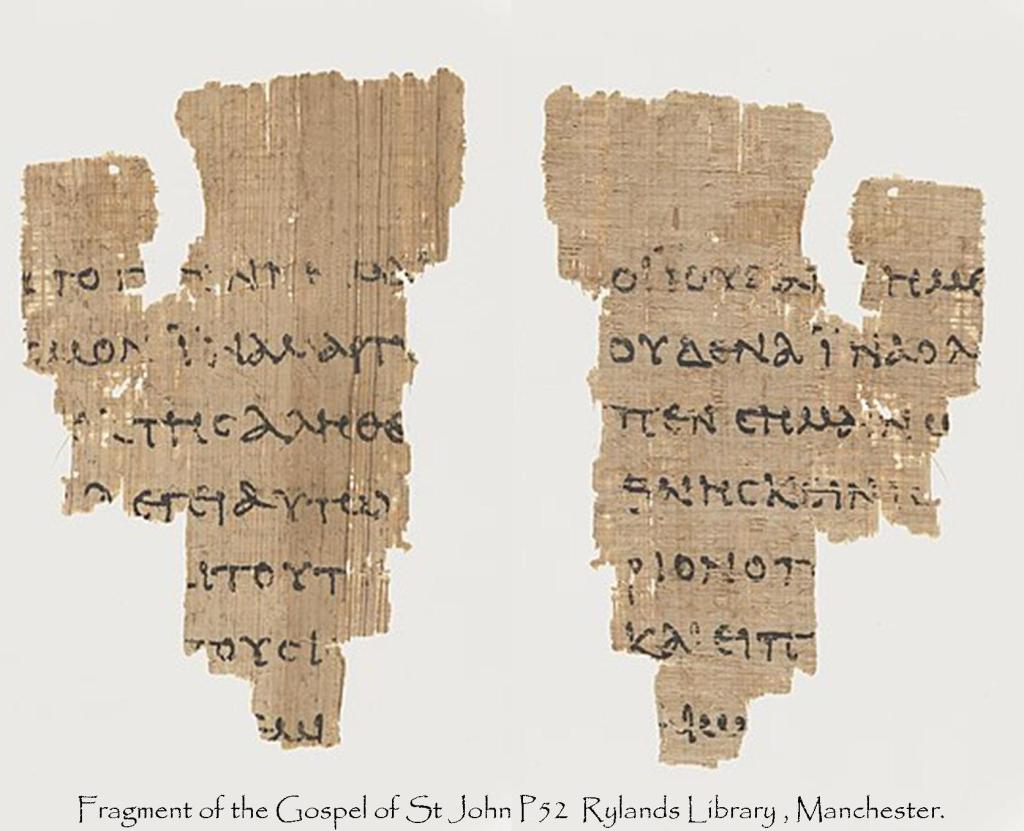
The earliest access we have to the New Testament story of God’s love is to be found – wait for it! – in Manchester!
In my late teens and early twenties I discovered how God’s love for me was touching my heart. I was a young civil  servant working in Manchester and one day I found myself on Deansgate where there is a beautiful building that, externally, could double up as a Cathedral. Internally even more so – though devotees of Harry Potter may believe that it is actually ‘Hogwarts’! There is a rumour!

In reality it is a neo-Gothic structure which was built as a library and opened to the public in 1900. It was founded by Enriqueta Augustina Rylands in memory of her husband, John Ryland. Today it is part of the University of Manchester.

Exciting though the building is, my first visit revealed something even more exciting. Within it there is the earliest known New Testament document. It is a small fragment of the Gospel of St. John. It is on papyrus and it measures 8.9 x 6.0 cms. It is displayed so that you can view both sides. On one side there are seven lines from John 18:31-33 and on the other the end of seven lines from John 18: 37-38. The fragment was found in Egypt in 1920 and it has been dated by experts as between AD 100  and AD150. It may have come from a copy not long after the Gospel itself was first written. It was purchased on the Egyptian market in the 1920s by Bernard Grenfell but it was 1934 before it was transcribed and translated by Colin H Roberts. It is classified as ‘Rylands Library Papyrus P52’ Scholars have had great fun musing over it, dating it, and discussing it: why was it written, when was it written and for whom? sort of questions.

But, you know what, there is something even more important about this fragment. When I stood before it all those years ago, I experienced a thrill and a sense of awe. Here I was in front of the Word of God which was written to tell me how much He loves me. I was faced with this truth in a unique and very special way.

It was only a fragment but it brought me to Jesus in a deeply personal way. Like an Icon which reveals its subject in an intimate way, I was drawn, through this fragment, into an intimacy with Jesus which was both simple and profound. This fragment became something which fragmented my soul and allowed Jesus to slip in. For me that’s its real significance.

It’s why the Bible is so very important – both Testaments for Christians, Old Testament for Jewish people and, because it has echoes within the sacred Koran, it has its place in Muslim spirituality too.
For those who want to know God it is essential.