Easter Bright ~ a poem for Easter by Peter Hellard-Malt.
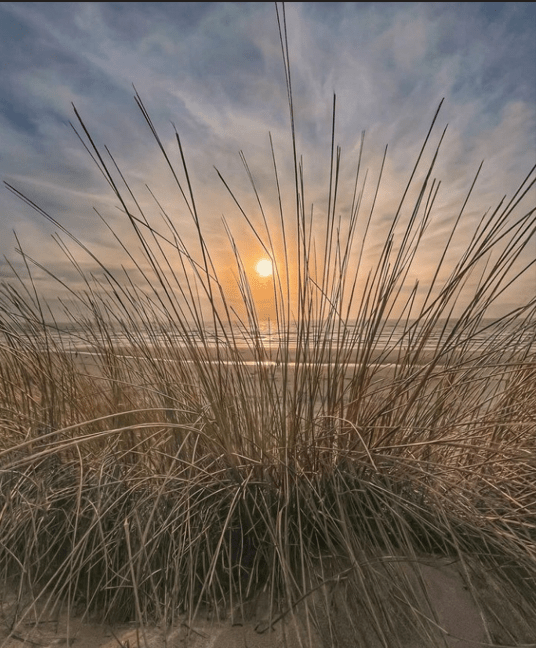
This morning begins with a quiet frost a carpenter sky, pale and ordinary low expectations drifting in from Nazareth
By mid-morning, scattered light gentle warmth moving among crowds a chance of healing in open places some may notice loaves increasing without explanation
Into the afternoon, conditions turn unsettled authorities gathering like thick cloud pressure dropping over Jerusalem voices rising, thunder without rain
Evening brings a sudden storm darkness at an unusual hour curtains torn by unseen wind one might say the forecast has gone quite wrong
Overnight, a deep stillness he kind that feels like waiting tombs sealed, hope folded away no visibility, not even for seasoned prophets
But at dawn, quite without warning a bright and unreasonable sunrise stone rolled aside like morning mist death giving way as if it were only weather
Outlook for the week light continues, stubborn and uncontained scattered appearances of joy and a general lifting of all things once thought final
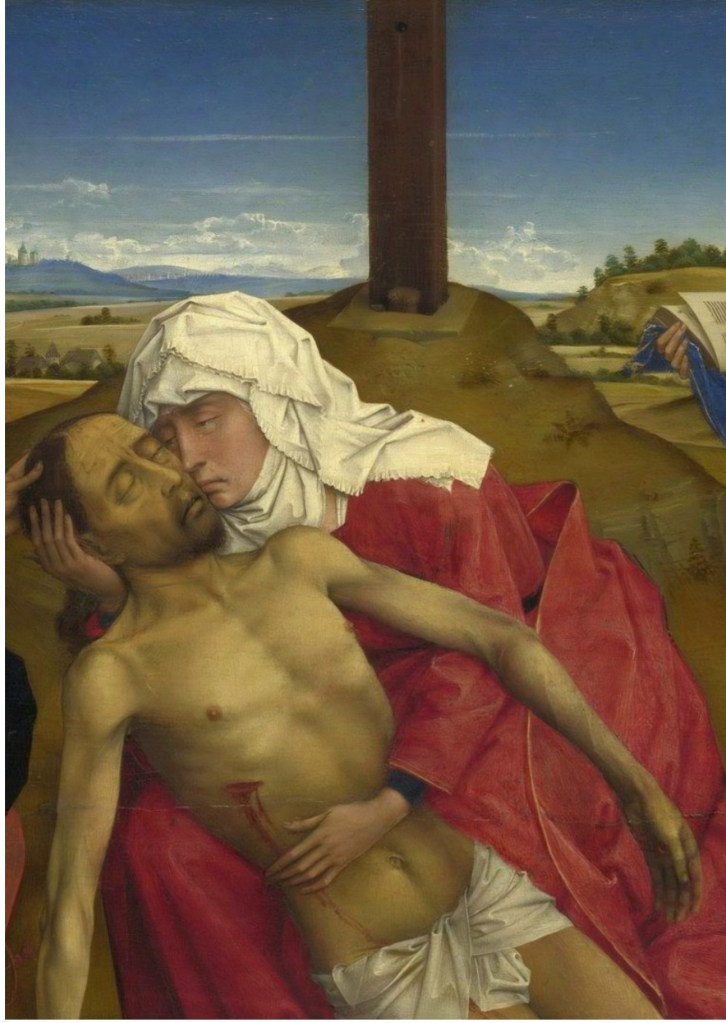
Their eyes never leave you, together confronting the agony as you are pinioned to the cross and crucified.
Three long hours.
Their presence is unwavering, their gaze unflinching, though a sword pierces their own anguished hearts.
Among them, the one who endured the agonies of bringing you into the world: who cradled the infant you. Now you are held in her gaze, her eyes fixed on you as she stands close by. Soon she will cradle your stiffening, lifeless body.
Where others have faltered and fled, these are the ones who remain, their presence, all that is left to give: a wilful resistance, a faithful standing by, a harrowing witness.
Here, at the foot of the cross, is true strength, true devotion: a love that is unsparing and never turns away…
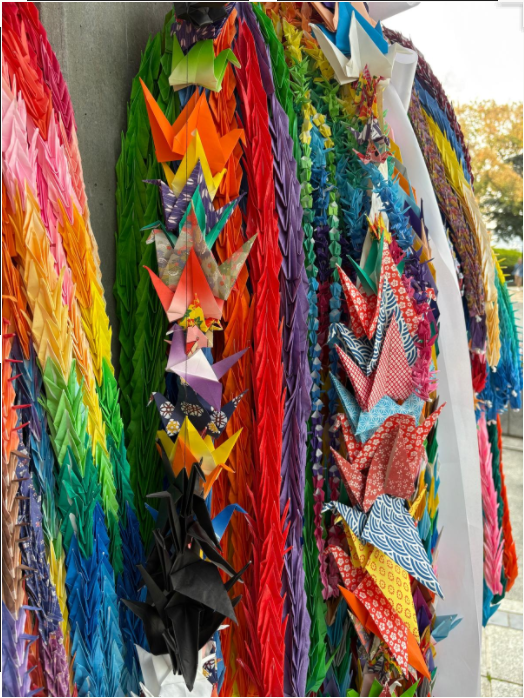
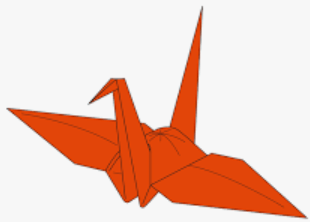
Paper Cranes at the Hiroshima Childrens’ memorial, Japan Photo by Gill Henwood
My friend, Gill, is touring Japan at present and has sent me photos of a visit to the Hiroshima Peace Memorial.
Whilst there she was able to share in the practice of making Origami Cranes (Orizuru). This is a traditional Japanese craft of paper-folding symbolizing hope, peace and healing.
It became linked with the Childrens’ Memorial at Hiroshima through the inspiration of Sadako Sasaki, a 12 year old girl who survived the 1945 atomic bombing of Japan by the USA, but who later died from leukemia. She was encouraged by a Japanese legend that folding 1,000 cranes grants a wish. When she was suffering and facing death she folded the paper cranes and this became a global icon for peace and the inspiration for the Children’s Peace Monument.
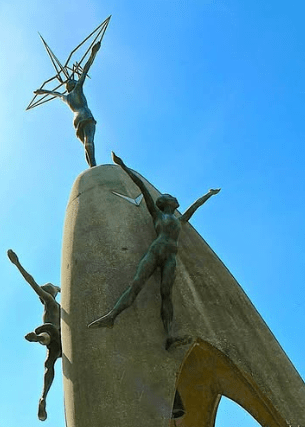
A Monument in the Peace Park is entitled ‘Atomic Bomb Children’. It was designed by Kazuo Kikuchi and Kiyoshi Ikebe, using money raised by Japanese school children. The figure of Sadako Sasaki is on the top and a boy and girl at the sides. Sadako holds a wire crane above her head. Behind the Statue are glass cases containing paper cranes.
Sadako’s wish, when making the paper cranes, was doubtless of personal healing, but her greater wish was to have a world without nuclear weapons.
When Gill and friends made their paper cranes they left behind a statement common to thousands of visitors of a desire for a world without nuclear war.
This desire is in forefront in many minds just now as we try to live with Global upheaval threatening the whole human race. Ukraine, Gaza, Sudan are names that easily trip off the tongue but are easily forgotten when other struggles take up the media’s attention. Even the struggle between Israel, the USA and Iran have become linked with whether the cost of petrol might spoil our Easter holiday! Humanity is sadly fickle and can be self seeking. Yesterday Holy Week began with the ‘Hosannas’ of Palm Sunday but how quickly that moved to ‘Crucify Him!’ by Good Friday.
It is often hard to fathom human motives.
We know that the regime in power in Iran is a danger and threat to the world (not least to its own oppressed people!) It might therefore be a justification by Mr Trump and his ally in Israel for the action they are undertaking. Yet there appear to be other motives which are drawing humanity to the kind of brink we saw in mid-1930’s Germany.
Perhaps the difficulty in trying to see similarities between the Nazi era and now is that it is far more complex. Too many vested interests are swirling around a vortex of demonic activity. To me, this feels like Satan’s time and it isn’t clear who are his agents. It would be wise, I feel, to remind ourselves of the events of August 6th 1945 and take heed.
It is always much easier to make war than it is peace and easier still to use God and religion to justify it but there are consequences leading from this which are not always taken into account. For example, the World Economy and resultant poverty and anxiety.
So, yesterday’s warning by Pope Leo is pertinent. Speaking during the Palm Sunday Mass, he said:
“Jesus is the King of Peace, who rejects war, whom no one can use to justify war. He does not listen to the prayers of those who wage war but rejects them.” He lamented the many wounds of the human family in our world today, as people cry out to God with the “painful groans of all those who are oppressed by violence and are victims of war.” “Christ, King of Peace, cries out again from His cross: God is love! Have mercy! Lay down your weapons! Remember that you are brothers and sisters!” said the Pope. [source:Vatican News]
In this Holy Week of the Christian Church we are therefore reminded how Jesus confronted the evil, which so easily grips humanity, with the power of God’s Love. John’s Gospel makes it very clear that the Crucifixion of Jesus Christ is a Victory. It is a Victory of Love over all that is unlove (sin) in the world. It is also a victory in which God’s plan for all of Creation is renewed by a deep outpouring of total freely given Love. That seems to run counter to the way human beings seem to be behaving. However, the paper cranes have a message too. They only happen when they are fashioned and made in that chosen image of peace. So, a renewed humanity only happens when we are fashioned and remade not with paper but with the love of God.
As Professor John Barton, in his book, Love Unknown, says, Christians share Christ’s victory through sharing his … vocation to be the love of God for a fallen world, and like him going out to embody God whatever the cost.
In her own way that is what Sadako Sasaki achieved, So may we.
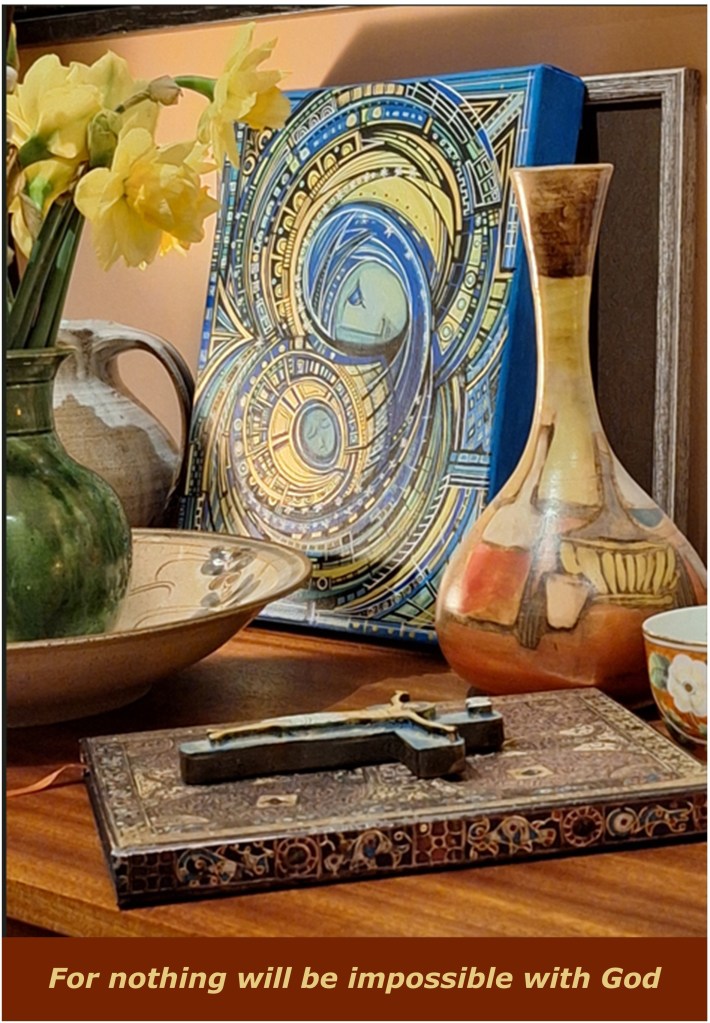
Painting by Kay Gibbons. Arrangement by Mr. G. Photo by Kay.
The Annunciation. (Gospel of Luke 2: 26 to 38)
Holy Father, almighty and eternal God, through Jesus Christ your Son our Lord. We give you thanks and praise that the Virgin Mary heard with faith the message of the angel, and by the power of your Holy Spirit conceived and bore the Word made flesh.
From the warmth of her womb to the stillness of the grave he shared our life in human form. In him new light has dawned upon the world and you have become one with us that we might become one with you in your glorious kingdom.
Therefore earth unites with heaven to sing a new song of praise; we too join with angels and archangels as they proclaim your glory without end.
~ from the Preface for the Eucharistic prayer for the Feast of the Annunciation. Common Worship, Church of England. Copyright The Archbishops’ Council 2000 ff
 Mr G's Ponderings