Tag: Beauty

For the beauty of the earth.

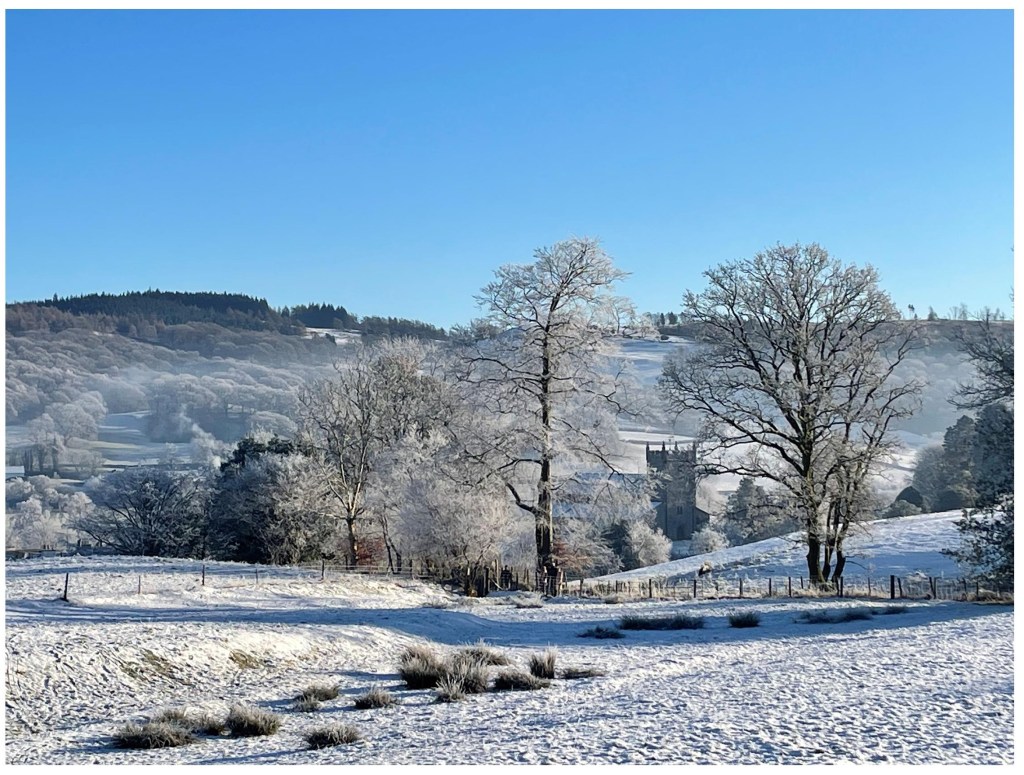
Langdale Pikes from Grizedale Forest, Lake District. Photo by Gill Henwood

My friend Gill Henwood has sent me the photo posted above. It is  a view of Langdale Pikes from Grizedale Forest, in the Lake District.
There is a certain broodiness about it with its different shades of light and dark which is rather in keeping with the extremities of weather at present in the UK.
The Lake District is a microcosm of our weather patterns and it is always wise, when walking in the Lakeland hills, to have a healthy respect for what Nature offers us. At one level we may call it fickle in that the conditions often change quickly. In another sense, it is a reminder that Planet Earth, and therefore its weather, is not something we can control. Sadly, we are messing things up with our human attempts at superiority over everything on earth.
The current preoccupation with the Northern Lights and with rare sightings of spectacular comets, along with other special things such as solar flares, remind us that these amazing displays from the cosmos are not of our making. They tell us, in fact, how small we are in the Universal scheme of things.
Unfortunately, the human race isn’t very good at learning lessons and applying them with humility to our borrowed and temporary life on earth. It was the poet T.S.Eliot who coined the phrase, humankind cannot bear very much reality so perhaps we shall continue to destroy the earth – and, of course, each other!

It would be good, therefore, if the human race might wake up to itself and accept that, as tenants with a life-span lower than many trees, a bit of humility might not go amiss.
As T. S. Eliot puts it in in his poem East Coker, “The only wisdom we can hope to acquire is the wisdom of humility: humility is endless.”

A large part of the lesson of humility can be found in contemplating the gifts God gives us through Creation. How can we not look at the scene depicted in the Gill’s photo above and be unmoved by what nature is trying to tell us about the Planet which is our home for the time being.
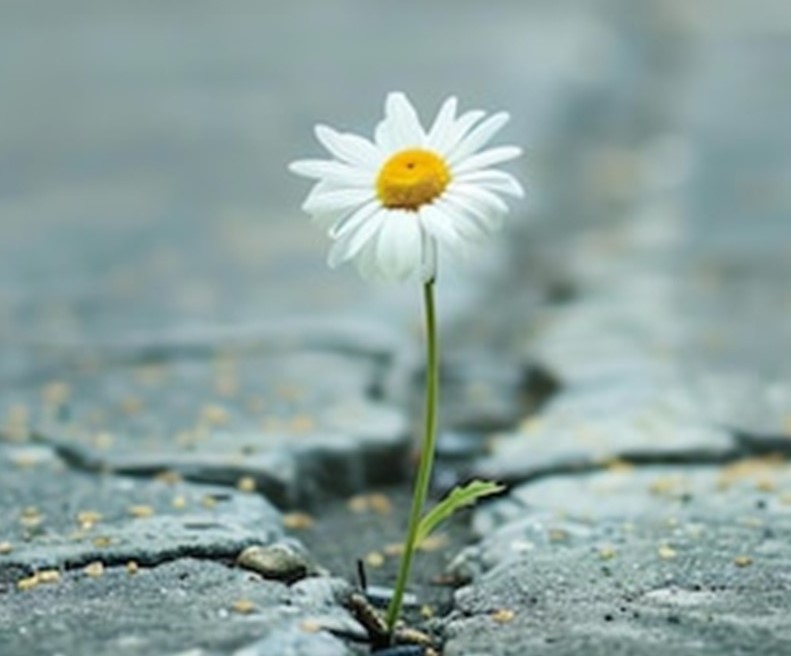
The light shimmering on the hills and the blue sky quietly folding itself around the clouds offers us a message of hope. It is just as true of a tuft of grass or a tiny flower pushing aside the tar of an urban footpath.
When the warmongers of the Middle East and  the Russian invasion of Ukraine come to an end, they will leave desolation but it won’t be long before a blade of grass or a microscopic flower spring to life.
Gill’s photo gives me hope. I have added a few words from a lovely hymn by Folliott Sandford Pierpont. He sat on a hill near Bath and was exhilarated by the beauty of creation which was laid out before him. Inspired by what he saw, he was filled with gratitude to God and he wrote his hymn in thanksgiving.

That too is another clue coming from Gill’s photograph ~ thanksgiving.
When we give thanks for Creation and for God who created it, we find ourself in a different place from lordship, conceit and self-centredness. In fact, thanksgiving, turns our attention towards others, towards providence and therefore towards God as Creator.
The photo is filled with the promise. of light and that is a source of joy and hope. If none of this means anything, then perhaps another thought might help – remember the Dinosaurs!

[Mr G] 14th October 2024
– Walter Rauschenbusch

All is beauty

The photograph of Hawkshead is by my friend, Gill Henwood.
The quotation is by St John of the Cross whose feast day is December 14th.

John of the Cross was regarded as one of the greatest Spanish mystics of the sixteenth century.
His writings still nourish modern Christians in their hunger for a true experience in the spiritual life.
He was born in 1542 and became a Carmelite friar at the age of twenty-one. Four years later he met Teresa of Avila in one of those God-moment meetings were two souls are fused together by the love of God, for the greater good of Christianity.
Teresa was occupied in reforming the Carmelite Order, instilling renewed vision and discipline and founding many new Convents of Prayer throughout Spain. John of the Cross joined her in this work. He served as a spiritual guide to the nuns and to Teresa herself. He was one who encouraged her to write her teaching on Prayer. His prominence in the reform movement made him a target for those who preferred the more comfortable old ways and twice he was abducted and imprisoned. After Teresa died, he was again targeted, this time by his own superiors in the Reformed Carmelites. Their harshness contributed to his death in 1591.
Nothing, however, took him away from his love of God and he gladly accepted the hardships because he saw them as sharing in the sufferings of Jesus on the Cross. Hence his name.

Like Teresa, he experienced the presence of Christ in “intellectual visions.” His reflection upon these experiences issued, first of all, in poetry of extraordinary power and beauty. At the urging of his disciples, he selected a number of his poems and produced prose commentaries on them, which have become classics of mystical theology. This includes one of his most famous writings on The Dark Night of the Soul.

John united the vocation of a theologian with the experience of a mystic, and his writings are the good example of theology as the fruit of prayer.

The most lovely thing that was ever said about him was by St Teresa.  “I cannot be in the presence of John without being lifted up into the presence of God.”

John said, himself, about God:

How gently and lovingly
You wake in my heart,
where in secret You dwell alone;
and in your sweet breathing,
filled with good and glory
how tenderly You dwell in my heart
with love
.

from, The Living Flame of Love by St. John of the Cross

and here is something for us to ponder over and pray about, applying it to ourself.

God is more pleased by one work, however small, done secretly, without desire that it be known,
than a thousand done with the desire that people know of them.
Those who work for God with purest love not only care nothing about whether others see their works,
but do not even seek that God himself know of them.
Such persons would not cease to render God the same services, with the same joy and purity of love,
even if God were never to know of these.”

― John of the Cross, The Collected Works of Saint John of the Cross

[Mr G]

In love is our strength

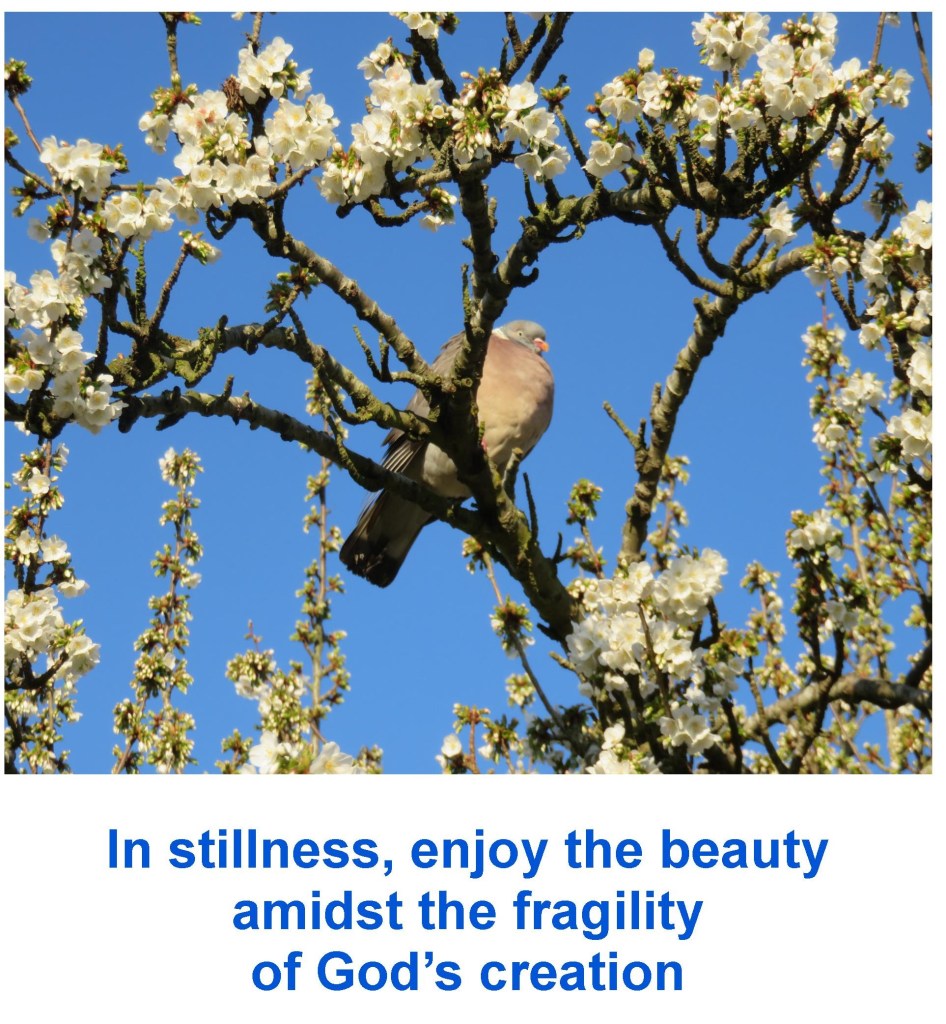
My friend Joyce has sent me this lovely picture tweet. She writes,
This sleepy wood pigeon is enjoying the warmth of the sun and the beauty of the blossom before it is blown away. With my love and prayers. God bless, Joyce

There is a call to stillness as nature and the natural world bring forth the joy of creation. The blossom heralds Spring and, though fleeting, it is a sign of hope.

We all know that there is so much darkness and despair right now. Ukraine weighs heavily on our hearts and other places are unsettled. The girls denied an education this week in Afghanistan are only part of the problem there, as children and families suffer increasingly from malnutrition.

We need to remain aware, too, that there are many in Russia who oppose the war at their peril and yet are brave enough to speak out. They too need our prayerful support.

So whilst all around us there is destruction and fragility, it is good to be reminded that the earth still blossoms with beauty and the promise of new life.

Two years ago we went into the first Lockdown against Covid.  That virus in differing forms is still with us. I myself am battling it at the moment, as are about a million others in the UK alone. Maybe we didn’t really learn the lessons. Maybe we should have taken up the opportunities of a new way of living and so developed new values by which to be truly human and truly at one with each other and creation.

At the time of the first lockdown, the artist, David Hockney, painted a series of paintings. Alongside them he said, Do remember, they can’t cancel the Spring! Maybe, in the midst of all that is besetting and destroying humanity in a maelstrom of the demonic, we need to pray and work for that truth.

Spring is God’s time of renewal and re-birth. To give us that gift, however, he had to take on the demonic of evil by dying on the Cross. It was the triumph of love and light against evil and darkness and, in the words of the poet T.S.Eliot, it cost God not less than everything. For Ukraine and other places of suffering, that is a personal reality for many right now, not least their inspirational and dedicated President, Volodymyr Zelensky. It is costing the Ukrainian Nation not less than everything.

Many of us are deeply humbled by the people of Ukraine and by the multitude of people who are receiving the victims of the war by opening their countries, their hearts and their homes with a generosity, compassion and love which is rapidly enfolding those for whom life has changed so deeply.
In such hospitality the demonic is being confronted and in many ways defeated by love.
God is enthusing and empowering that love.

Our little wood pigeon surrounded by blue sky and gorgeous blossom is, in its own way, a reminder that not only has spring not been cancelled but also, neither has love. It may be very fragile but it cannot be broken.

[Mr G]