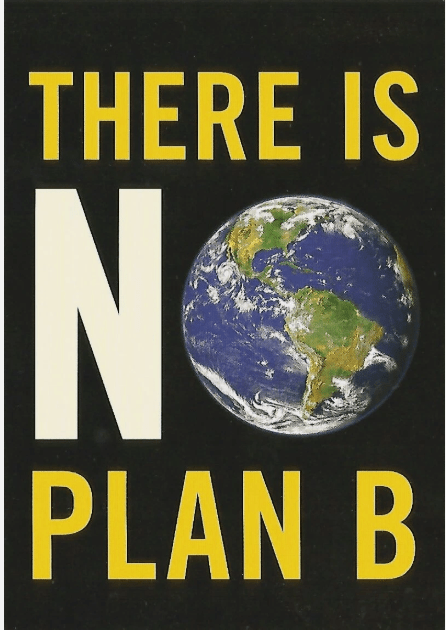
When Jesus had finished his work on earth and returned to heaven, the archangel Gabriel met him and said, “Lord, is it permitted to ask what plans you have made for carrying on your work on earth? “I have chosen twelve men and some women,” Jesus replied, “they will pass my message on until it reaches the whole world.” “But” said Gabriel, “supposing those few people fail you, what other plans have you made?Jesus smiled. “I have no other plan, “he said, “I’m counting on them.”
There is no plan B – Jesus entrusted his message of eternal love and salvation to a motley band of chosen people whose track record, to say the least, was questionable.
I wouldn’t dream, of course, of questioning my Lord Jesus’ arrangements to bring the love of God to a world increasingly in need but, because of that state of things on earth just now, I might be permitted to wonder if he might have regretted leaving things in our incapable hands!
The story of humanity is not always a good one and our reliability cannot always be taken for granted. Too often we allow despots, tyrants and self-absorbed groups to take over Creation and wage battle for power, self-interest and self-will.
At present I suggest that there are a small group of people who believe it is their right to make life impossible for others and who are responsible for many of the wars, pain, conflicts and the mess our world seems to be in. What is worse is that we are letting them do this either because groups of people are following a shared ideology or believe in a warped vision.
Yet, we know the truth that for evil to prosper, good people simply have to do nothing. That was never part of the plan of Jesus to build a world founded on mutual love, peace, truth justice or compassion.
At a House Group I am part of, it was suggested that in the face of the current violence, death and pain, we are called to stand up and be counted as each of us is part of God’s Plan. If the billions of believers in God, however their faith is expressed or practiced, were to stand up and collectively say, “No! This will not do. We don’t accept your false and demonic vision. You neither speak for us nor represent the Will of God for the World nor all that draw life from it – and that means the whole of Creation from the tiniest insect to the tallest tree. We are, after all, merely travellers through this world and at best, its custodians.”
Thankfully, in the face of the evil which afflicts our world, God does have Plan B and it is the same as Plan A – it rests on us. In many different ways, languages, environments, we who believe in God have the message of eternal love and salvation; of peace and justice; of compassion; of kindness and all those things which deepen the quality of life and fulfil the nature of what it means to be human ~ truly human which is a lot about developing Godliness.
God’s Plan, though often thwarted, is never abandoned and a major part of it is how he uses people to remind us of the true values of life, of love, of concern for others.
On February 7th the Christian Church celebrates the faith of a group of early Christian saints – St Felicity, St Perpetua and their Companions.
They were ordered to be put to death for their persistence in proclaiming Jesus Christ as their Lord, when the pagan rulers of the Roman Empire wanted to make an example of them, in order to warn others not to disobey the Emperor.
It all went rather wrong because this small group of women simply refused to live the lie of a corrupt society. One story of Perpetua is that her father begged her to renounce her faith and her reply to him was:
“Father, do you see this vase or water-pot here, for example , could it be called by any other name than what it is?” He said,” No,” and Perpetua replied, “Well, so too I cannot be called anything other than what I am ~ a Christian.”
Instead of renouncing her belief in God her words were to strengthen many, many others, in holding on to their Christian faith at a time when it would have been so easy to turn one’s back on God…
Throughout history, God has faced the wickedness of the world and counteracted its falseness through those who, like Perpetua, are unwavering in showing God’s truth and love, peace and justice – simply by being who they are, the beloved of God.
It strengthened people in dark times and goes on doing so still.
When the world is up against it, people are sent by God to lead us away from darkness into light. People who remind us that life can and must be lived in a different way and with greater, purer, values.
Today, I detect that God has sent us just such a person in Pope Leo. He is speaking God’s words through his own prayer, spirituality and understanding of a world which needs leading back to God’s ways.
God is counting on him just as he is counting on all of us who take great strength from what God is telling us through him.
Comes the hour, comes the True messenger of God. We are bidden to hear God speaking through him.
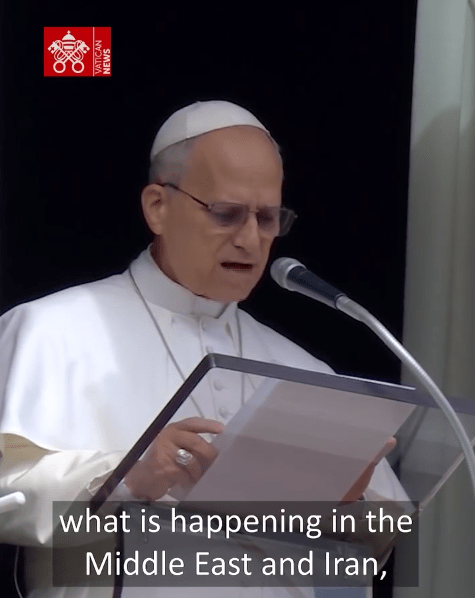
I follow with deep concern what is happening in the Middle East and Iran in these dramatic hours.
Stability and peace are not built with mutual threats nor with weapons which sow destruction,
pain and death but only through reasonable, authentic and responsible dialogue.
Faced with the possibility of a tragedy of enormous proportions, I address both parties involved a
heartfelt appeal to assume the moral responsibility to stop the spiral of violence before it becomes
an irreparable abyss!
May diplomacy recover its role and may the good of people be promoted; peoples who long for
peaceful co-existence founded on justice – and let us continue to pray for peace.”
-Pope Leo. March 5th 2026




 Mr G's Ponderings