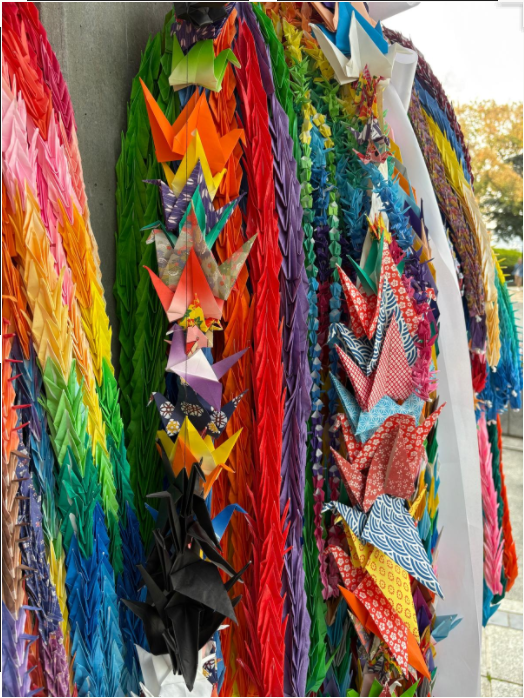
Paper Cranes at the Hiroshima Childrens’ memorial, Japan Photo by Gill Henwood
My friend, Gill, is touring Japan at present and has sent me photos of a visit to the Hiroshima Peace Memorial.
Whilst there she was able to share in the practice of making Origami Cranes (Orizuru). This is a traditional Japanese craft of paper-folding symbolizing hope, peace and healing.
It became linked with the Childrens’ Memorial at Hiroshima through the inspiration of Sadako Sasaki, a 12 year old girl who survived the 1945 atomic bombing of Japan by the USA, but who later died from leukemia. She was encouraged by a Japanese legend that folding 1,000 cranes grants a wish. When she was suffering and facing death she folded the paper cranes and this became a global icon for peace and the inspiration for the Children’s Peace Monument.
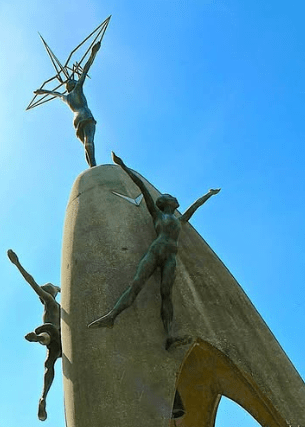
A Monument in the Peace Park is entitled ‘Atomic Bomb Children’. It was designed by Kazuo Kikuchi and Kiyoshi Ikebe, using money raised by Japanese school children. The figure of Sadako Sasaki is on the top and a boy and girl at the sides. Sadako holds a wire crane above her head. Behind the Statue are glass cases containing paper cranes.
Sadako’s wish, when making the paper cranes, was doubtless of personal healing, but her greater wish was to have a world without nuclear weapons.
When Gill and friends made their paper cranes they left behind a statement common to thousands of visitors of a desire for a world without nuclear war.
This desire is in forefront in many minds just now as we try to live with Global upheaval threatening the whole human race. Ukraine, Gaza, Sudan are names that easily trip off the tongue but are easily forgotten when other struggles take up the media’s attention. Even the struggle between Israel, the USA and Iran have become linked with whether the cost of petrol might spoil our Easter holiday! Humanity is sadly fickle and can be self seeking. Yesterday Holy Week began with the ‘Hosannas’ of Palm Sunday but how quickly that moved to ‘Crucify Him!’ by Good Friday.
It is often hard to fathom human motives.
We know that the regime in power in Iran is a danger and threat to the world (not least to its own oppressed people!) It might therefore be a justification by Mr Trump and his ally in Israel for the action they are undertaking. Yet there appear to be other motives which are drawing humanity to the kind of brink we saw in mid-1930’s Germany.
Perhaps the difficulty in trying to see similarities between the Nazi era and now is that it is far more complex. Too many vested interests are swirling around a vortex of demonic activity. To me, this feels like Satan’s time and it isn’t clear who are his agents. It would be wise, I feel, to remind ourselves of the events of August 6th 1945 and take heed.
It is always much easier to make war than it is peace and easier still to use God and religion to justify it but there are consequences leading from this which are not always taken into account. For example, the World Economy and resultant poverty and anxiety.
So, yesterday’s warning by Pope Leo is pertinent. Speaking during the Palm Sunday Mass, he said:
“Jesus is the King of Peace, who rejects war, whom no one can use to justify war. He does not listen to the prayers of those who wage war but rejects them.” He lamented the many wounds of the human family in our world today, as people cry out to God with the “painful groans of all those who are oppressed by violence and are victims of war.” “Christ, King of Peace, cries out again from His cross: God is love! Have mercy! Lay down your weapons! Remember that you are brothers and sisters!” said the Pope. [source:Vatican News]
In this Holy Week of the Christian Church we are therefore reminded how Jesus confronted the evil, which so easily grips humanity, with the power of God’s Love. John’s Gospel makes it very clear that the Crucifixion of Jesus Christ is a Victory. It is a Victory of Love over all that is unlove (sin) in the world. It is also a victory in which God’s plan for all of Creation is renewed by a deep outpouring of total freely given Love. That seems to run counter to the way human beings seem to be behaving. However, the paper cranes have a message too. They only happen when they are fashioned and made in that chosen image of peace. So, a renewed humanity only happens when we are fashioned and remade not with paper but with the love of God.
As Professor John Barton, in his book, Love Unknown, says, Christians share Christ’s victory through sharing his … vocation to be the love of God for a fallen world, and like him going out to embody God whatever the cost.
In her own way that is what Sadako Sasaki achieved, So may we.
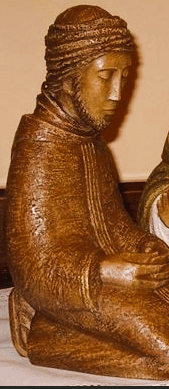
St Joseph could be called the man in the background. His importance at one level is that he provides a link with his ancestor David, thus giving Jesus the lineage back to the establishment of the Royal Kingdom of which Jesus is the heir. In the story of Jesus’s birth, we have to go to St. Matthew for the story of Joseph’s own Annunciation. (Matthew 1: verses 18 to 25) Having learned of Mary’s pregnancy, Joseph’s life was in a turmoil. The law was quite clear that Mary should be punished but Joseph was a compassionate man and he wanted to spare her and her family disgrace. It was then that an angel visited him in a dream and explained about the work of the Holy Spirit in Mary and about both their parts in the Incarnation. Joseph is central to the Christmas story and it is because of him that they must go the Bethlehem for a census. There he provides shelter for Mary to give birth to the Saviour of the World. We next hear about him when Herod seeks to kill Jesus and they take the long journey to Egypt. Later he is told by an angel to return home and the family settle in Nazareth. After this, the only reference to Joseph is in the incident where the boy Jesus remains in the Temple and his parents have to rush back to search for him. We are told that after this Jesus went back home with his parents to Nazareth where he was obedient to his parents. Then, Joseph fades completely from the story though there are references to him when the crowd say of Jesus, Isn’t this the Carpenter’s Son?
Reading the Bible there are many people who appear for some particular reason and then disappear from its pages. Joseph, however, stands not only as one who completes the picture of the Holy Family but who is also a reminder to all of us that God does not always need us to shine on the centre stage. God needs people who are faithfully living out a life of prayer and support with compassion, kindness and loving obedience. People who, like Joseph are attentive to God’s will. He needs people who are content to be in the background and who, by a life of quiet service, allow Jesus to take centre stage in all our lives. Too often the Church is preoccupied with itself and can get so bogged down in its own affairs that it fails to proclaim the Lord we are there to serve. Joseph never does that. He always points away from himself and shows us a vision of God in Christ Jesus. That is God’s call to Christians ~ to us.
Heavenly Father, whose Son grew in wisdom and stature in the home of Joseph the carpenter of Nazareth and on the wood of the cross perfected the work of the world’s salvation: help us to count the wisdom of the world as foolishness, and to walk with Joseph in simplicity and trust; through Jesus Christ our Lord.
Cygnets watched over by parent swans. Hatfield Forest, Essex. Photo by Mr G
A Reflection about Mothering Sunday by Piers Northam.
There is a Neopolitan saying about cockroaches Ogni scarrafone è bell’ a mamma soja– which translates as ‘every little cockroach is beautiful to its own mother…’ It feels relevant, because the cockroach’s mother looks on her offspring with a eyes filled with love – and that set me thinking about how we are each looked on by God.
As we journey through Lent, I think it’s an important thing to ponder on for ourselves: how does God see us? I mean really see us? I suspect that answers to this question will vary, but they might include the fact that he loves us; that he might also be a bit disappointed in what he sees us getting up to; that he’s forgiving and always willing us to turn back to him; that he’s also forward-looking and sees the potential in us: sees the best that we can be; and that he sees the beauty that we might think is either not there or well-hidden under our crusty, cockroachy exteriors – and so he gazes on us with love and affection – with the gaze of a loving parent.
On Mothering Sunday, that notion of the relationship between parent and child – by which I mean the very best version of that relationship – might have a lot to teach us: it’s bound up in notions of nurturing and feeding us; protecting us; teaching and equipping us for life; perhaps a bit of necessary discipline from time to time, but above all that sense of wanting the best for us; loving us: and that unspoken bond and shared identity… The Bible Readings for Mothering Sunday, from Exodus and from St John’s Gospel, have some other interesting things to say about parenthood:
First there’s the story of Moses’ mother. It’s perhaps useful to remind ourselves of the background to this story: the Hebrews were enslaved to the Egyptians, but they had grown hugely in number and the Pharaoh feared being overrun by them so, in order to keep down the population, he commanded that all Hebrew male children be thrown into the Nile and killed – they were living in dark times. When Moses was born and his mother could no longer hide him, she made a basket for him, sealed it with pitch to make it watertight and hid him amongst the reeds. Here is a mother who can no longer protect her child, so she entrusts him to God, leaving him somewhere she prays he will be safe. And then, of course, Pharaoh’s daughter comes along and finds him – she acts instinctively; taking pity on this defenceless baby. She is aware that he is probably Hebrew – an alien that her society looks down on – but what she sees is a fellow human being: a child in need of care and nurturing whom she goes on to bring up as her own. And then we see the two women working together to raise Moses: his biological mother hired as a wet-nurse to feed him and raise him for a period. Later, she hands him over to Pharaoh’s daughter because she realises that by doing so he will survive and thrive and be safe and well looked after. In her we see sacrifice and trust in God; putting her child’s needs before her own; nurturing him and wanting the best opportunities for him in life. And in Pharaoh’s daughter, we see compassion and generosity; she looks beyond the views of her society, to see a defenceless child and she responds to his need, bringing him up as her own. Both these women think of Moses first and both act in his best interests.
The other little thread here, that is picked up in the Gospel reading, is that motherhood for Pharaoh’s daughter goes beyond blood-ties. Moses is her child by adoption, yet he is treated as her own. And this is what we see at the Cross when Jesus entrusts Mary and John to each other. The beloved disciple takes Mary into his household and treats her as his own – as she does him. In entrusting them to each other, Jesus is asking them to form this interdependent, loving relationship.
It is these relationships that are at the very heart of our Christian faith. Jesus tells us that we are children of his Heavenly Father, who is also our Father – we’re reminded of it every time we pray that great prayer he taught us. And so, by extension, we are to be family to each other – with all that that might entail. As with Pharaoh’s daughter, we are to see beyond the blood-ties of our own families and beyond the borders of race and nationality and to regard each other as beloved brothers and sisters.
But on Mothering Sunday, I think we could push things a stage further. We’ve all heard of sibling rivalry and there’s never a guarantee that we’ll get on with our brothers and sisters. But if we focus on the way that the best parents look on their children, we might find a stronger imperative.
In the 16th century, long before it was subsumed into the Mothers’ Day peddled by the card companies, this Sunday in Lent was a day when churchgoers returned to their ‘Mother Church’ – often the local cathedral or big church, or perhaps the church where they were baptised. In later times, domestic staff who lived away from home, were given the day off to return to their families – and usually to their mothers – and this is where some of the customs that we keep today came from. But that notion of ‘Mother Church’ is an important one, for if we take it seriously, then it tells us something about how the church should be – not a church that fences us out with rules and regulations about who’s in and who’s out, but one that loves and nurtures us. One that, like Pharaoh’s daughter, simply recognises our common humanity – whether we’re Hebrew or Egyptian, black or white, rich or poor, gay or straight or any of the shades and variations in between. Because if we look beyond our cockroachy exteriors, we’re all simply children of God and the Church needs to recognise this and gaze upon us with abundant love – irrespective of who we are or what we look like.
Now I know that for some, the phrase ‘Mother Church’ will evoke notions of an Institution that knows best; perhaps even one that lays down the law and tells you what to think; or one that is too slow to show true love and acceptance to all. And that’s not what the best parenting is all about is it? What I would love to be able to say of the Church of England is that it isn’t entirely like that – and actually, at grass-roots level, I don’t think it is. For me, Anglicanism – in its best form – aims to brings us to maturity: helping us to learn that we are loved by our Father in Heaven so that we grow in confidence; teaching and equipping us; encouraging us to think for ourselves and to learn so that we can grow into adults – or at least mildly sensible teenagers – who have enough nous and confidence to go out into the world and treat our fellow men and women lovingly. That’s what the best parents do, don’t they? They bring up their children confident in the knowledge that they are loved and therefore able to be loving to others; equipped to be good and valuable members of society.
Now I referred to ‘Mother Church’ a moment ago as an Institution, but of course the really important thing is that the church isn’t an institution at all. It’s you and me – we are the Church. So it seems to me that our calling is not just to treat each other as brothers and sisters, with whom we might bicker around the dinner table, but actually to look at each other with the loving eyes of a parent – with all that that entails.
Of course that’s a lot more challenging isn’t it? We’ve got to be like the cockroach’s mother, seeing past the carapace to the lovely little cockroach inside. We’ve got to want the very best for each other – and not just the ones who are like us – Jesus, with his words to John and Mary, blew the whole thing wider from up there on the cross. We need to be like this to the whole of humanity.
I was chatting with a friend in the week who I haven’t seen for quite a while and we were talking about the rather depressing state of the world right now and she said, ‘wouldn’t it all be so much better if we could simply treat each other with kindness?’ I think she’s absolutely right – and I think St Paul would agree:
‘clothe yourselves with compassion, kindness, humility, meekness, and patience. Bear with one another […] forgive each other. And above all, clothe yourselves with love.’[1]
The other day I was telling someone, who didn’t know it, that wonderful story of the Prodigal Son – it’s one of my all-time favourites: I never cease to be moved by that moment when the father, who’s been sitting all day at the front step gazing down the road, sees his son returning home. What does he do? He hitches up his skirts and goes running, full pelt down the road to meet him and sweep him up in a loving embrace. That bursting-at-the-seams joy at seeing his lost child come home, gets me every time. And that needs to be us.
We need to be out on the front step, looking down the road to see which one of our children might be coming home; we need to be rooting around in the bulrushes looking for those whom we can protect and clothe and give a home to; we need to be feeding and nurturing those who are with us and – in the manner of all good parents, giving them the confidence that they are loved and valued; we need to be inviting and gathering those around us to the table to break bread with our brother, Jesus.
When Jesus had finished his work on earth and returned to heaven, the archangel Gabriel met him and said, “Lord, is it permitted to ask what plans you have made for carrying on your work on earth? “I have chosen twelve men and some women,” Jesus replied, “they will pass my message on until it reaches the whole world.” “But” said Gabriel, “supposing those few people fail you, what other plans have you made?Jesus smiled. “I have no other plan, “he said, “I’m counting on them.”
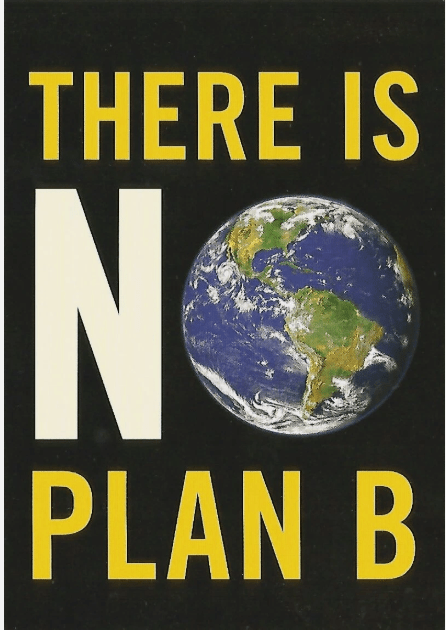
There is no plan B – Jesus entrusted his message of eternal love and salvation to a motley band of chosen people whose track record, to say the least, was questionable.
I wouldn’t dream, of course, of questioning my Lord Jesus’ arrangements to bring the love of God to a world increasingly in need but, because of that state of things on earth just now, I might be permitted to wonder if he might have regretted leaving things in our incapable hands!
The story of humanity is not always a good one and our reliability cannot always be taken for granted. Too often we allow despots, tyrants and self-absorbed groups to take over Creation and wage battle for power, self-interest and self-will. At present I suggest that there are a small group of people who believe it is their right to make life impossible for others and who are responsible for many of the wars, pain, conflicts and the mess our world seems to be in. What is worse is that we are letting them do this either because groups of people are following a shared ideology or believe in a warped vision.
Yet, we know the truth that for evil to prosper, good people simply have to do nothing. That was never part of the plan of Jesus to build a world founded on mutual love, peace, truth justice or compassion.
At a House Group I am part of, it was suggested that in the face of the current violence, death and pain, we are called to stand up and be counted as each of us is part of God’s Plan. If the billions of believers in God, however their faith is expressed or practiced, were to stand up and collectively say, “No! This will not do. We don’t accept your false and demonic vision. You neither speak for us nor represent the Will of God for the World nor all that draw life from it – and that means the whole of Creation from the tiniest insect to the tallest tree. We are, after all, merely travellers through this world and at best, its custodians.”
Thankfully, in the face of the evil which afflicts our world, God does have Plan B and it is the same as Plan A – it rests on us. In many different ways, languages, environments, we who believe in God have the message of eternal love and salvation; of peace and justice; of compassion; of kindness and all those things which deepen the quality of life and fulfil the nature of what it means to be human ~ truly human which is a lot about developing Godliness. God’s Plan, though often thwarted, is never abandoned and a major part of it is how he uses people to remind us of the true values of life, of love, of concern for others.
On February 7th the Christian Church celebrates the faith of a group of early Christian saints – St Felicity, St Perpetua and their Companions. They were ordered to be put to death for their persistence in proclaiming Jesus Christ as their Lord, when the pagan rulers of the Roman Empire wanted to make an example of them, in order to warn others not to disobey the Emperor. It all went rather wrong because this small group of women simply refused to live the lie of a corrupt society. One story of Perpetua is that her father begged her to renounce her faith and her reply to him was:
“Father, do you see this vase or water-pot here, for example , could it be called by any other name than what it is?” He said,” No,” and Perpetua replied, “Well, so too I cannot be called anything other than what I am ~ a Christian.”
Instead of renouncing her belief in God her words were to strengthen many, many others, in holding on to their Christian faith at a time when it would have been so easy to turn one’s back on God…
Throughout history, God has faced the wickedness of the world and counteracted its falseness through those who, like Perpetua, are unwavering in showing God’s truth and love, peace and justice – simply by being who they are, the beloved of God. It strengthened people in dark times and goes on doing so still. When the world is up against it, people are sent by God to lead us away from darkness into light. People who remind us that life can and must be lived in a different way and with greater, purer, values. Today, I detect that God has sent us just such a person in Pope Leo. He is speaking God’s words through his own prayer, spirituality and understanding of a world which needs leading back to God’s ways. God is counting on him just as he is counting on all of us who take great strength from what God is telling us through him.
Comes the hour, comes the True messenger of God. We are bidden to hear God speaking through him.
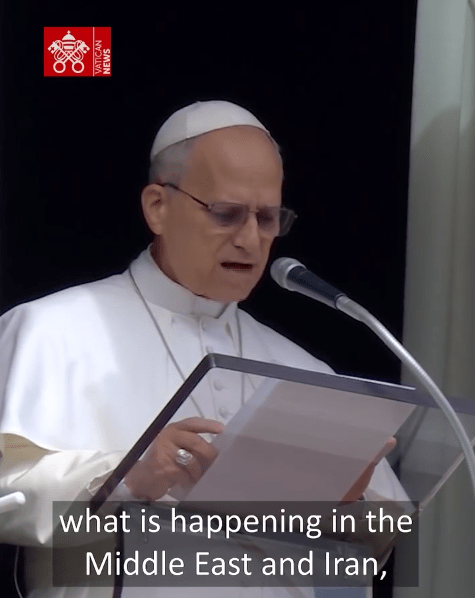
I follow with deep concern what is happening in the Middle East and Iran in these dramatic hours. Stability and peace are not built with mutual threats nor with weapons which sow destruction, pain and deathbut only through reasonable, authentic and responsible dialogue. Faced with the possibility of a tragedy of enormous proportions, I address both parties involved a heartfelt appeal to assume the moral responsibility to stop the spiral of violence before it becomes an irreparable abyss! May diplomacy recover its role and may the good of people be promoted; peoples who long for peaceful co-existence founded on justice – and let us continue to pray for peace.”


 Mr G's Ponderings