Tag: Jesus

I Believe ~ Niceae 1700

Basilica of Saint Neophytos is the name of the underwater basilica in Lake İznik, modern-day Turkey.
This was where those who gathered for the Council of Nicaea .

The Telling of our Faith.

Over the past weekend, the Christian Church has been celebrating one of the most important anniversaries of our faith, the 1,700 Anniversary of the First Ecumenical Council which was held in Nicaea, (now Iznik) in what is now Turkey. Until 325AD, the Christian Church was established in various centres of mission but, as it grew, it was also dealing with persecution on a large scale from those who did not want the Christian faith, rooted in the life, witness and teaching of Jesus Christ to succeed.
Whilst we have never been free from persecution nor strangers to martyrdom, the period until the 4th century was particularly one where many Christians were put to death or tortured for their faith.
In the 4th Century, under the reign of Emperor Constantine, things changed. His mother, Helen(a) had become a Christian during a time in the Holy Land and her faith influenced her son. Though he did not immediately become a Christian himself, (though he died one), he declared that Christianity would become the official religion of the Roman Empire. Peace and stability came to the Church.

Except, not quite!
When people are up against terrible suffering, persecution and death, there is a unity which concentrates everyone on survival and on being loyal to what they believe. It brings with it its own high level of support for each other. There is no time or freedom to concentrate on anything but holding each other together, caring, loving and sustaining each other in mutual hope and encouragement.
When danger passes, the personal relief can sometimes give people the opportunity to face issues of disagreement which trouble them and can produce division.
That is what happened and the church faced differences in practice and custom caused by not being able to worship and prayer together.
Things like the date when the Church observed Easter and  other practices needed to be dealt with but the Church was facing its biggest ever challenge at Nicaea. At this moment in the story of the Church the biggest and most important question of our faith had to be faced: Who is Jesus?
Under its new found peace, Christianity had to face the question about the nature of Jesus. Followers of a theologian called Arius maintained that Jesus was a created being, who whilst a good man and infused with the vision of God, was not God.
More than anything else before or since this view threatened to destroy the church. The fierce debate it created division amongst Christians and everything we stand for was in danger of falling apart.
So concerned was Constantine that the Christian faith he had chosen to bring stability and harmony to his Empire was itself in grave crisis, that he called together Christians leaders at Nicaea.
This was the first Synod or gathering and here the question about who Jesus truly is, was debated.
The Council rejected the teaching of Arius and affirmed the total belief that Jesus is one in substance with his Father; that both are God together with the Trinitarian belief that the Holy Spirit is part of a three-fold God.
At Nicaea, the Church set out our belief in a ‘Statement’ or ‘Creed which became, at one level the ‘Constitution of the Christian Faith.
Though it was refined and deepened at the Council of Constantinople  in 381AD and again at Chalcedon in 451, it has become the foundational statement of the Christian faith’  and it forms an essential part of our expression of personal and corporate belief to be recited by the whole Church, Roman Catholic, Orthodox, Anglian, Methodist, every Sunday.
Essentially it is summarized by the acclamation often made in worship.

This is our faith.
We believe in One God,
Father, Son and Holy Spirit.

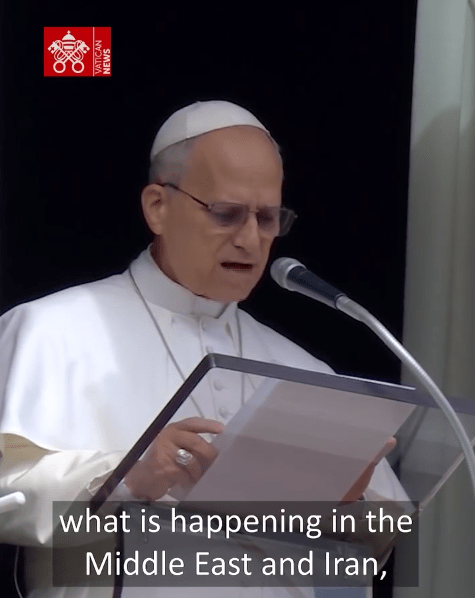
Pope Leo gathered last weekend gathered with 27 other Christian leaders to celebrate the 1700th anniversary in Nicaea, modern-day Iznik, Türkiye. Pope Leo  thanked Patriarch Bartholomew I, Ecumenical Patriarch of Constantinople, for his “great wisdom and foresight” in calling for Church leaders to celebrate this important anniversary together.
He spoke of the power of the Nicaean Creed to “invite Christians, even today ,to ask ourselves who is Jesus Christ for us personally,“ especially when there is a risk of reducing Jesus Christ, “to a kind of charismatic leader or superman, a misrepresentation that ultimately leads to sadness and confusion.”
The Pope went on to point out that reducing Jesus to an intermediary between God and humanity, and therefore not Divine, ignores the reality of the Incarnation.”“But if God did not become man, how can mortal creatures participate in His immortal life?” asked Pope Leo. “What was at stake at Nicaea, and is at stake today, is our faith in the God who, in Jesus Christ, became like us to make us ‘partakers of the divine nature’.”

He went on to say that, because the Creed was professed by all Christian Churches and Communities, “it is of fundamental importance in the journey that Christians are making towards full communion. Faith in one Lord Jesus Christ, the only Son of God, born of the Father before all ages…consubstantial with the Father (Nicene Creed) is a profound bond uniting all Christians.”

For me, reciting the Creed grounds my faith in Jesus who, in his birth, life, teaching, death and resurrection, speaks to me of the immensity of God’s Love, for me personally; for each other;and of my love for God; and of the power of that love to embrace all. Telling the story of what God, the Holy Trinity has done for us and goes on doing,  and speaking it prayerfully at the heart of worship is a tremendous experience of belonging and believing which holds us in a deeply inclusive and profound relationship and so becomes the prayer which speaks from the heart of our living faith in God.

I believe!

[Mr G. 2nd December 2025]

Christ our King in glory reigning

Christ the King window, St Eadmer’s Church, Admarsh-in Bleasdale, Forest of Bowland, North Lancashire.
The dedication to Eadmer is thought to be unique in the United Kingdom and possibly the world. Eadmer is
probably the name of a monk who, during a Vigil called to determine where Saint Cuthbert’s body should be laid
finally to rest, received a vision from God that his Shrine Church should be built at what is now Durham.
Those who established the Church at Bleasdale where a family who came from Hexham which at the time
was in the Diocese of Durham.
The window is a Triptych with Christ in glory taking up the centre panel (above).
The window was made by Abbot & Company of Lancaster in memory of Isabella Bullock and was installed on 5th November 1925, 100 years ago. (Photo: Robert Gardener, former churchwarden)

Christ our King in Glory reigning.

This week, the Christian Church celebrates the Feast of Christ the King, the last week of the Church Year, which begins again on Advent Sunday.

The title, Christ the King in glory reigning is a theme found in a number of hymns. Specifically it is the title of a hymn by Canon Patrick Appleford to which was given the tune Sunderland, written by Father Geoffrey Beaumont CR. Both were members of the Twentieth Century Music Group which sought to give the church new hymns in contemporary style with new words and tunes.
The hymn Christ our King in glory reigning is rarely sung now but its title celebrates the universal sovereignty of Jesus Christ combined with a longing for God to reign over the world He has created, as a Kingdom filled with Justice, Love and Peace.

This is a Kingdom which contrasts deeply with how much of the world regards kingship. It is a rule of self-giving love rather than one of domination or control. It is a rule of gentleness. It is also a reminder to us that God rules in glory. That glory is expressed in worship not just on earth but especially in heaven. This state of living close to God in His nearer presence is experienced  together with all who have entered fully God’s Kingdom and who form a great myriad of beings which include Angels and Archangels, Saints and Holy Ones; all who form what the Eucharist calls the whole company of Heaven and of which we are part.
We are citizens of a Kingdom which calls us to live by the values shown to us by Jesus. These values are not as many in our world understands them. The foundations of God’s Kingdom are  holiness, justice, freedom, peace and love. To be citizens of such a kingdom means to have far more radical and differing values than those often found in the world around us.

To establish this Kingdom was costly and totally self-giving.  The poet, T S Eliot, has a phrase, Costing not less than everything and that is precisely what it cost Jesus to bring God’s new Kingdom into being. It needed love and sacrifice because God was releasing a new, powerful force into the world. The Kingdom that Jesus inaugurated from the Cross is not a Kingdom as this world understands it. God’s Kingdom is very different.
In the face of hatred it brings love; gentleness replaces might; peace instead of strife; mercy instead of retribution; justice rooted in fairness; liberty and freedom in the place of oppression and intolerance; self-giving replacing self-centredness; service to others rooted in humility replacing pride;  forgiveness removing blame and generosity overcoming greed.

All this and much more  come at a cost but it is one that God chooses to pay in the sacrifice of Jesus on the Cross. There is the throne of God from which he reigns over our hearts and lives. From that very cross He claims us as His own and he asks us to claim each other in love and acceptance and generosity, valuing each other as God values each one of us.

We often speak of Service to God and to each other as hallmarks of the Kingdom. This service is initially one of the heart before it is of the hand. We are called to carry within us the signs of the Kingdom as companions of our High King. We are called to share those signs , the values we follow, and in the words of St Mother Teresa of Kolkata, to share the simple, little things we learn from our King, but with a great deal of love.

I have often been encouraged by a little prayer I came across, written by a new Christian who had just come to faith. His experience of God’s love showed him what he must do.

O Lord, you are King of our spirits.
You have issued orders to your subjects to do a great work.
You have commanded us to preach the gospel to every creature.
We are going on that errand now.
Let your presence go with is to enliven and enable us
to persevere in that great work until we die. 
Amen

The Living Gospel on All Hallows Eve.

D C Parker tells the story of Codex Sinaiticus

The Living Gospel 

Whenever I visit the British Library in London I try to search out two very special manuscripts ~ The Codex Siniaticus and the Codex Alexandrinus. They are two of the rarest copies of Bible texts in Greek. In the case of Codex Siniaticus it is one of the most important books in the world. It is, arguably, the oldest complete copy of the New Testament that is still in existence, though not all of it is kept in London with a portion still being in Egypt, Russia and Leipzig.  However, it has been digitally re-united so a complete copy now exists.
From its text (and others which are less complete) all our translations of the New Testament are influenced.

It is also rather beautiful to look at in its handwritten script.
To come close to what is the earliest known version of the Gospel of Jesus Christ, lovingly scripted in the 4th century at the monastery of St. Catherine on Mount Sinai, is to come close to the Living Gospel. It is the closest we get to God’s Holy Word spoken by Jesus and the New Testament apostles and evangelists.
Yet this is not the only example of the Living Gospel.

I write this on All Hallows Eve or ‘Halloween’ – a night when we try not to think of ghosts and scary things but rather of the Holy Ones of God—the saints whose lives God touched and who became, in the way they lived those lives Living  copies of the Good  News of Jesus Christ. I think not only of the many saints we commemorate in our Church Calendars but also those whose holiness is known to but a few, though always to God. People who, through the lives and values they have tried to lead and the faith they have proclaimed, been influential and an encouragement to others. Most, if not all, of us who embrace the Christian faith, can think of such people whose nurture of our Christian understanding and practice have laid the foundation of our belief in Jesus Christ and our love for Him. These are the unsung hero’s of our Church. These we remember at All Saints’ tide.
But their specialness is not about them being unique. All of us are called to be the Holy Ones of God. We are all called to saintliness and to nurture and grow the faith of others by our example, our prayers and our living out of the Gospel—a Gospel we should know by heart because it is absorbed into our souls. Someone once said that we should remember that we may be the only copy of the Gospel that others may read!

As I keep the Hallowed (sacred) evening on the cusp of All Saints’ Day, I think of those holy ones of God  who have made such a difference in my own life with their outflowing of God’s love. They have been the beacons which have illuminated my journey towards God. I am thankful that they were placed in my way to bring God’s heavenly glow to my pilgrimage to heaven.
They are also a reminder that, as we can read in the Book of Wisdom (Chapter 3) “The souls of the righteous are in the hands of God.
That includes all the Saints, and all who, today, are trying to live close to God and who continue to show us the way to God’s Heart.

[Mr G. All Hallows Ever 2025]

Learning of God from Island Saints

Sunrise from Lindisfarne over the Farne Islands, St Cedd’s day, October 26th 2025. Photo by Gill Henwood.

October 26th is St. Cedd’s Day:

The little that is known about Saint Cedd comes to us mainly from the writing of Saint Bede in his Ecclesiastical History Of The English People.
Cedd was born in the kingdom of Northumbria and brought up on the island of Lindisfarne by Saint Aidan. He was one of four brothers: Chad (originally Ceadda), Cynibil and Caelin being his siblings. The first datable reference to Cedd by Bede makes clear that he was a priest by the year 653. It is likely that Cedd was oldest of the brothers and was acknowledged the head of the family. While he was alive, he seems to have taken the lead, while Chad was his chosen successor.
Cedd was sent out from Lindisfarne to take the Gospel to Essex, landing after a sea journey at Bradwell where, today, there is still a Chapel built on the foundation of Cedd’s monastery.

As well as this mission, Cedd also established a monastery at Lastingham in the Cleveland Hills. From here he established a mission in North Yorkshire. When he died of the Plague, his brother Chad took over. Today, at Lastingham, the crypt chapel is said to date back to Cedd’s time.

Learning of God from Island Saints.

I come to this Holy place
where, when the tide turns,
silence and conversation
meld into stillness.
God is here.
His sanctuary, enclosed by the sea,
welcomes those who are seeking after meaning.

What am I looking for, here on Lindisfarne,  
where the spirit of Aidan
gathered together those chosen by God,
on whom the Saint poured out his soul,
his faith, into their waiting hearts?

I sense and seek the company
of those who first prayed here
through the storms of the sea, the blowing of the winds
sweeping over the Headland Heugh,
in the strange light of pale day
and the fading shadows of eventide.
In silence and in prayer; through learning and in listening;
by becoming steeped in God’s word;
twelve young monks, were inspired to mission the good,
Gospel news, of Jesus Christ.

Cedd and Chad, Cynibil, Caelin and companions
allowed Jesus to be etched upon their hearts,
discovering a love which must be shared.
How else would others inhale God’s blessing
and love in their own lives
and cause a world’s darkness to be bathed and transformed
by the dazzling  light of God’s Spirit?

And I, kneeling somewhere between the waves and shore
of my inner being, must hear anew this call
to open the Gospel pages illuminated by God within my soul,
that through me also
God may mission to others His amazing and saving Love.

Mr. G.
St Cedd’s Day 2025.

Dawn over Lindisfarne, taken from Bamburgh by Gill Henwood. St Cedd’ s Day 2025