Tag: Salvation

Mid-Summer Wort

Today, the Christian church keeps the festival day of St. John the Baptist.
There is another feast day later in the year when we mark his beheading at the hands of King Herod. Today, however, it is a joyful day, possibly helped by the fact that in the Northern Hemisphere it is Mid-Summer!

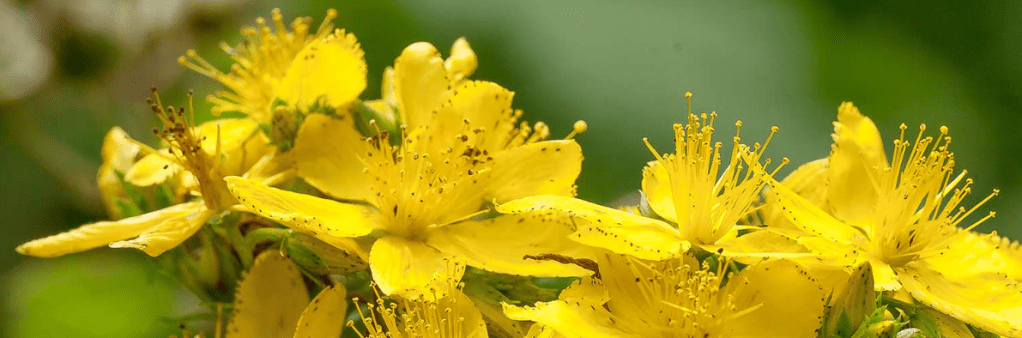
One of the things that marks this as a special time for all sorts of people is that it is also associated with a special flower, The Hypericum, or to give it its posh name, Hypericum perforatum. A native of Europe but now flowering in many other places worldwide (except for Siberia and other cold extremes),it is a bright flower marking bright summer. The dominant colour is vivid yellow, its petals often decorated with black dots. It generally has five petals with five smaller leaf-like sepals below them.

Hypericum is made up of two words from Greek – Hyper  meaning above and eikon meaning picture. This may well date back to a custom, in earlier times, of hanging the flower over an Icon (sacred picture) in the home.

This really introduces us the other name for this plant which is St John’s Wort.There is a direct association with St John the Baptist in the flower itself. It has been suggested that the five petals form a halo, a symbol of saintliness. The red juice which is released when the stem is crushed, represents the blood of the martyred saint.

St John’s Wort is also known for its healing properties and in various forms is a wort or salve (0intment). In earlier times it was used, therefore to ward off evil spirits; safeguard against sickness, protect against the bad things in life. This made the plant special in the nature of healing and it is still  offered as an alternative medicine. It is however toxic to some animals and even humans so should be used carefully and advisedly.
Its power and that of St John the Baptist, is, however feted in an anonymous 14th Century Old English poem:

St Johns wort doth charm all the witches away.
If gathered at midnight on the Saints holy day.
And devils and witches have no power to harm
Those that do gather the plant for a charm.
Rub the lintels and post with that red juicy flower
No thunder nor tempest will then have the power.

The ministry of healing,  offered by John the Baptist to the people who heard his message was a more powerful salve. He was known in the Gospel as the Forerunner the one who prepared the way of Salvation through God’s Son, Jesus.This Salvation is God’s healing of a broken and unloving world and Jesus his beloved Son His Salve,  is the ointment of God’s Saving Love.
John the Baptist led the way to Jesus through his baptism of Repentance, a Baptism which Jesus enhanced through his own life and ministry, death and resurrection. It is possible to say that it is in Baptism that we receive the Healing of God, the Salve which invites us to partake of the Salve of eternal life.

Another title by which St John the Baptist is known is that of Friend of the Bridegroom.
He knew Jesus through a life lived in friendship with God. Friendship brings its own healing and when we are in friendship with God we are touched by the salve or Wort of his love and friendship for us.

Often when we visit friends we take them flowers. Receiving flowers can brighten and change the direction of our day and even our life. Giving them is even better! The love behind them is better still.

St John the Baptist offers us not St John’s Wort but the love and friendship of the  giver, the Lord, our SALVE-ation, who loved us a into being created us to be bright with His image.

[Mr G. Nativity of St John the Baptist. 2025]
Salvation ~ a Candlemas tale

SALVATION ~ a Candlemas tale.

[St Luke 2:28-40]

Joshua and I, Ahuz*, are doorkeepers of the Temple.
We greet people and try to make them welcome.
There are visitors and strangers and, of course, we have our regulars.
Like that old man over by the corner of sacrifice.
We don’t know where he lives but it must be nearby.
He’s always here as soon as the doors are open.

Then there’s Anna who seems to live in the Temple, in a dark, quiet place.
We know her because she has good connections.
She comes from the tribe of Asher and she’s the daughter of Phanuel and she’s a prophet, they say.

We’ve found out that the old man is called Simeon.
He has a stillness about him which suggests that he’s a man of prayer.
He behaves as if he loves God, which is more than most who come here!
Others are more like politicians, self-seekers, people who believe not in God but in their own religious importance.

Old Simeon has just noticed me and he smiles and bows towards me, making me feel human, wanted, needed.
Out of the corner of my eye, I spot the daughter of Phanuel who comes and grasps my cold hands and rubs them warm. It’s a kind gesture of gratitude for letting her wait.

I don’t really know what they are both waiting for but there is always an expectation about them.
I once asked the old man, Simeon, “What are you doing here? What are you waiting for?”
“Salvation”, he said quietly, “and a peaceful death.”

‘Salvation’, isn’t a word we hear in the Temple these days!
That’s what Joshua said, when I told him. “I reckon they’re on a fool’s errand.”
“Maybe”, I tell him, “but I’m not so sure. There’s a holiness about him and Anna, too. There’s wisdom as well, without any trace of self-boasting. They know things we don’t.”
Joshua laughed. “I’ve told you, they’re wasting precious time. They haven’t much left.”

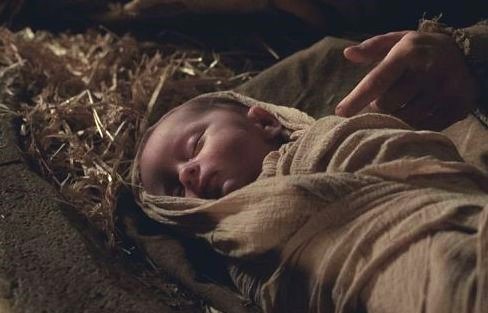
Then, it happened. A young woman and a caring man came into the Temple, carrying a little vulnerable baby.  Purification. It’s like a thanksgiving after childbirth and an act of dedication.
So they made their offering to God and then Simeon shuffled to stand next to them. Anna drew near as well. Interesting! Is this what they were waiting for? Odd, though. How could a baby bring Salvation and hope?

Simeon took the child into his arms and praised God.
I quietly moved towards them, just as the old man began to speak.  “…let me go in peace…I have seen your Salvation…” Love shone in his eyes and in Anna, too.
I couldn’t make sense of it. How could a mere child be God’s fulfilment?
Simeon spoke again of the child, who would be God’s light not only to us, the Jewish people, but also to Gentiles – non-Jews.
You could see that the young couple were as perplexed as I was, but there was more. It was like a prophecy, about a future event, something about conflict the child would cause, some choosing for him, others against him. He would see into every heart; speaking of which, the young lady would also have her heart pierced as if by a sword. It would, without doubt, be a sword of pain and sadness but she seemed to smile a little as if she knew something we didn’t.
Why didn’t Simeon’s word worry her? Nothing would break up her serenity. It was as if she already seemed to live with God.

Then Anna took the child from Simeon’s hands and held him close, cherishing the one of  whom the prophets had spoken. They called him ‘The Messiah’ but this child was called, Jesus.
Where they the same? Was he the one for whom, in the depths of all our hearts we too have been waiting?

For a moment, as we all stood facing the child, the Temple was filled with silence, but it was such a stillness that it felt as though it trembled with the very breath of God.

Salvation had come to the Temple that day. I, Ahuv*, found it in that little child and, like myriads who came to recognize him, I was changed and loved and saved!

[Mr G. Candlemass 2025]

*Ahuv translates as “being loved” or “beloved.” The word ahuv comes from the Hebrew root aleph-hei-vet, which means, “to love.”