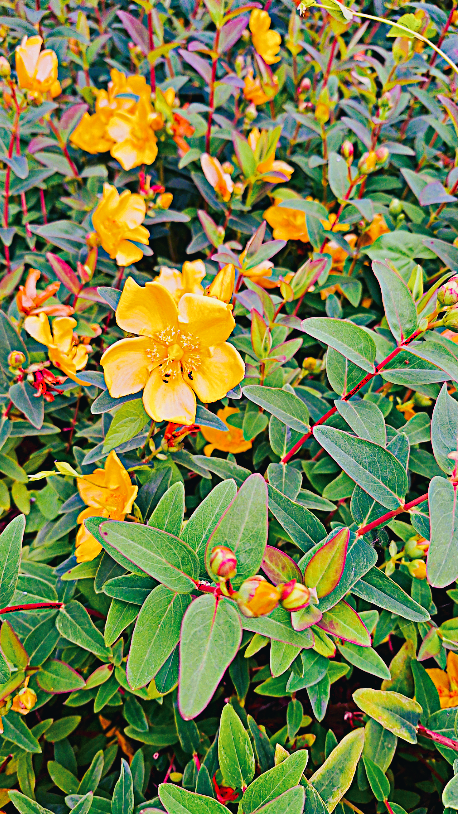
St John’s Wort at Fairacres. Photo by Julia Sheffield.
A few days ago we celebrated the Nativity of St. John the Baptist. (June 24th,) – Midsummer’s Day. John has two festivals though I suspect the one this week was preferable to him than the other which commemorates his beheading!
Just before celebrating his Nativity, I visited the Convent of the Incarnation, the home of the Sisters of the Love of God at Fairacres in Oxford. By the entrance there was a profusion of yellow flowers filling a bush of welcome. I was reminded that the birth of St John the Baptist and this flowering bush are connected. In horticultural parlance it is known by the name Hypericum but it also has a name in religion – that of St. John’s Wort. It flowers mainly in June and usually around the time of St. John’s birthday.
The word ’Wort’ comes from the Old English word, ‘Wyrt’, meaning a plant or a herb or root. It is associated by some with folk medicine and is said to have healing properties in the treatment of mild depression. However, it can affect other medicines adversely so it’s always wisest to consult professional people.
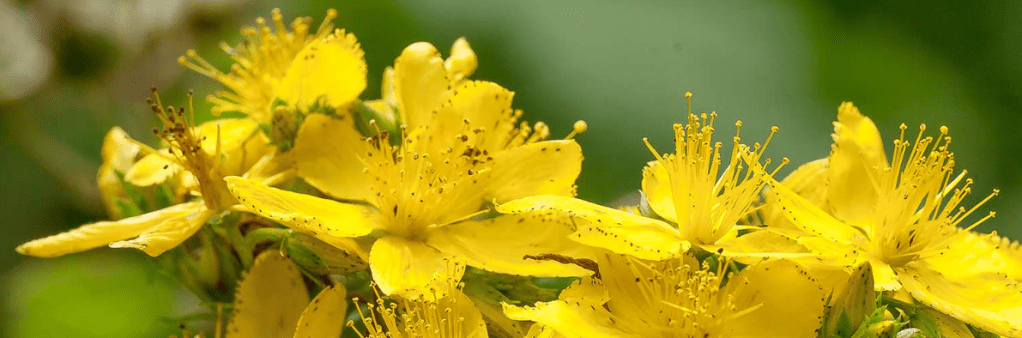
Gardeners know it as a herb with woody roots which the Royal Horticultural Society tells of it bearing yellow flowers mark by black glands and leaves that appear perforated due to translucent glands producing copious seed per plant.
From a religious point of view, it is noted that the flowers have five petals which represent a halo. When cut there is red liquid which becomes a symbol of St. John the Baptist’s beheading.
Religious folklore adds that the plant traditionally wards off evil spirits and demons linking this with St John as a spiritual protector. In medieval Europe people hung sprigs of the plant above doorways to protect homes. During midsummer celebrations the plant was placed in fields and burned in bonfires. This was to protect people, livestock, homes and crops against evil forces.
Oddly, in an age when evil and malice prevail more than ever, we neglect these helpful ceremonies and symbols!
That was certainly not true for Saint Columba. According to Gaelic tradition, Columba always carried a piece of St. John’s Wort not only because of his great regard for St. John but also for its protective and healing qualities.
This is one of the many examples how nature and spirituality are intertwined as God’s great design of Creation of which we are but a part. Living in harmony, care and love for God’s creation which defines us, is something we need to re-discover and put into practice. May St. John’s Wort remind us of that.
Breath of Summer ~ a prayer
Creator God who breathed this world into being, who is discernible within the harmony of nature, the perfection of a butterfly’s wing, the grandeur of a mountain range, the soaring eagle and humming bird, thank you for this world which you have created. Thank you for summer sun, which reminds us that your creative breath is still alive and active. Thank you for the warmth of your love, sustaining this world, your garden
Prayer from Xavier University Cincinnati #Jesuitresource.org is developed by The Center for Mission and Identity at Xavier University with support from the Conway Institute for Jesuit Education.
Raymond Raynes, a former Father Superior of the Community of the Resurrection Mirfield, once asked a group of young people he was teaching: “Can anyone tell me what a saint is?” A young lady on the back row shot up her hand and said, “Yes, Father, a saint is a dead Christian.” Fr. Raynes thought that to have to be dead in order to become a saint was rather depressing.
A more positive answer is that of Archbishop Alban Goodier who wrote:Let us remember that to become saints we have only to be what God wants us to be; To do what God wants us to do; To forget ourselves and never forget God. In order to achieve this we need: Perfect simplicity with regard to ourselves, Perfect contentment with all that comes our way, Perfect peace of mind in utter self-forgetfulness. And all this becomes easier the more we realize the absolute goodness and greatness of God.
Today is the feast of St. John the Baptist and any examination of his life shows us that in every sense of Archbishop Goodier’s description of a Saint, John the Baptist ticks all the boxes.
God wanted John to be a person of prayer, of zeal, of conviction and of action and he was all these things.God wanted him to be a voice crying in the wilderness of a self-centred and self-preoccupied world that people were to prepare themselves for the coming of God amongst them as the Saviour. He would deliver people from all that prevented the love of God growing in their hearts and who would return them to a rightful relationship with Him through repentance – a turning of their lives back to God. John fulfilled all of God’s hopes.
He never sought anything for himself except to serve God. So he could say to his disciples about Jesus . ‘Look, there is the Lamb of God’ and, later, when his disciples told him that Jesus was also baptizing and everyone was now going to him rather than to John, he replied simply that Jesus must increase whilst he, John, decreased. He showed forgetfulness of self whilst never forgetting who was God. When John came briefly onto the centre stage of the sacred drama which would bring Jesus to lead and love His Father’s people into the Kingdom, John was happy with His work as Fore-runner or as the other John put it more beautifully, The friend of the bridegroom. He attracted the crowds and had close disciples but when the time came he faded quietly into the background. Eventually he was arrested and thrown into prison because of his outspokenness towards the sin of the King, Herod.
Then he was beheaded.
And throughout all that happened to him, he was at peace because he was full of God. He recognized the greatness and goodness of God. It was God that John Proclaimed. It is what made him a saint. One of the special Eucharistic prayers for Saints days tells us what a saint is called to be and once again, John the Baptist fulfils this role perfectly.
In the darkness of this passing age They [The Saints] proclaim the glory of your kingdom. Chosen as lights in the world,they surround our steps as we journey on towards the city of eternal light where they sing the everlasting song of triumph. In communion with angels and archangels and all who have served you on earth and worship you now in heaven, we raise our voices to proclaim your glory,
The connection between the saints in heaven and us on earth who are also called to sainthood is that in God’s scheme of things, we are all one, at least in destiny if not yet in substance. St Paul often referred to God’s people as God’s holy ones or saints and thus reminds us that sainthood is about holiness. Holiness is not something we can buy off the shelf or award ourselves, or even earn through trying to gain pious brownie points. It is a gift of God which is His alone to give. It comes to us through the grace he pours into us. We can call that filling us with God. We can call it becoming saintly.
Archbishop Goodier, said that Christ came not to call saints but to MAKEsaints and often he does this out of weak, sinful and unpromising people. Saints are not only models of holiness for us to imitate, they are reminders that God’s grace can outshine every human flaw. Despite all our worst efforts God simply loves us into holiness and that is both comforting and encouraging. And, just as the example of good people around us help to encourage us in our life of faith, so the saints who have travelled this often rough and rocky road can be a great help.
St. John the Baptist brings us in touch with the unique examples of holiness which he shows us in his own life. He turns our vision towards God because that is what his life was all about. To to be inspired by him, to share his vision is surely an excellent reason to go along with him as a special heavenly friend. Our friend and as John said, the friend of the bridegroom (John 3: 29) The one who has an intimate closeness to Jesus himself. And that closeness is brought home to us in a particularly spectacular way in the event which precedes John’s birth, which we know of as the Visitation.
After The Blessed Virgin Mary accepts God’s will that she is to be the mother of Jesus, she goes off to spend time with her cousin Elizabeth, who also is involved in a miracle of her own. Her barren womb is now fertile, by God’s decree, and in her womb is being formed the future John the Baptist. St. Luke tells us that as Mary greeted Elizabeth the child in her womb leapt for joy. Elizabeth was filled with the Holy Spirit. She proclaimed, Blessed are you among women and blessed is the fruit of your womb. This moment led St. Anselm to begin his prayer about St. John the Baptist, with these words:
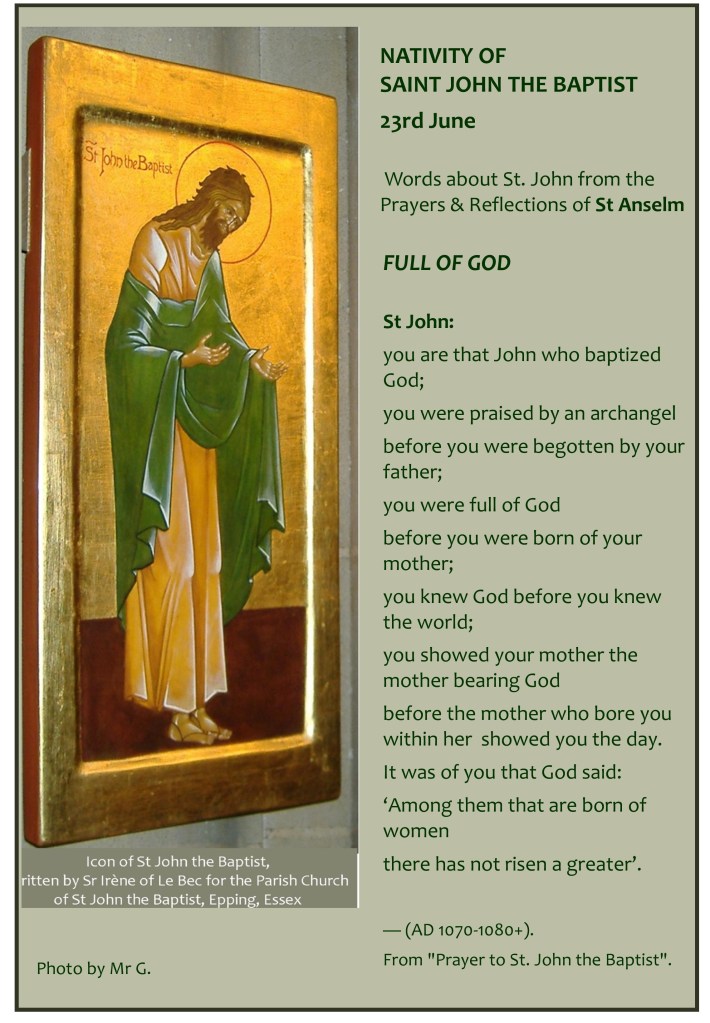
St John, You are that John who baptized God; You were praised by an archangel before you were begotten of your father; you were full of God before you were born of your mother; you knew God before you knew the world.
Anselm’s words are tremendous and absolutely vital if we are to understand something really fundamental about saints and about holiness and about ourselves. I have already drawn attention to the fact that Christ makes us saints and that holiness is a gift from God. Now – St. Anselm tells us precisely what that means. John the Baptist he says, was, full of God and that he knew God before he knew the world. St. Anselm says something very profound. Saintliness is all about God and God’s action in our lives. It’s about recognizing God at work within us, filling us with Himself. It’s as if God is filling the womb of our soul and we are carrying him as he leaps for joy within us.
And if we are full of God we shall indeed know him and this knowledge is far greater than anything we shall acquire in the world. Being full of God is something we should long to be.
Today, the Christian church keeps the festival day of St. John the Baptist. There is another feast day later in the year when we mark his beheading at the hands of King Herod. Today, however, it is a joyful day, possibly helped by the fact that in the Northern Hemisphere it is Mid-Summer!
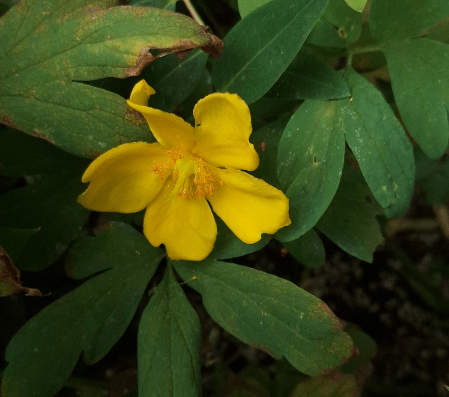
One of the things that marks this as a special time for all sorts of people is that it is also associated with a special flower, The Hypericum, or to give it its posh name, Hypericum perforatum. A native of Europe but now flowering in many other places worldwide (except for Siberia and other cold extremes),it is a bright flower marking bright summer. The dominant colour is vivid yellow, its petals often decorated with black dots. It generally has five petals with five smaller leaf-like sepals below them.
Hypericum is made up of two words from Greek – Hyper meaning above and eikon meaning picture. This may well date back to a custom, in earlier times, of hanging the flower over an Icon (sacred picture) in the home.
This really introduces us the other name for this plant which is St John’s Wort.There is a direct association with St John the Baptist in the flower itself. It has been suggested that the five petals form a halo, a symbol of saintliness. The red juice which is released when the stem is crushed, represents the blood of the martyred saint.
St John’s Wort is also known for its healing properties and in various forms is awort or salve (0intment). In earlier times it was used, therefore to ward off evil spirits; safeguard against sickness, protect against the bad things in life. This made the plant special in the nature of healing and it is still offered as an alternative medicine. It is however toxic to some animals and even humans so should be used carefully and advisedly. Its power and that of St John the Baptist, is, however feted in an anonymous 14th Century Old English poem:
St Johns wort doth charm all the witches away. If gathered at midnight on the Saints holy day. And devils and witches have no power to harm Those that do gather the plant for a charm. Rub the lintels and post with that red juicy flower No thunder nor tempest will then have the power.
The ministry of healing, offered by John the Baptist to the people who heard his message was a more powerful salve. He was known in the Gospel as the Forerunner the one who prepared the way of Salvation through God’s Son, Jesus.This Salvation is God’s healing of a broken and unloving world and Jesus his beloved Son His Salve, is the ointment of God’s Saving Love. John the Baptist led the way to Jesus through his baptism of Repentance, a Baptism which Jesus enhanced through his own life and ministry, death and resurrection. It is possible to say that it is in Baptism that we receive the Healing of God, the Salve which invites us to partake of the Salve of eternal life.
Another title by which St John the Baptist is known is that of Friend of the Bridegroom. He knew Jesus through a life lived in friendship with God. Friendship brings its own healing and when we are in friendship with God we are touched by the salve or Wort of his love and friendship for us.
Often when we visit friends we take them flowers. Receiving flowers can brighten and change the direction of our day and even our life. Giving them is even better! The love behind them is better still.
St John the Baptist offers us not St John’s Wort but the love and friendship of the giver, the Lord, our SALVE-ation, who loved us a into being created us to be bright with His image.