
My friend Gill Henwood has sent me the photo posted above. It is a view of Langdale Pikes from Grizedale Forest, in the Lake District.
There is a certain broodiness about it with its different shades of light and dark which is rather in keeping with the extremities of weather at present in the UK.
The Lake District is a microcosm of our weather patterns and it is always wise, when walking in the Lakeland hills, to have a healthy respect for what Nature offers us. At one level we may call it fickle in that the conditions often change quickly. In another sense, it is a reminder that Planet Earth, and therefore its weather, is not something we can control. Sadly, we are messing things up with our human attempts at superiority over everything on earth.
The current preoccupation with the Northern Lights and with rare sightings of spectacular comets, along with other special things such as solar flares, remind us that these amazing displays from the cosmos are not of our making. They tell us, in fact, how small we are in the Universal scheme of things.
Unfortunately, the human race isn’t very good at learning lessons and applying them with humility to our borrowed and temporary life on earth. It was the poet T.S.Eliot who coined the phrase, humankind cannot bear very much reality so perhaps we shall continue to destroy the earth – and, of course, each other!
It would be good, therefore, if the human race might wake up to itself and accept that, as tenants with a life-span lower than many trees, a bit of humility might not go amiss.
As T. S. Eliot puts it in in his poem East Coker, “The only wisdom we can hope to acquire is the wisdom of humility: humility is endless.”
A large part of the lesson of humility can be found in contemplating the gifts God gives us through Creation. How can we not look at the scene depicted in the Gill’s photo above and be unmoved by what nature is trying to tell us about the Planet which is our home for the time being.
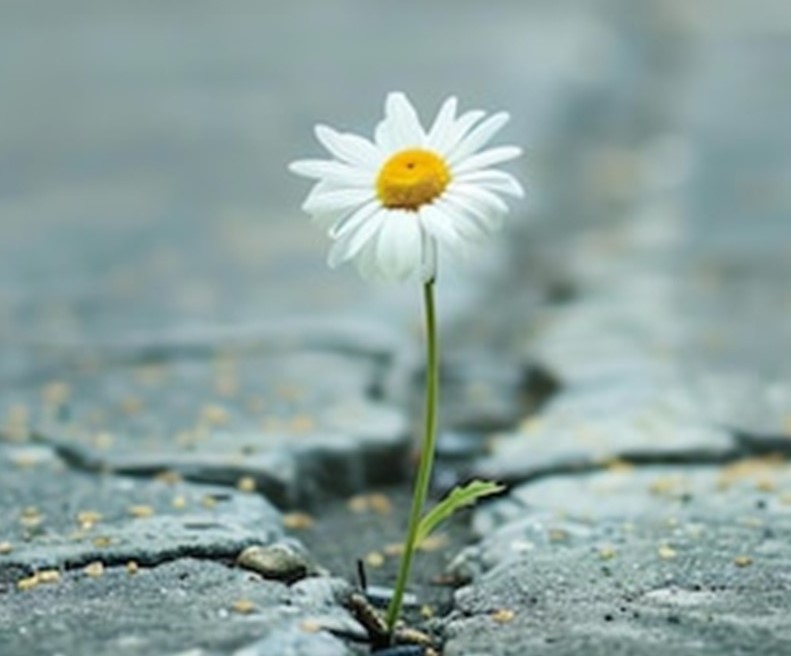
The light shimmering on the hills and the blue sky quietly folding itself around the clouds offers us a message of hope. It is just as true of a tuft of grass or a tiny flower pushing aside the tar of an urban footpath.
When the warmongers of the Middle East and the Russian invasion of Ukraine come to an end, they will leave desolation but it won’t be long before a blade of grass or a microscopic flower spring to life.
Gill’s photo gives me hope. I have added a few words from a lovely hymn by Folliott Sandford Pierpont. He sat on a hill near Bath and was exhilarated by the beauty of creation which was laid out before him. Inspired by what he saw, he was filled with gratitude to God and he wrote his hymn in thanksgiving.
That too is another clue coming from Gill’s photograph ~ thanksgiving.
When we give thanks for Creation and for God who created it, we find ourself in a different place from lordship, conceit and self-centredness. In fact, thanksgiving, turns our attention towards others, towards providence and therefore towards God as Creator.
The photo is filled with the promise. of light and that is a source of joy and hope. If none of this means anything, then perhaps another thought might help – remember the Dinosaurs!
[Mr G] 14th October 2024
The Beauty of Nature
O God, we thank you for this earth, our home;
For the wide sky and the blessed sun,
For the salt sea and the running water,
For the everlasting hills
And the never-resting winds,
For trees and the common grass underfoot.
We thank you for our senses
By which we hear the songs of birds,
And see the splendour of the summer fields,
And taste of the autumn fruits,
And rejoice in the feel of the snow,
And smell the breath of the spring.
Grant us a heart wide open to all this beauty;
And save our souls from being so blind
That we pass unseeing
When even the common thorn bush
Is aflame with your glory,
O God our creator,
Who lives and reigns forever and ever.
– Walter Rauschenbusch
 Mr G's Ponderings