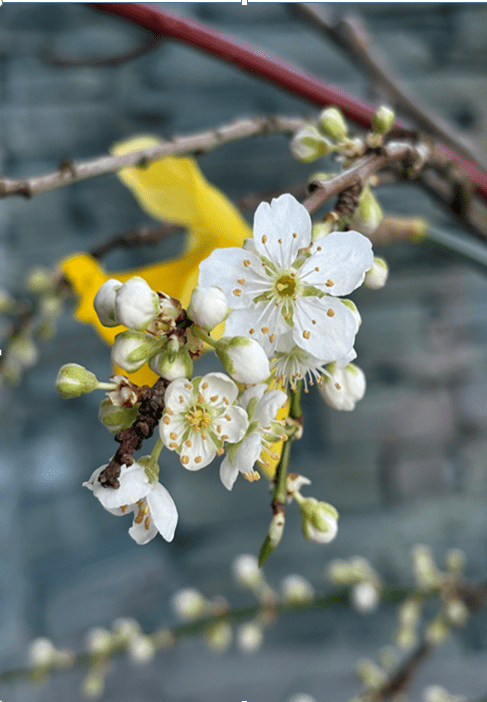
Plum Blossom in the Lake District
Photographed by Gill Henwood
Let us be be grateful
to people who make us happy.
They are the charming gardeners
who make our souls blossom.
~ Marcel Proust ~
Photograph by Gill Henwood
Plum Blossom in the Lake District
Photographed by Gill Henwood
Let us be be grateful
to people who make us happy.
They are the charming gardeners
who make our souls blossom.
~ Marcel Proust ~
Photograph by Gill Henwood

A wise friend once said to me that it only costs the price of a stamp to thank people for something they have done for us or a kindness they have shown to us. Saying Thank You can seem a small thing to do but it can make a world of difference to the person receiving thanks.
Today we might do this via email, WhatsApp or telephone but sending and receiving a greetings card is still rather special.
Kindness is something which is too often lacking in society and it’s all too easy to take people for granted.
That is particularly true about God. We take his love for us for granted and we can fall short of thanking him for his goodness to us.
That is something that I think as we approach Lent.
At a time when so much in the world is dark and negative, life can exist in a state of gloom and emptiness.
That can only ever be part of the story. There are many things that happen which are much more positive. There are also people who make our lives happy and hopeful, joyful and full of kindness.
So, one thing which can help us to change the balance from despair and sadness to joy and gladness is to spend time on giving thanks. In particular we can use the period of Lent as a time of thankfulness to God.
At the beginning and end of each day we can identify something that has happened recently and for which we can thank God. Maybe write these things in a notebook which build up into a special kind of prayer book, or maybe use post-it notes.
We can offer our thanks in a very simple way. During a time of quiet, perhaps only a few minutes, you can tell God your thanksgiving. It may be for some personal action of God’s grace in your life or for something good that has happened to you or you may want to thank him for taking care of you through a difficult period of your life. You may simply want to thank him for the way he continually blesses you and holds you in love. It may be a thanks for what others have contributed to your life, or for a kindness to a friend or relative. It may be for a new insight into the working of God’s love and grace.
Basically we want to Thank God for his many blessings to us—blessings which far outweigh anything negative in our Life.
We continually rejoice at the way God showers his love and grace upon us and how God blesses our efforts to live out the Gospel and try to live a corporate and individual life of discipleship. We try to serve God as best we can and He guides, strengthens and rejoices in that service.
The Book of Common Prayer has a prayer of General Thanksgiving which we might pray. This prayer can gather your thanks to God. Here’s a modern version.
Almighty God, Father of all mercies,
we your unworthy servants give you humble thanks for all your goodness and loving-kindness to us
and to all whom you have made.
We bless you for our creation, preservation,
and all the blessings of this life;
but above all for your immeasurable love
in the redemption of the world by our Lord Jesus Christ;
for the means of grace, and for the hope of glory.
And, we pray, give us such an awareness of your mercies,
that with truly thankful hearts we may show forth your praise,
not only with our lips, but in our lives, by giving up ourselves
to your service, and by walking before you
in holiness and righteousness all our days;
through Jesus Christ our Lord, to whom, with you and the Holy Spirit,
be honour and glory throughout all ages. Amen.
Or something quicker,
a prayer of Dag Hammarkjold (a former General Secretary of the United Nations )
Dear God,
For all that has been, Thanks!
For all that will be, Yes!
[Mr. G. February 14th 2026]
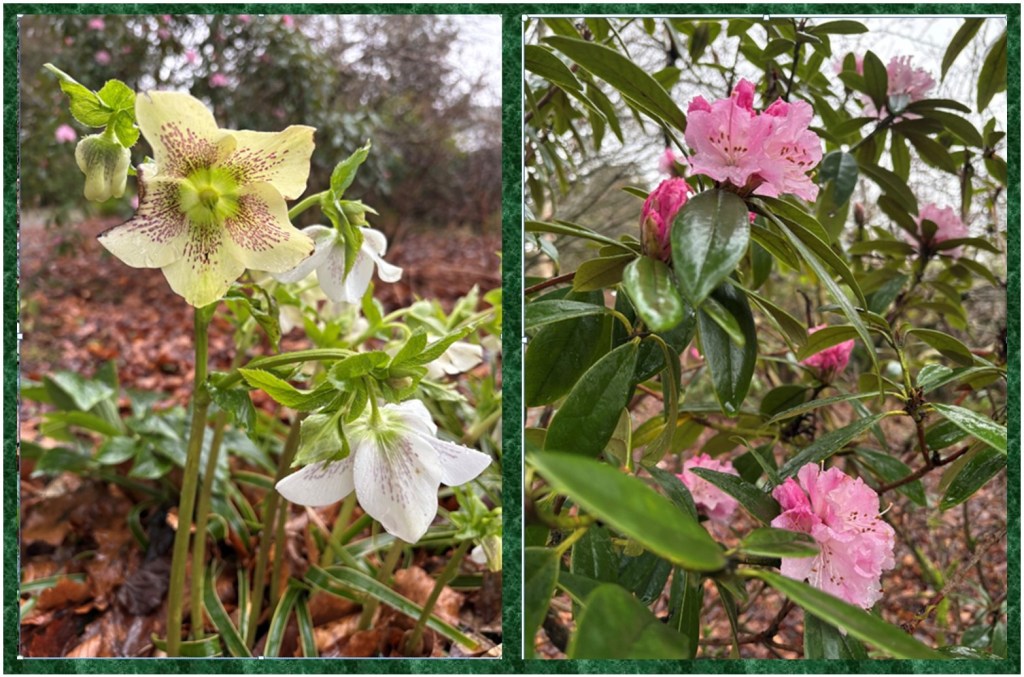
The short period between the end of the Christmas Season (at Candlemass on February 2nd) and Lent, is known in the Church as ‘Ordinary Time’.
As far as Nature is concerned this is very far from the truth. In the Western Hemisphere and particularly in Europe we are moving into the season of Spring. Though in many parts of Europe it has been a particularly stormy and wet period of late, there are many signs that there is new life emerging from the earth.
The photos which my friend Gill Henwood has sent show “hellebores in full flower and an early rhododendron.” She says that “both were budding before Christmas and, so far, have weathered frost and wind”, not forgetting hares which have turned their attention towards other plants this year!
The Christmas Box plant has been wafting beautiful scent throughout Cristmastide. The aroma is fabulous even on dark mornings and dark night walks in the garden. For Gill, this is a reminder of the Frankincense of Christmas.
The ‘Greening’ of the earth which Gill’s photos point to is being experienced through the emergence of buds and bulbs shooting on branches and in the soil. Crocus and daffodil are close behind. My tulips are pushing leaves through the top of the pots, seeking the breath of light and life. This morning, near the church path, buds and a dusting of green spoke to me of God’s amazing creative activity. This Winter has been harsh for many and the world situation is so dire that there is a need for us to re-focus.
Right on cue we can fill our lungs with a breath of hope and wonder.
We can find joy in the singing of the birds and soon the animal kingdom will fill our fields, forests & woodlands and gardens with new life. Bees and butterflies, insects and worms will populate our gardens, hedgerows,lakes and ponds. So much new life and growth will teem and swirl, dance full of life and reach to heaven as the trees prepare to become shade and homes and hiding places for all manner of creation..
And we? The Spirituality of Nature lifts our souls from creation to Creator.
All this is gift from our giving God!
And in a mutual thanksgiving, our part is to be custodians and stewards of the earth, living in deep friendship with Creation, Nature, and with all who allow us to share this earth with them.
As the poet Rumi reminds us:
Such a giving from God leaves no room for anything from us but compassion and love for all.
Hardly an Ordinary Time!
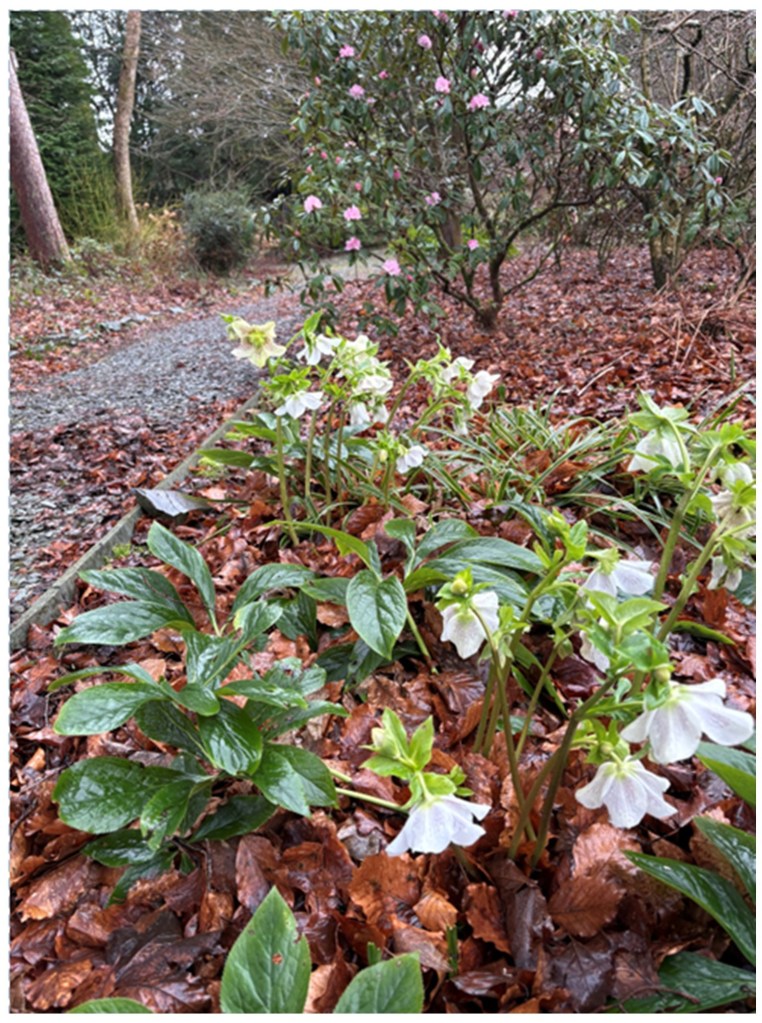
[Mr G. with thanks and love to Gill Henwood for her wonderful photos
and comments.]
Sometimes in our relationships we can lose touch with people. We might be so busy that we neglect friends, relatives, colleagues, even neighbours.
It’s never intentional and when we do find time to catch up, it’s often as if we last spent time with each other yesterday. Even so, real friendships need to be worked at or we simply drift apart and our life loses a little bit of meaning or even love.
Of course, we do have to show that our friendship matters and that we really do mean to do something about it! Here’s a conversation I imagined.
Conversation.
We must catch up sometime soon!
It’s been too long.
There’s so much to talk about.
It’s amazing how time has flown
I don’t know where it’s all gone.
It’s not intentional.
Just so many things getting in the way.
Tell me about it!
There just aren’t enough hours in the day.
But I’m determined to catch up, so I’ll ring you soon.
It would be good to get a date in the diary
otherwise it will never happen.
I’ll email you with some dates when I get home.
Good plan.
Must go but it’s been lovely to chat.
Yes, hasn’t it. I look forward to hearing from you again soon.
Are there any dates you can’t do?
Oh no, I’m always around,
but then, being God, I always will be.
Mr G.
January 29th 2026
 Mr G's Ponderings