Tag: Faith

Famous last words

St Non’s Well where St David is said to have been baptized near St. David’s. Photo Mr G

Not far from St. David’s Cathedral in Wales, there is a lovely scenic walk along the coastal headlands to a place where St. David is reputed to have been born in the 6th century.
It is said that David’s mother, Saint Non, gave birth to David in a house on the site of an ancient chapel and nearby there is a small well bubbling up from the ground and forming a little pool before cascading away. Today it is known as  St. Non’s Well  because tradition says that it first sprung up at the time David was born. The water is said to have healing and miraculous powers. It is regarded as one of the most sacred Wells in Wales. It certainly feels a holy place – one of those spots where you sense that God’s grace has been specially dispensed. Visitors to the well strew garlands of flowers and herbs in the pool of water and some, like me, fill water bottles with the crystal clear spring water. Cupping one’s hand and letting the water trickle through the fingers is a delicious sensation.

David himself was very fond of water – the only liquid he drank, except the wine of the Eucharist. He and his followers were known as the Aquati because of this.  Perhaps, too, David’s affinity with water stems from the legend which surrounds his birth. He is said to have been born in the midst of a terrific thunderstorm!

St. Non, David’s mother, was the daughter of a local chieftain and she is said to have been made pregnant (perhaps even by force) by Prince Sant of the royal house of Ceredigion. Some say he was King. Whatever the circumstance of the pregnancy, Sant seems to have tried to make amends by renouncing his kingdom after David’s birth and following the life of a hermit.

David himself eventually became a monk and a scholar. He is said to have founded 12 monasteries and certainly many came to him to learn the Christian faith. Of those, quite a few went on missionary journeys to Cornwall and to Brittany. There they established the faith and proclaimed the Gospel. David continued to live in Wales but his reputation for holiness and scholarship, as a spiritual warrior,  spread throughout Europe.

He and his monks lived a simple life of prayer, worship and study. They ate frugally on a diet of vegetables with water. Not all his monks approved of this and it is said that a group of them were so fed up that they tried to poison him! Hagiography is not always noted for its accuracy!

It was as death approached that David prepared himself for his final words to his monks and nuns. According to his chief biographer, Rhgyfarch, himself a son of a later Bishop of St. David’s, David gathered his loved ones to his side and spoke these words:

The little things which David taught included prayer, being present for the breaking of bread at the Eucharist; reading scripture; speaking only when necessary and helping the poor. He believed also that we should have a deep respect for others. Learning to listen to each other with real love is a way towards greater understanding but it also leads to godliness. We are encouraged to be lowly, possessing a humility which never expresses itself arrogantly and which steers us away from pride. He also set great store on hospitality – always being ‘at home’ for others and for God – having time for both.
There are so many big, dark things happening in our world today and we might wonder what doing some little things can make such a difference. You would be amazed – in fact do be amazed!

It is the little things we do in Christ’s name which matter most. Mother Teresa of Calcutta expressed much the same thing when she said that she and her sisters didn’t do great things but rather little things with a great love. St. David would have approved of that.
Mother Teresa points us to one particular thing we can do more than anything else and it is suggested by the lovely Saint John of the Cross.

That will change everything in a world of great sorrow and need.

[Mr G]

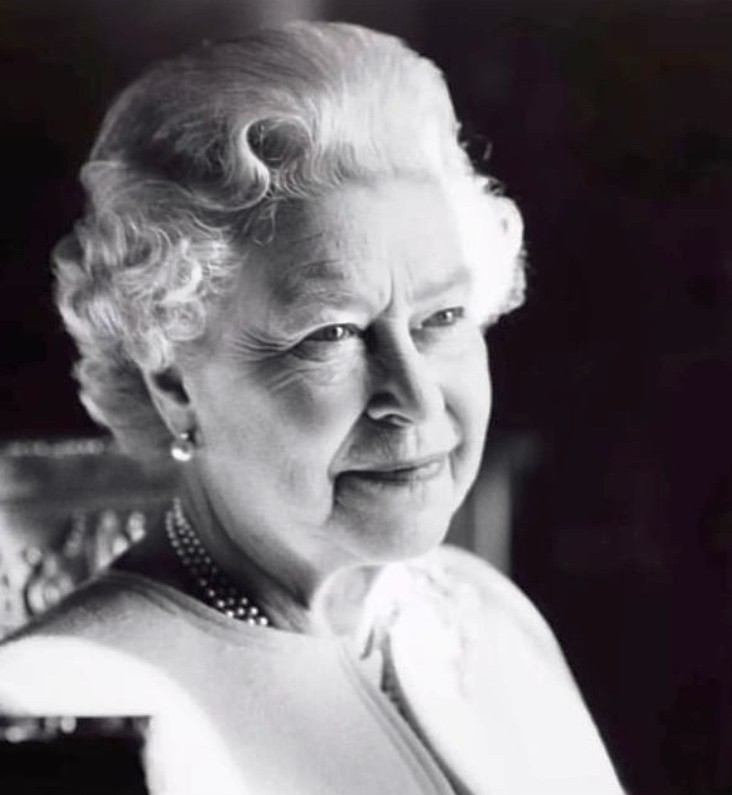
The faith of a Queen

The FAITH OF A QUEEN

Since Queen Elizabeth’s death, many words have been spoken, photos displayed, opinions expressed and conjectures shared. One thing frequently mentioned has been Her Majesty’s faith in God. The often quoted words in her first Christmas broadcast in 1952 asked for people to pray for her. Her request was that God might “give her wisdom and strength to carry out the solemn promises” that she would be making and that she might faithfully serve God and her people, all the days of her life.

In this she set down two elements under one – that she would serve God all the days of her life and that because of this she would serve others.  It’s a statement of intent which would be symbolized in her Coronation service the following year.   As part of the service she was anointed with holy oil to show that her life was being consecrated to God and dedicated to his service.  The Anointing was a form of ordination that would seal this and Elizabeth knew that once she had undertaken this there was no way she could turn her back on God.  This was literally something she must do ‘for  life’.

Behind her determination to do this was the steadfastness of her faith, rooted as it was in a deep personal prayer life and sustained and fed by the Church.  This faith was fed too by her knowledge of Jesus Christ and to learn more about this we need only go to her annual Christmas Broadcasts where she spoke of Jesus’ teachings, handed down from generation to generation, as having been the bedrock of her faith – she found in Jesus an inspiration for her own life, saying, in 2014:

“For me, the life of Jesus Christ, the Prince of Peace, (whose birth we celebrate today), is an inspiration and an anchor in my life.  A role-model of reconciliation and forgiveness, he stretched out his hands in love, acceptance and healing.  Christ’s example has taught me to seek to respect and value all people of whatever faith or none.”

The maturity of her faith, while often tested, carried her through real dark moments.  She believed very strongly in the power of forgiveness to foster and encourage healing.  In her 2011 broadcast she said that ‘Forgiveness lies at the heart of the Christian Faith.  It can heal broken families, restore friendships and reconcile divided communities.

That is the application of forgiveness but Queen Elizabeth went much further: “It is in forgiveness that we feel the power of God’s love.”  For her personally this was given perhaps its hardest test when she shook hands with Sinn Fein’s Martin McGuinness in a gesture seen as a vital step in securing reconciliation between nationalists and unionists in a troubled Northern Ireland, for this was the same Martin McGuinness who had been deeply involved in the murder of Prince Philip’s uncle, Earl Mountbatten, years earlier.

Recognizing the heavy demands on life in the modern world led her to offer great support and comfort in the Covid Lockdowns.  Speaking encouragingly, she told us that this darkness would pass, we would gather as families and we would meet again.

In hard times she turned to her faith:

“I know just how much I rely on my own faith to guide me through the good times and the bad.  Each day is a new beginning, I know that the only way to live my life is to try to do what is right, to take the long view, to give of my best in all that the day brings, and to put my trust in God. Like others of you who draw inspiration from your own faith, I draw strength from the message of hope in the Christian gospel.”

She noted “that Christ not only revealed to us the truth of his teachings. He lived by what he believed and gave us the strength to try to do the same – and, finally, on the cross, he showed the supreme example of physical and moral courage.”

And in 1980, she spoke of the need to look beyond ourselves:

“In difficult times we may be tempted to find excuses for self-indulgence and to wash our hands of responsibility.  Christmas stands for the opposite… we need to go out and look for opportunities to help those less fortunate than ourselves, even if that service demands sacrifice.”

Her life was rooted in prayer and in a desire to learn more of God’s love.

“For Christians, as for all people of faith, reflection, meditation and prayer help us to renew ourselves in God’s love, as we strive daily to become better people.  The Christmas message shows us that this love is for everyone. There is no one beyond its reach.”

Good spreads outwards and every little (good) does help.  Mighty things from small beginnings grow as indeed they grew from the small child of Bethlehem.”

She believed firmly “that God sent his only Son to serve, not to be served”

And she went on to say: “It is my prayer that his example and teaching will continue to bring people together to give the best of themselves in the service of others.”

This was at the heart of her own life of duty and faithfulness.  Someone has described her as our ‘servant-hearted Queen’ – how true that is.

[Mr G]