Tag: God

Singing the song in our heart

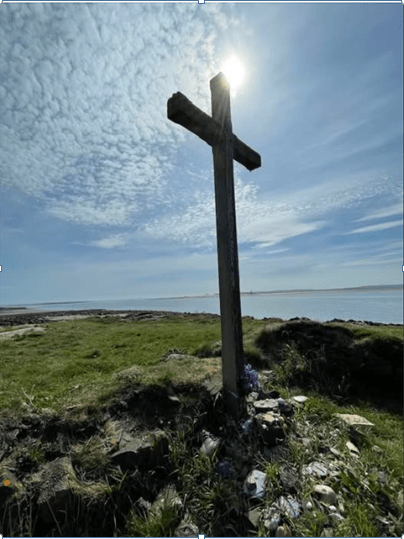
Photo: Lynn Hurry

I post this on St Cecilia’s Day, November 22nd. Since the 15th century she has been known as the Patron Saint of Music. A document known as the Golden Legend’ described her as a “bride of Christ whose love of music elevated her soul to God.  This document also encouraged us to consider the link between earth and heaven. It is a link between the song of heaven, led by the angels and the echo of that song on earth, particularly in religion, poetry and music.

The poet, John Dryden, wrote a Song for St Cecilia’s Day which strengthened that link and serenaded the power of music with the line:

“What Passion cannot music raise and quell?”

For many of us, this is expressed in song and hymns and psalms whilst others use the gifts they have to make music in other ways. (Not a mutually exclusive experience!)
Song and music as an expression of faith has been the subject of a short piece of writing by the Taizé Community which is worth pondering over:

I love the quotation from Maya Angelou which accompanies the photo above.
In the interplay of the Godly song of heaven and our earthly melody of the heart it is good for Maya to remind us that the main reason we can sing and make music is because there is a song in our heart to be sung. A Song put there by God. It raises spirits and lifts our lives beyond ourselves to God. That’s a good enough reason for me to sing.

[Mr G + Taizé Community]

The Invitation

A Pondering on BIBLE SUNDAY, by my friend, The Revd. Becs Challis.

So, it’s Bible Sunday, this is a time where we pay special attention to and give thanks for the Bible in our lives as disciples….
I’ll be honest, for me I find this easier said than done….

  • First, the bible that I am currently paying most attention to is the NIV study bible (a big large hardback book) and I’m paying attention not because I am referencing it  but because it’s just the right size as a laptop stand on my desk.
  • Secondly, rather than simply give thanks  in my inner thoughts, I want to add “but did it really have to be SO long and SO complicated (not only to read but also to understand)
    And I’m not being flippant I am just recognizing my human condition and the fact that actually the bible if I think about it as a “book”,  for me is the source of a lot of shame. And I am going to hedge my bets that I am not totally alone in sometimes slipping into thinking things along these lines?

Yet this is actually the one day when many churches will be praying and giving thanks for the bible, so it’s worth us really understanding what we mean when we say that we are paying attention to and giving thanks for, the Bible. So let’s use this time to take away any  barriers we may have to connecting with God when we are thinking, praying or blowing the dust off and potentially even reading the bible!

So what is it, that we are actually giving thanks for, and can we put words to the impact that that has had on our lives and those around us?
We’re told in 2 Timothy (3:14-4:5) that all scripture is inspired by God, all of it. – The passages we love, the passages we’ve read over and over again, the verses we can recite and the bit’s we’re less familiar with, those sections we skim over or the ones we’ve never read, those passages that we can’t quite reconcile with our view of God, and those ones that have been interpreted differently and used as weapons against us or those we love…. All of them every word is inspired by God.
The bible is God breathed; all 66 books all 700 thousand plus words are inspired words of God. It is the most sold book  (not necessarily most read) but most controversial books in the world.
Yet it’s not a book at all, it’s an invitation into relationship with Jesus, it’s admittedly a very large, dense, wordy invitation. But it is an invitation all the same…

This is an invitation of hope:

  • an invitation to us here in church.
  • an invitation to those who we know aren’t here today
  • an invitation to those who ‘have never’ and ‘will never’ come here….
  • an invitation to the whole human race, the whole world, to all of us grace gifted misfits[1] that in some way don’t think we are good enough

    But what do we do, how do we access this invitation?

Well in Paul’s letter to Timothy there’s a sense of urgency, whatever you do, do something because the Bible is invitation into relationship with Jesus, it is not something to put off for a rainy day.

“Hold fast to what you have learned.”
It might be just one word or one phrase but hold onto it. However, right at the heart of this instruction, it isn’t about gripping tightly with fists closed. Instead, it’s a reminder to hold on with an openness, with a heart ready to receive, a mind willing to explore. The Bible, or “scripture” for Paul, is not a cage meant to confine us. It’s Jesus as light within us, illuminating dark corners, showing us paths of justice, mercy and peace.

The bible, this invitation, is not just to know Jesus, but to be known. This is wisdom for salvation, Paul says – not salvation only in some distant, other-worldly sense, but salvation that reaches into the here and now, into our living, breathing lives on the good days and on those that are more challenging.
The Bible when we let it breathe, has the power to show us how to live in rhythm with God’s grace, in sync with God’s love. – This invitation instead of us reading it, allows us to be read and in turn, to be known.

The interesting thing about invitations is that they generally come with an RSVP, it’s not good enough to just receive the invitation of the Bible we have to respond as well:

In John’s Gospel (5:36b-end) Jesus says:
You study the Scriptures diligently because you think that in them you have eternal life. These are the very Scriptures that testify about me, yet you refuse to come to me to have life.

The RSVP to the invitation we have all been given is not found in echo chambers and divisions, or in those voices that are heard louder and more confidently than the rest, it’s not found in words that flatter rather than challenge…
The response, the real response to us receiving the gift of the Bible, the inspired word of God, is to take it in with each breath we take , each pause, each silence each chaotic unplanned moment, each waking minute of every day move closer to Jesus.

And as with all invitations, they generally always come with a +1
For Timothy, and for us the invitation to be in relationship with Jesus is not about how much you’ve read or whether you can quote it word for word, it is about how you respond in the ordinariness of your life. How you embody the Good news in all you say and do. It’s about living life in a way that others can see Jesus through and in you.
So if you do nothing else, just find a way that works for you to connect and engage with the Bible and let God’s inspired breath become part of all of us. This invitation is to a dynamic relationship, one with a God that is very much alive, not a relic of the past covered in dust,  but rather, a living breathing divinely inspired word unfolding all around us, calling us to new depths of love and wisdom and inviting us to be shaped, transformed and in turn transform others.


(based on a sermon preached at St. Mary-at-Latton, Harlow. on Sunday October 27th 2024.

[Becs Challis,
Programme Manager Mission & Ministry, Diocese of Chelmsford

For the beauty of the earth.

Langdale Pikes from Grizedale Forest, Lake District. Photo by Gill Henwood

My friend Gill Henwood has sent me the photo posted above. It is  a view of Langdale Pikes from Grizedale Forest, in the Lake District.
There is a certain broodiness about it with its different shades of light and dark which is rather in keeping with the extremities of weather at present in the UK.
The Lake District is a microcosm of our weather patterns and it is always wise, when walking in the Lakeland hills, to have a healthy respect for what Nature offers us. At one level we may call it fickle in that the conditions often change quickly. In another sense, it is a reminder that Planet Earth, and therefore its weather, is not something we can control. Sadly, we are messing things up with our human attempts at superiority over everything on earth.
The current preoccupation with the Northern Lights and with rare sightings of spectacular comets, along with other special things such as solar flares, remind us that these amazing displays from the cosmos are not of our making. They tell us, in fact, how small we are in the Universal scheme of things.
Unfortunately, the human race isn’t very good at learning lessons and applying them with humility to our borrowed and temporary life on earth. It was the poet T.S.Eliot who coined the phrase, humankind cannot bear very much reality so perhaps we shall continue to destroy the earth – and, of course, each other!

It would be good, therefore, if the human race might wake up to itself and accept that, as tenants with a life-span lower than many trees, a bit of humility might not go amiss.
As T. S. Eliot puts it in in his poem East Coker, “The only wisdom we can hope to acquire is the wisdom of humility: humility is endless.”

A large part of the lesson of humility can be found in contemplating the gifts God gives us through Creation. How can we not look at the scene depicted in the Gill’s photo above and be unmoved by what nature is trying to tell us about the Planet which is our home for the time being.
The light shimmering on the hills and the blue sky quietly folding itself around the clouds offers us a message of hope. It is just as true of a tuft of grass or a tiny flower pushing aside the tar of an urban footpath.
When the warmongers of the Middle East and  the Russian invasion of Ukraine come to an end, they will leave desolation but it won’t be long before a blade of grass or a microscopic flower spring to life.
Gill’s photo gives me hope. I have added a few words from a lovely hymn by Folliott Sandford Pierpont. He sat on a hill near Bath and was exhilarated by the beauty of creation which was laid out before him. Inspired by what he saw, he was filled with gratitude to God and he wrote his hymn in thanksgiving.

That too is another clue coming from Gill’s photograph ~ thanksgiving.
When we give thanks for Creation and for God who created it, we find ourself in a different place from lordship, conceit and self-centredness. In fact, thanksgiving, turns our attention towards others, towards providence and therefore towards God as Creator.
The photo is filled with the promise. of light and that is a source of joy and hope. If none of this means anything, then perhaps another thought might help – remember the Dinosaurs!

[Mr G] 14th October 2024

– Walter Rauschenbusch

Of Angels.

St. Michael ~ detail~ Statue carved by Josefina de Vasconcellos
~ first exhibited in Manchester Cathedral in the winter of 1991
~ now it is on permanent display in Cartmel Priory, in the Lake District.
photo by Mr. G.
Therefore with Angels and Archangels …

At almost every Eucharist Christians pray: “Therefore with angels and archangels and with all the company of heaven, we proclaim your great and glorious name.” The picture is of our being part of a great company, invisible but near, who worship Almighty God without ceasing. At this point in the Eucharist we are at what the Celts call a ‘thin place’ when the barrier between earth and heaven is opened to those who have faith to see it. That can be very helpful when we are missing departed loved ones but we are also reminded that our worship is caught up in a greater praise. We, as it were, plug in to a current of worship which is forever flowing and for ever being proclaimed. But for many, angels belong to myth and one wonders what is going through many Christian minds when they reach that point in the Eucharist. Despite the fact that Holy Scripture is crammed with references to angels and they play a significant part in the Christmas and Easter stories, it is easy to dismiss them.
It is also rather arrogant because it assumes that God who is the great creator of everything on earth, is incapable of creating any other order of being than we can actually see. Yet we continue to explore space for other forms of life—assuming, naturally, that what we will find will be ‘human’ life! As we seem to be making quite a mess of our own planet it might be better if we hoped any life form found might not be human! The writer of Psalm 8 praises creation and puts humanity in its place:

“When I consider your heavens, the work of your fingers,
the moon and the stars that you have ordained,
What are mortals that you should be mindful of them;
mere human beings, that you should seek them out?
You have made them little lower than the angels
and crown them with glory and honour.


Though human beings have dominion (or stewardship) of creation on earth we are ‘lower than’ angels. They have a special place in God’s scheme of things—as Defenders in the cosmic battle between good and evil; as messengers of God’s word to humanity as in the Annunciation; as healers and as guardians. Jesus himself spoke of angels in this way saying that God’s little ones have their Guardian angels and he, himself, knew of their ministrations at the end of his wilderness experience. If Jesus believes in angels, who are we to dispute their existence and their part in God’s plan?

[St Michael’s Day is September 29th]

[Mr G]