A few days ago we celebrated the Nativity of St. John the Baptist. (June 24th,) – Midsummer’s Day.
John has two festivals though I suspect the one this week was preferable to him than the other which commemorates his beheading!
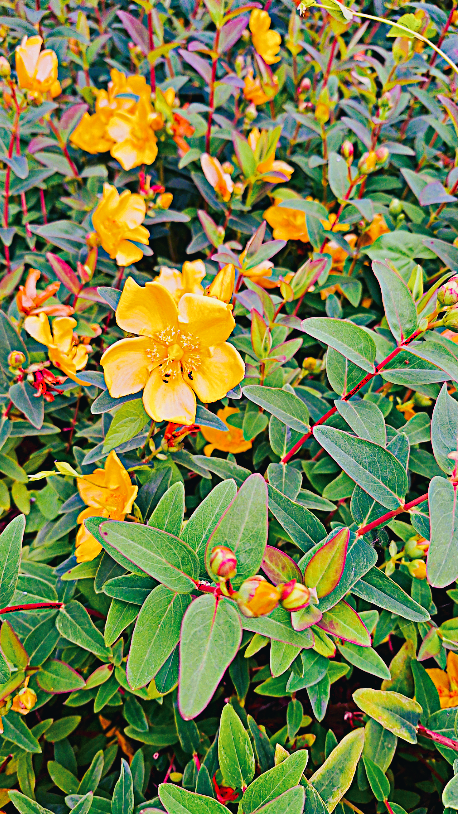
Just before celebrating his Nativity, I visited the Convent of the Incarnation, the home of the Sisters of the Love of God at Fairacres in Oxford. By the entrance there was a profusion of yellow flowers filling a bush of welcome.
I was reminded that the birth of St John the Baptist and this flowering bush are connected. In horticultural parlance it is known by the name Hypericum but it also has a name in religion – that of St. John’s Wort. It flowers mainly in June and usually around the time of St. John’s birthday.
The word ’Wort’ comes from the Old English word, ‘Wyrt’, meaning a plant or a herb or root. It is associated by some with folk medicine and is said to have healing properties in the treatment of mild depression. However, it can affect other medicines adversely so it’s always wisest to consult professional people.
Gardeners know it as a herb with woody roots which the Royal Horticultural Society tells of it bearing yellow flowers mark by black glands and leaves that appear perforated due to translucent glands producing copious seed per plant.
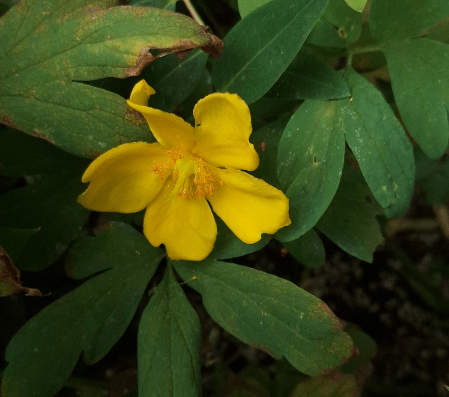
From a religious point of view, it is noted that the flowers have five petals which represent a halo. When cut there is red liquid which becomes a symbol of St. John the Baptist’s beheading.
Religious folklore adds that the plant traditionally wards off evil spirits and demons linking this with St John as a spiritual protector. In medieval Europe people hung sprigs of the plant above doorways to protect homes. During midsummer celebrations the plant was placed in fields and burned in bonfires. This was to protect people, livestock, homes and crops against evil forces.
Oddly, in an age when evil and malice prevail more than ever, we neglect these helpful ceremonies and symbols!
That was certainly not true for Saint Columba. According to Gaelic tradition, Columba always carried a piece of St. John’s Wort not only because of his great regard for St. John but also for its protective and healing qualities.
This is one of the many examples how nature and spirituality are intertwined as God’s great design of Creation of which we are but a part. Living in harmony, care and love for God’s creation which defines us, is something we need to re-discover and put into practice.
May St. John’s Wort remind us of that.
Breath of Summer ~ a prayer
Creator God
who breathed this world into being,
who is discernible within
the harmony of nature,
the perfection of a butterfly’s wing,
the grandeur of a mountain range,
the soaring eagle and humming bird,
thank you for this world
which you have created.
Thank you for summer sun,
which reminds us
that your creative breath
is still alive and active.
Thank you for the warmth of your love,
sustaining this world,
your garden
Prayer from Xavier University Cincinnati #Jesuitresource.org is developed by The Center for Mission and Identity at Xavier University with support from the Conway Institute for Jesuit Education.
[Mr G. 27th June 2026]

