Tag: Nature

For the beauty of the earth.

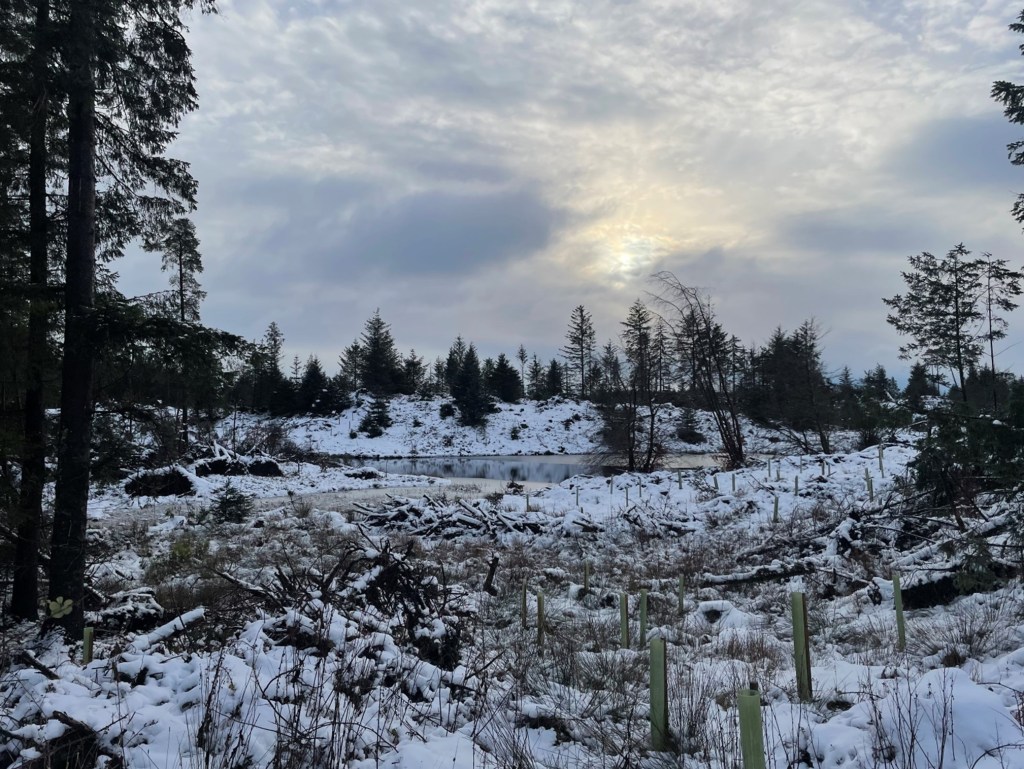
Langdale Pikes from Grizedale Forest, Lake District. Photo by Gill Henwood

My friend Gill Henwood has sent me the photo posted above. It is  a view of Langdale Pikes from Grizedale Forest, in the Lake District.
There is a certain broodiness about it with its different shades of light and dark which is rather in keeping with the extremities of weather at present in the UK.
The Lake District is a microcosm of our weather patterns and it is always wise, when walking in the Lakeland hills, to have a healthy respect for what Nature offers us. At one level we may call it fickle in that the conditions often change quickly. In another sense, it is a reminder that Planet Earth, and therefore its weather, is not something we can control. Sadly, we are messing things up with our human attempts at superiority over everything on earth.
The current preoccupation with the Northern Lights and with rare sightings of spectacular comets, along with other special things such as solar flares, remind us that these amazing displays from the cosmos are not of our making. They tell us, in fact, how small we are in the Universal scheme of things.
Unfortunately, the human race isn’t very good at learning lessons and applying them with humility to our borrowed and temporary life on earth. It was the poet T.S.Eliot who coined the phrase, humankind cannot bear very much reality so perhaps we shall continue to destroy the earth – and, of course, each other!

It would be good, therefore, if the human race might wake up to itself and accept that, as tenants with a life-span lower than many trees, a bit of humility might not go amiss.
As T. S. Eliot puts it in in his poem East Coker, “The only wisdom we can hope to acquire is the wisdom of humility: humility is endless.”

A large part of the lesson of humility can be found in contemplating the gifts God gives us through Creation. How can we not look at the scene depicted in the Gill’s photo above and be unmoved by what nature is trying to tell us about the Planet which is our home for the time being.
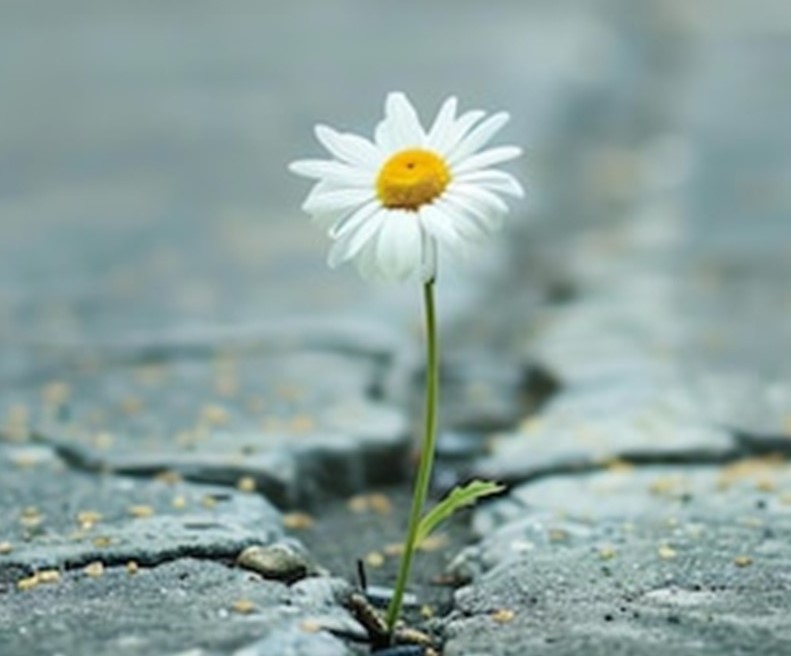
The light shimmering on the hills and the blue sky quietly folding itself around the clouds offers us a message of hope. It is just as true of a tuft of grass or a tiny flower pushing aside the tar of an urban footpath.
When the warmongers of the Middle East and  the Russian invasion of Ukraine come to an end, they will leave desolation but it won’t be long before a blade of grass or a microscopic flower spring to life.
Gill’s photo gives me hope. I have added a few words from a lovely hymn by Folliott Sandford Pierpont. He sat on a hill near Bath and was exhilarated by the beauty of creation which was laid out before him. Inspired by what he saw, he was filled with gratitude to God and he wrote his hymn in thanksgiving.

That too is another clue coming from Gill’s photograph ~ thanksgiving.
When we give thanks for Creation and for God who created it, we find ourself in a different place from lordship, conceit and self-centredness. In fact, thanksgiving, turns our attention towards others, towards providence and therefore towards God as Creator.
The photo is filled with the promise. of light and that is a source of joy and hope. If none of this means anything, then perhaps another thought might help – remember the Dinosaurs!

[Mr G] 14th October 2024

– Walter Rauschenbusch

Woodland ponder

Woodland collage photographed b y Mr G

 An Autumn Pondering

They lay where they fell, spine cracked wood,
snatched from their roots yet lying on the ground which once fed them.
Separated logs, twigs, branches, brushed aside and hidden by the lofty trees which remain swishing their still-leaved branches, a little too haughtily.
Mourning or with relief? The fate is not yet theirs.
Allowing the wind to jet-stream through the whisper of greens and faded yellows turning gold and red.

The dying of autumn leaves flutter down like confetti at a wedding where the bride and groom have long since departed.
Soon they will be carpets strewn by nature over the dead,
hiding what has been lost, grave clothes which will also fade and die.

The Cycle of life and death leaves behind a part of nature that will rot and crumble its way into the earth that bore them, enlivened and sustained them.

Here, in the stillness of the forest, Dying and death, so natural here in the grove, is never Natures final answer. The fallen wood brings hope of life for others. Quiet movement announces that the tenants of the Forest,
are  seeking shelter from the coming tendrils of frosty winter.
They creep into the open veins of broken wood – insects, over-wintering spiders, slugs and beetles already yawning, awaiting hibernation.
Late-skipping squirrels pause to rest on upturned benches made by the forest debris, wondering where they buried their winter food.
Woodland creatures;  birds, rabbits and foxes; bats, worms burrow deeply, nesting bees, beetles and woodlice, millipedes, even snakes, all gather as Nature holds out a welcome to the Winter hotel.
So many of nature’s guests book their wintry yet warm rooms, each finding peace and safety and food according to need and station.
Rain falls onto wood opening up pools of refreshment in the crevices or intertwine of branches, as fungi steadies itself for growth and roots give up the water so necessary for life.

In Nature nothing is wasted.
Nothing is left over, abandoned, discarded.
All are part of the creative cycle of life to which we all belong.
Only God our Creator is eternally whole and holds everything in love according to His Divine Plan.

Mr G. October 12th 2024

For more information about the importance of dead wood
see the presentation under ‘Deadwood’ on the Woodland Trust site.

Hatfield Forest is under the care of the National Trust.

Mellow Fruitfulness

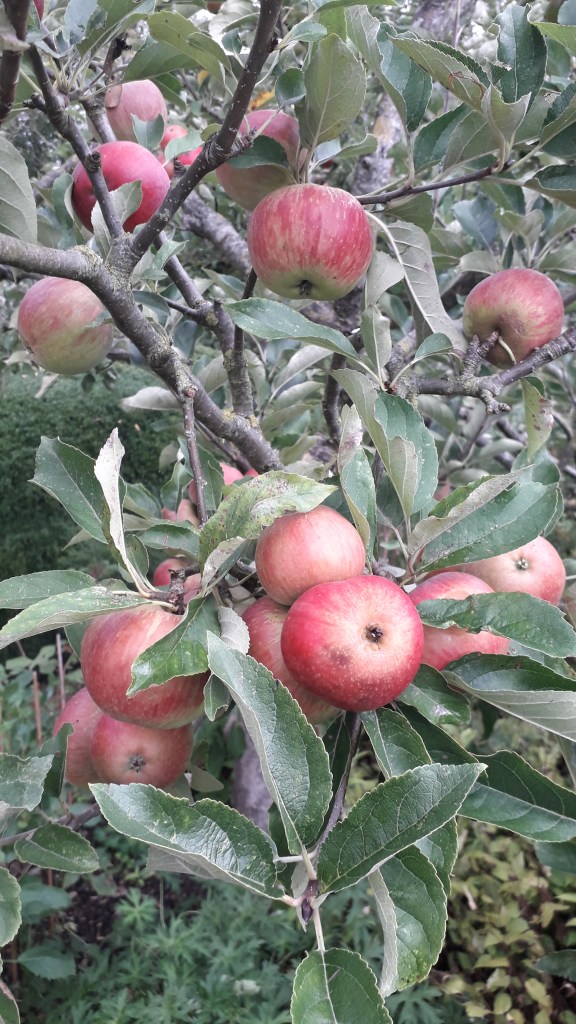
{Autumn apples at Charleston. photograph Mr. G}

On the last day of September, some thoughts naturally turn to Autumn. This was true this morning as I took a companion to the local railway station. As tends to happen on such occasions, this led to poetry!

Of all the poems about Autumn, the one most well known is probably Ode to Autumn, beginning with the words, Season of mists  and mellow fruitfulness …
It was composed by the English Romantic Poet, John Keats, in 1819 and published first in 1820.
Many can quote the beginning and others know it by heart. Some may know snatches and others simply are just aware of it. For some it may be time to remake its acquaintance!
This beginning of Autumn could be a good time for this. It is such a beautifully descriptive poem which draws people into the depth of its richness and to a delightful meaning.
Though many have written and reflected about this, it really doesn’t need a commentary. Just a walk in the countryside, woods, park or any place where nature reveals herself.

Let the poem quietly and even thrillingly, soak into your being.
My hope is then you will come to appreciate Creation more wonderfully and, of course, that it will lead you to a more thankful blessing of your Creator God in all his loveliness and providence.

[Mr]

Season of mists and mellow fruitfulness,
    Close bosom-friend of the maturing sun;
Conspiring with him how to load and bless
    With fruit the vines that round the thatch-eves run;
To bend with apples the moss’d cottage-trees,
    And fill all fruit with ripeness to the core;
        To swell the gourd, and plump the hazel shells
    With a sweet kernel; to set budding more,
And still more, later flowers for the bees,
Until they think warm days will never cease,
        For Summer has o’er-brimm’d their clammy cells.

Who hath not seen thee oft amid thy store?
    Sometimes whoever seeks abroad may find
Thee sitting careless on a granary floor,
    Thy hair soft-lifted by the winnowing wind;
Or on a half-reap’d furrow sound asleep,
    Drows’d with the fume of poppies, while thy hook
        Spares the next swath and all its twined flowers:
And sometimes like a gleaner thou dost keep
    Steady thy laden head across a brook;
    Or by a cyder-press, with patient look,
        Thou watchest the last oozings hours by hours.

Where are the songs of Spring? Ay, where are they?
    Think not of them, thou hast thy music too,—
While barred clouds bloom the soft-dying day,
    And touch the stubble-plains with rosy hue;
Then in a wailful choir the small gnats mourn
    Among the river sallows, borne aloft
        Or sinking as the light wind lives or dies;
And full-grown lambs loud bleat from hilly bourn;
    Hedge-crickets sing; and now with treble soft
    The red-breast whistles from a garden-croft;
        And gathering swallows twitter in the skies.

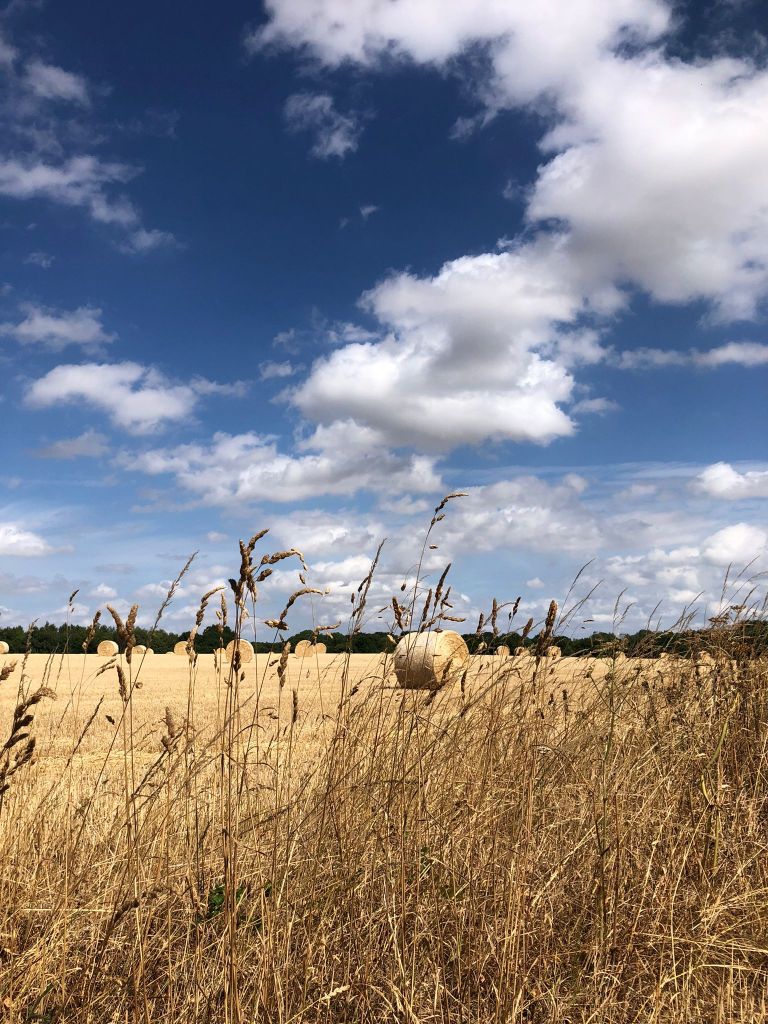
Photo: Julia Sheffield

[Mr G]