Tag: Nature

A little honey too!

Bee and flower kiss and make nectar. Photo : Lynn Hurry

World Bee Day

According to all known laws of aviation, there is no way that a Bumble Bee should be able to fly. Its wings are too small to get its fat little body off the ground. It’s something to do with its body mass in relation to its wing span. It’s all been tested out, using the science of aerodynamics and a wind tunnel.
The Bumble Bee is, however, blissfully ignorant of this scientific fact and, possessing considerable determination, and refusing to accept a low expectation of its capabilities, it not only does fly, but it makes a little honey too.

[Perhaps we can bear that in mind when we are faced with difficulties about things we can or can’t do. Even more important when others tell us what we can’t do. Think of the bee and don’t let others put you down.]

Despite possessing determination, the bee population needs our help at present.

This week, the United Nations led us in the observance of a World Bee Day. It is generally held on May 20th. The date was chosen to honour Anton Jans̆a, a pioneer of modern beekeeping who was born on May 20th, 1734.The main purpose of the Day is to raise awareness about the essential role that bees and other pollinators play in “in maintaining healthy ecosystems and ensuring food security.” (UN).
By encouraging the observance of this day, it is hoped that actions might be promoted to protect and enhance bees and other pollinators and their habitats which are threatened increasingly by human activities such as habitat loss, increasing and indiscriminate use of pesticides and the effects of climate change.
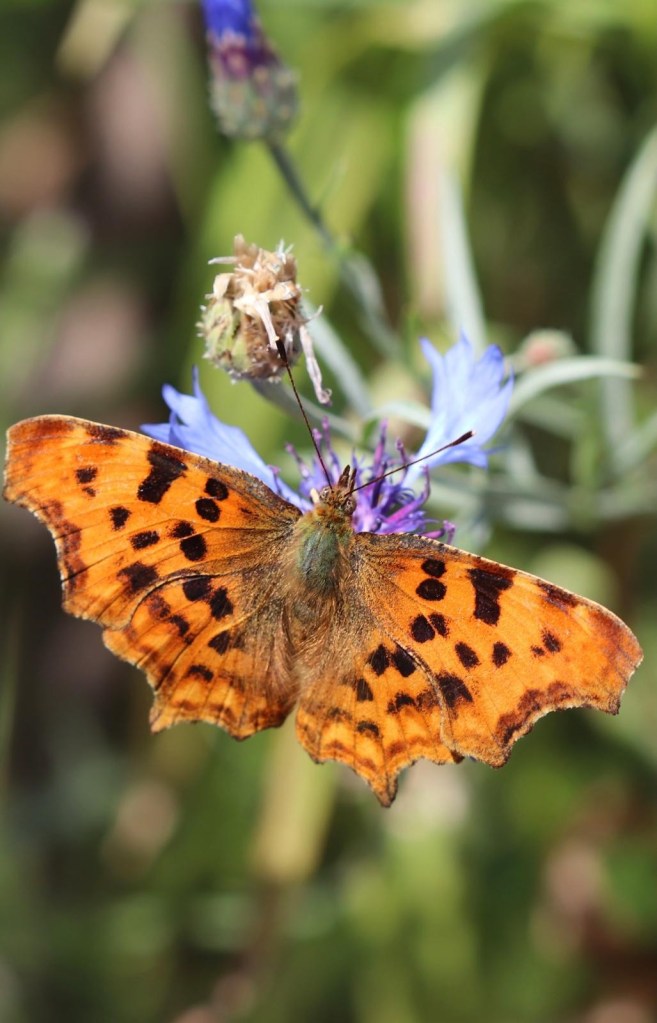
Pollinators, which include bees and also endangered butterflies, are responsible for a staggering reproduction of over 75% of the world’s food crops BUT 40% of them are currently at risk of extinction.

The United Kingdom Government has issued suggestions how gardeners and other’s involved in the growth of plants, might help to nurture nature and help our pollinators to thrive:

  1. Grow more nectar rich flowers, shrubs, and trees. Using window or balcony boxes are good options if you don’t have a garden;  
  2. Let patches of garden and land grow wild;  
  3. Cut grass less often;  
  4. Do not disturb insect nests and hibernation spots; and  
  5. Think carefully about whether to use pesticides.  
  6. In addition you could build a bee hotel and make a bee watering station. Bees and butterflies, wasps and other pollinators need water and bowls placed around your garden or window box can be a real lifeline.

Don’t forget to commit this action to prayer:
In Ecclesiasticus Chapter 11, verse 3, we can read:
The bee is small among flying creatures,
but what it produces is the best of sweet things.

Here’s a prayer inspired by this:

O God, Creator of the earth,
We pray for tiny, buzzing bees
who work so hard and true to pollinate
and bring life anew.
May we protect them from harm and wrong
and cherish the gifts they bring along.
All creation speaks of Your divine glory.
May we honour and protect it, in Your divine name.
Amen.

Photo: Lynn Hurry

All things New

Gill Henwood, photo towards Gooseyfoot Tarn, Lake District.

Behold I make all things new (Book of Revelation 21: 5)
This is a hope expressed at the end of the New Testament and it is re-enacted each year as Spring approaches.Despite the effects of climate change, Nature is determined to keep Planet Earth going. This, despite attempts by some of the human species to do the opposite. But we can rejoice and have hope. The Witch-Hazel in my garden is already producing its leaves on which it will build new growth. Tulips,  daffodils and other bulbs are beginning to peep over the parapets of their pots. Things are being made new.

Gooseyfoot Tarn. (Photo by Gill Henwood)

My friend Gill who sent me the photos of Nature at work in her part of the Lake District, at Gooseyfoot Tarn, has also sent me this comment:

As February approaches, in the Northern Hemisphere, we can look forward to more light and the greening of new growth. Life in our world is far from easy just now and sometimes it is hard to have hope. The world’s political situation is very uncertain and wildfires and other climatic disasters make it hard for many others. Yet, there is a renewal and regeneration which tells us a different story. Below is a prayer which many will find helpful. In whatever way we are able, may we all try to take up what it is telling us about our Stewardship of the earth and our share in the creative process of God.

Daffs appearing. Photo: Gill Henwood

[Mr G. 23rd January 2025]

For the beauty of the earth.

Langdale Pikes from Grizedale Forest, Lake District. Photo by Gill Henwood

My friend Gill Henwood has sent me the photo posted above. It is  a view of Langdale Pikes from Grizedale Forest, in the Lake District.
There is a certain broodiness about it with its different shades of light and dark which is rather in keeping with the extremities of weather at present in the UK.
The Lake District is a microcosm of our weather patterns and it is always wise, when walking in the Lakeland hills, to have a healthy respect for what Nature offers us. At one level we may call it fickle in that the conditions often change quickly. In another sense, it is a reminder that Planet Earth, and therefore its weather, is not something we can control. Sadly, we are messing things up with our human attempts at superiority over everything on earth.
The current preoccupation with the Northern Lights and with rare sightings of spectacular comets, along with other special things such as solar flares, remind us that these amazing displays from the cosmos are not of our making. They tell us, in fact, how small we are in the Universal scheme of things.
Unfortunately, the human race isn’t very good at learning lessons and applying them with humility to our borrowed and temporary life on earth. It was the poet T.S.Eliot who coined the phrase, humankind cannot bear very much reality so perhaps we shall continue to destroy the earth – and, of course, each other!

It would be good, therefore, if the human race might wake up to itself and accept that, as tenants with a life-span lower than many trees, a bit of humility might not go amiss.
As T. S. Eliot puts it in in his poem East Coker, “The only wisdom we can hope to acquire is the wisdom of humility: humility is endless.”

A large part of the lesson of humility can be found in contemplating the gifts God gives us through Creation. How can we not look at the scene depicted in the Gill’s photo above and be unmoved by what nature is trying to tell us about the Planet which is our home for the time being.
The light shimmering on the hills and the blue sky quietly folding itself around the clouds offers us a message of hope. It is just as true of a tuft of grass or a tiny flower pushing aside the tar of an urban footpath.
When the warmongers of the Middle East and  the Russian invasion of Ukraine come to an end, they will leave desolation but it won’t be long before a blade of grass or a microscopic flower spring to life.
Gill’s photo gives me hope. I have added a few words from a lovely hymn by Folliott Sandford Pierpont. He sat on a hill near Bath and was exhilarated by the beauty of creation which was laid out before him. Inspired by what he saw, he was filled with gratitude to God and he wrote his hymn in thanksgiving.

That too is another clue coming from Gill’s photograph ~ thanksgiving.
When we give thanks for Creation and for God who created it, we find ourself in a different place from lordship, conceit and self-centredness. In fact, thanksgiving, turns our attention towards others, towards providence and therefore towards God as Creator.
The photo is filled with the promise. of light and that is a source of joy and hope. If none of this means anything, then perhaps another thought might help – remember the Dinosaurs!

[Mr G] 14th October 2024

– Walter Rauschenbusch

Woodland ponder

Woodland collage photographed b y Mr G

 An Autumn Pondering

They lay where they fell, spine cracked wood,
snatched from their roots yet lying on the ground which once fed them.
Separated logs, twigs, branches, brushed aside and hidden by the lofty trees which remain swishing their still-leaved branches, a little too haughtily.
Mourning or with relief? The fate is not yet theirs.
Allowing the wind to jet-stream through the whisper of greens and faded yellows turning gold and red.

The dying of autumn leaves flutter down like confetti at a wedding where the bride and groom have long since departed.
Soon they will be carpets strewn by nature over the dead,
hiding what has been lost, grave clothes which will also fade and die.

The Cycle of life and death leaves behind a part of nature that will rot and crumble its way into the earth that bore them, enlivened and sustained them.

Here, in the stillness of the forest, Dying and death, so natural here in the grove, is never Natures final answer. The fallen wood brings hope of life for others. Quiet movement announces that the tenants of the Forest,
are  seeking shelter from the coming tendrils of frosty winter.
They creep into the open veins of broken wood – insects, over-wintering spiders, slugs and beetles already yawning, awaiting hibernation.
Late-skipping squirrels pause to rest on upturned benches made by the forest debris, wondering where they buried their winter food.
Woodland creatures;  birds, rabbits and foxes; bats, worms burrow deeply, nesting bees, beetles and woodlice, millipedes, even snakes, all gather as Nature holds out a welcome to the Winter hotel.
So many of nature’s guests book their wintry yet warm rooms, each finding peace and safety and food according to need and station.
Rain falls onto wood opening up pools of refreshment in the crevices or intertwine of branches, as fungi steadies itself for growth and roots give up the water so necessary for life.

In Nature nothing is wasted.
Nothing is left over, abandoned, discarded.
All are part of the creative cycle of life to which we all belong.
Only God our Creator is eternally whole and holds everything in love according to His Divine Plan.

Mr G. October 12th 2024

For more information about the importance of dead wood
see the presentation under ‘Deadwood’ on the Woodland Trust site.

Hatfield Forest is under the care of the National Trust.