[Based on a sermon by Piers Northam and adapted and added to by Mr G.]
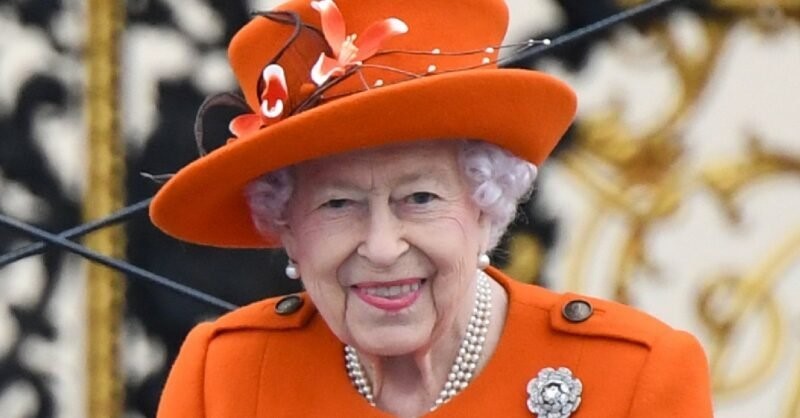
This week we, in the United Kingdom and the British Commonwealth, have commemorated the Anniversary of the Birth of Queen Elizabeth II (our longest reigning Monarch) who would have celebrated her Centenary on April 21st.
She died in 2022.
At the time of her death, our present King – Charles III – wrote:
‘The death of my beloved Mother, Her Majesty The Queen, is a moment of the greatest sadness for me and all members of my family. We mourn profoundly the passing of a cherished Sovereign and a much-loved Mother. I know her loss will be deeply felt throughout the country, the Realms and the Commonwealth, and by countless people around the world.’
In his message we can note a holding together of the two things: the personal and the shared. The Royal Family were mourning a mother, grandmother, great-grandmother; and we as a Nation were mourning the death of our Sovereign – who for many of us at the time was the only one we’ve ever known – but one with whom so many of us feel a strong, personal connection.
At the Platinum Jubilee, just before her death, the then Prince Charles began his speech ‘Your Majesty… Mummy…’ to huge applause. For Queen Elizabeth inhabited both those roles and in so doing, she became the person who drew us together as a worldwide family – through national ties, but also through ties across the Commonwealth and beyond. She inspired love and that drew people of all races, colours, creeds and classes together. This was her gift and, in her way, she made possible a drawing together of people.
She not only brought people together but also, through her historic ancestry was a link with many previous generations. She had clearly defined links to Queen Victoria and further back to Margaret of Scotland – the sister of Henry VIII. Her bloodline was well established.
It brought with it a right to rule but this right was tied with both responsibility and accountability.
No one, with power to govern, either elected or inherited, can avoid accountability which defines how they act and how that action is carried out in service for others.
This is very important in our present day when some world leaders are wielding power for their own ends and with no real sense of care for others.
Queen Elizabeth did not rely on right or might. What defined her was not bloodline, but rather, loveline.
For Queen Elizabeth the Loveline had its roots in God and in an Almighty Love which has a global outreach – and one that extends beyond humanity to all of Creation.
Queen Elizabeth gladly accepted that God’s love is for each and every one of us, his beloved children who, through Jesus are drawn into a global and eternal family of love.
She expressed this in terms of a belonging together as a community under God, remembering that community is about holding our world in a common unity. Her Majesty, in her Christmas broadcasts, clearly proclaimed her belief in the importance of community: In 2001 she said this:
‘I believe that strong and open communities matter both in good times as well as in bad. Certainly they provide a way of helping one another. Communities also give us an important sense of belonging which is a compelling need in all of us. We all enjoy moments of great happiness and suffer times of profound sadness; the happiness is heightened, the sadness softened when it is shared. But there is more than that. A sense of belonging to a group, which has in common the same desire for a fair and ordered society, helps to overcome differences and misunderstanding by reducing prejudice, ignorance and fear. We all have something to learn from one another, whatever our faith… whatever our background, whether we be young or old.’
But her understanding went further than that, as she said in 2007:
Jesus of Nazareth reached out and made friends with people whom others ignored or despised. It was in this way that he proclaimed his belief that, in the end, we are all brothers and sisters in one human family.
Our humanity alongside our responsibility for the Care of all Creation is rooted and grounded in Love which flows from the Love of God.
For Queen Elizabeth this became an essential part of her loveline which she expressed in two ways.
One is that she had a deep interest and love for people. At an individual level, so many have talked of how when they met her, she paid them her full attention; really listening to them; entirely focused on them during their exchange. There is that sense that in so doing, she honoured their identity, openly and without judgement.
The other theme is the way that at a national and international level, she was able to draw us together; to point to something bigger than our own private concerns. Her ability to forge a connection with us; to show her love and care and concern for us in that long life of service – service to the Nation, the Commonwealth and the wider global community;– helped us to feel that vital sense of connection to each other; helped us to see beyond ourselves and give us a sense of belonging.
In our deeply fragmented world both internationally and locally, we need to take those words, which are the essence of who Elizabeth was, and cherish them deeply in our own hearts.
All this sprang from her profound faith and trust in God.
This must be something we seek for our own lives and what we should expect and demand from others. Not least from those in leadership who act in ungodly ways whilst pretending to believe they have some kind of Divine right to behave as they do! Not least those who have the temerity to believe they might have some claim to a Godliness which couldn’t be further from the truth.
Reflection on the Saints, their actions, prayers and faith has always been an helpful way of shaping our own lives and souls. Queen Elizabeth lived a saintly life (indeed, for me she is a worthy candidate for for Canonization!) and as we seek a way out of the present morass of our world, we would do well to ponder on her example, values and faith.
Here’s how we may set about doing it:
- by following her example;
- by trusting in the goodness of God
and his ability to do great things; - by looking beyond ourselves to others;
- by seeking to draw all people into family;
- by honouring each of God’s beloved children
who are our brothers and sisters;
So, here’s a blessing prayer which was a favourite one of Queen Elizabeth’s.
Go forth into the world in peace;
be of good courage;
hold fast that which is good;
render to no one evil for evil;
strengthen the fainthearted;
support the weak;
help the afflicted;
honour all people;
love and serve the Lord,
rejoicing in the power of the Holy Spirit.
Amen.
{Piers Northam &Mr G 22nd April 2026}

