Tag: King Charles III

From Bloodline to Loveline

Lessons from Queen Elizabeth

[Based on a sermon by Piers Northam and adapted and added to by Mr G.]

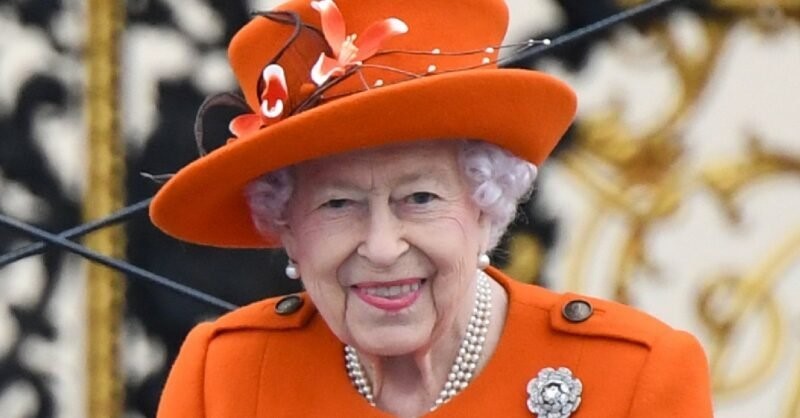
This week we, in the United Kingdom and the British Commonwealth, have commemorated the Anniversary of the Birth of Queen Elizabeth II (our longest reigning Monarch) who would have celebrated her Centenary on April 21st.
She died in 2022.

At the time of her death, our present King – Charles III – wrote:

‘The death of my beloved Mother, Her Majesty The Queen, is a moment of the greatest sadness for me and all members of my family.  We mourn profoundly the passing of a cherished Sovereign and a much-loved Mother.  I know her loss will be deeply felt throughout the country, the Realms and the Commonwealth, and by countless people around the world.’

In his message we can note a  holding together of the two things: the personal and the shared.  The Royal Family were mourning  a mother, grandmother, great-grandmother; and we as a Nation were mourning the death of our Sovereign – who for many of us at the time  was the only one we’ve ever known – but one with whom so many of us feel a strong, personal connection. 

At the Platinum Jubilee, just before her death, the then Prince Charles began his speech ‘Your Majesty… Mummy…’ to huge applause.   For Queen Elizabeth inhabited both those roles and in so doing, she became the person who drew us together as a worldwide family – through national ties, but also through ties across the Commonwealth and beyond.  She inspired love and that drew people of all races, colours, creeds and classes together.  This was her gift and, in her way, she made possible a drawing together of people.

She not only brought people together but also, through her historic ancestry was a link with many previous generations. She had clearly defined links to Queen Victoria and further back to Margaret of Scotland – the sister of Henry VIII.  Her bloodline was well established. 
It brought with it a right to rule but this right was tied with both responsibility and accountability.
No one, with power to govern, either elected or inherited, can avoid accountability which defines how they act and how that action is carried out in service for others.
This is very important in our present day when some world leaders are wielding power for their own ends and with no real sense of care for others.
Queen Elizabeth did not rely on right or might. What defined her was not bloodline, but rather, loveline.

For Queen Elizabeth the Loveline had its roots in God and in an Almighty Love which has a global outreach – and one that extends beyond humanity to all of Creation.

Queen Elizabeth gladly accepted that God’s love is for each and every one of us, his beloved children who, through Jesus are drawn into a global and eternal family of love.
She expressed this in terms of a belonging together as a community under God, remembering that community is about holding our world in a common unity. Her Majesty, in her Christmas broadcasts, clearly proclaimed her belief in the importance of community:  In 2001 she said this:

‘I believe that strong and open communities matter both in good times as well as in bad.  Certainly they provide a way of helping one another.  Communities also give us an important sense of belonging which is a compelling need in all of us.  We all enjoy moments of great happiness and suffer times of profound sadness; the happiness is heightened, the sadness softened when it is shared.  But there is more than that.  A sense of belonging to a group, which has in common the same desire for a fair and ordered society, helps to overcome differences and misunderstanding by reducing prejudice, ignorance and fear.  We all have something to learn from one another, whatever our faith… whatever our background, whether we be young or old.’

But her understanding went further than that, as she said in 2007:

Jesus of Nazareth reached out and made friends with people whom others ignored or despised.  It was in this way that he proclaimed his belief that, in the end, we are all brothers and sisters in one human family.

Our humanity alongside our responsibility for the Care of all Creation is rooted and grounded in Love which flows from the Love of God.

For Queen Elizabeth this became an essential part of her loveline which she expressed in two ways.  
One is that she had a deep interest and love for people.  At an individual level, so many have talked of how when they met her, she paid them her full attention; really listening to them; entirely focused on them during their exchange.  There is that sense that in so doing, she honoured their identity, openly and without judgement.

The other theme is the way that at a national and international level, she was able to draw us together; to point to something bigger than our own private concerns.  Her ability to forge a connection with us; to show her love and care and concern for us in that  long life of service – service to the Nation, the Commonwealth and the wider global community;– helped us to feel that vital sense of connection to each other; helped us to see beyond ourselves and give us a sense of belonging.
In our deeply fragmented world both internationally and locally, we need to take those words, which are the essence of who Elizabeth was, and cherish them deeply in our own hearts.

All this sprang from her profound faith and trust in God.

This must be something we seek for our own lives and what we should expect and demand from others. Not least from those in leadership who act in ungodly ways whilst pretending to believe they have some kind of Divine right to behave as they do! Not least those who have the temerity to believe they might have some claim to a Godliness which couldn’t be further from the truth.

Reflection on the Saints, their actions, prayers and faith has always been an helpful way of shaping our own lives and souls. Queen Elizabeth lived a saintly life (indeed, for me she is a worthy candidate for for Canonization!) and as we seek a way out of the present morass of our world, we would do well to ponder on her example, values and faith.

Here’s how we may set about doing it:

  • by following her example;
  • by trusting in the goodness of God
    and his ability to do great things;
  • by looking beyond ourselves to others;
  • by seeking to draw all people into family;
  • by honouring each of God’s beloved children
    who are our brothers and sisters;

So, here’s a blessing prayer which was a favourite one of  Queen Elizabeth’s.

{Piers Northam &Mr G 22nd April 2026}

The Fragility of Freedom

a Candle for Holocaust Memorial Day. The Church of Scotland.

Holocaust Memorial Day 2024

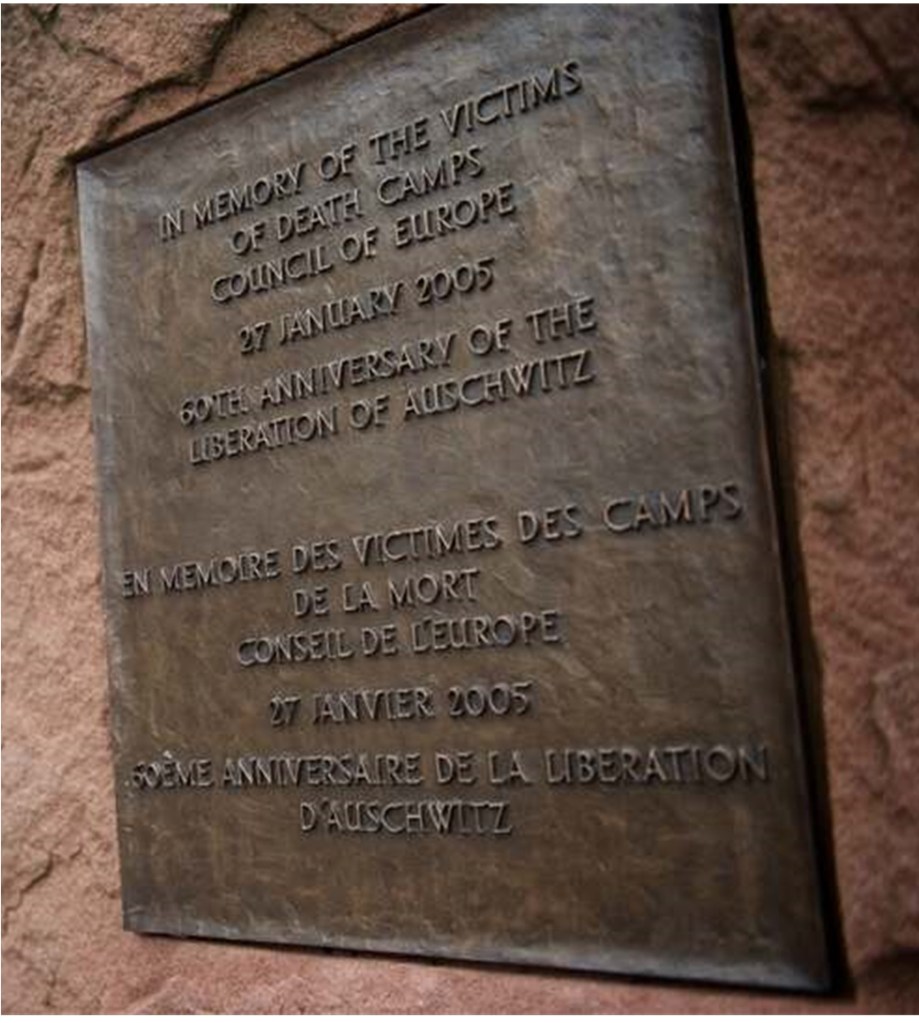
With our world in increasing turmoil and uncertainty, it is even more important that we pause to recall the atrocities of the past and the horror, and method of the destruction, by the Nazis of,  millions of Jews, Roma, Resistance members, politicians, homosexuals, Jehovah’s Witnesses, and disabled persons. The Holocaust Memorial Day is the day for people to remember all the victims and those in the genocides which followed in other parts of the world. The 27th of January marks the liberation of Auschwitz, Birkenau, the largest Nazi death camp.
We are reminded this day of the Fragility of Freedom, especially in our own times.
This is summed up, for me, in a message from King Charles III, which he has asked to be shared with others.

This week, people from across the United Kingdom and the world are coming together to remember the six million Jewish men, women, and children who were murdered during the Holocaust, alongside the millions of other people killed under Nazi persecution, and those killed in other genocides such as in Rwanda, Srebrenica, and Cambodia.
The theme for Holocaust Memorial Day 2024 is the Fragility of Freedom, a stark reminder to us all how freedom can so easily be lost when it is taken for granted, and how crucial it is, therefore, to learn from those who bear witness to the horrors of the Holocaust and all genocides. Tragically, we live in a world where violence and acts of unspeakable cruelty are still perpetrated against people for no other reason than their religion, their race or their beliefs. In recommitting ourselves to remembering the horrors of the past, we take an important step in creating a safer, freer world today and for future generations.

For us in the United Kingdom, Holocaust Memorial Day offers a valuable opportunity for the richly diverse communities of this nation to come together and recommit to building a society free from antisemitism, persecution and hatred. This steadfast commitment is at the heart of everything the Holocaust Memorial Day Trust does. It is why its vital work in ensuring that people across the country are able to pay fitting tribute to those who were murdered and to honour those who survived, remains as important as ever before.

A Prayer for Holocaust Memorial Day 2024:
The Fragility of Freedom

The Council of Christians and Jews in the United Kingdom has written the following prayer to reflect this theme.

Anointed to serve

Photo: BBC

A Call to service.

At the beginning of the Coronation Service Samuel Strachan, a boy of His Majesty’s Chapel Royal, addressed The King:
Your Majesty, as children of the kingdom of God we welcome you in the name of the King of kings.
King Charles replied:
“In his name and after his example I come not to be served but to serve.”

Right at the beginning of the Coronation; a service rich in music, symbolism, pageantry, and historic significance, the heart of what was happening was stated clearly.
King Charles had come with Queen Camilla to Westminster Abbey to be consecrated to a particular kind of life; a life of Service.

The Archbishop of Canterbury at the beginning of his sermon said:
We are here today to crown a king and we crown a king to serve.

The word and the meaning dominated the proceedings.

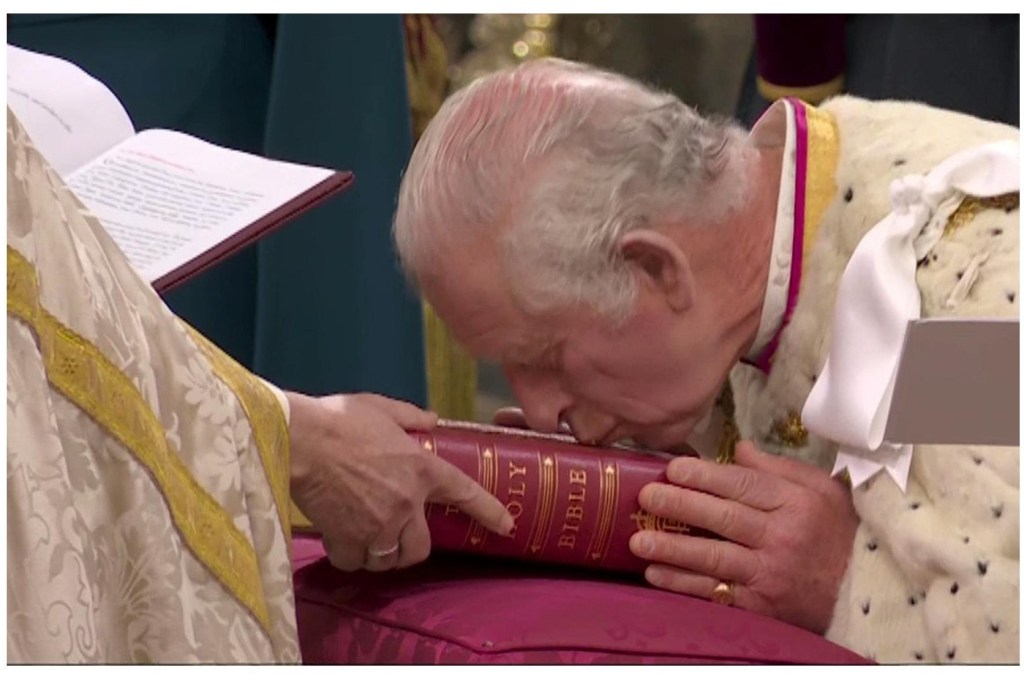
King Charles, himself, placed himself under obedience to serve and he referred to the Gospel message of Jesus who made it quite clear that He came not to be served but to serve.
Charles prayed:

GOD of compassion and mercy whose Son was sent not to be served but to serve, give grace that I may find in thy service perfect freedom and in that freedom knowledge of thy truth. Grant that I may be a blessing to all thy children, of every faith and belief, that together we may discover the ways of gentleness and be led into the paths of peace; through Jesus Christ our Lord. Amen.

King Charles thus pledged his life as King to the King of Kings by imitation.
He saw and proclaimed it his duty to serve in a way which is Love in Action and which reaches out to the vulnerable in our society and builds up communities where all share this duty of service.  With our King we are all called to dedicate our lives for the service of others.
This is what was behind the invitation of the Archbishop for the Nation to get behind our new Sovereign in an allegiance to share with him in a life of service.

As the Archbishop was to say later, we are bound together with our King to work for the Righteous Salvation of all.
This was a work which was a pledge between God and the King and between King and the People.
For this work King Charles is consecrated, set apart, not from the people but for us.

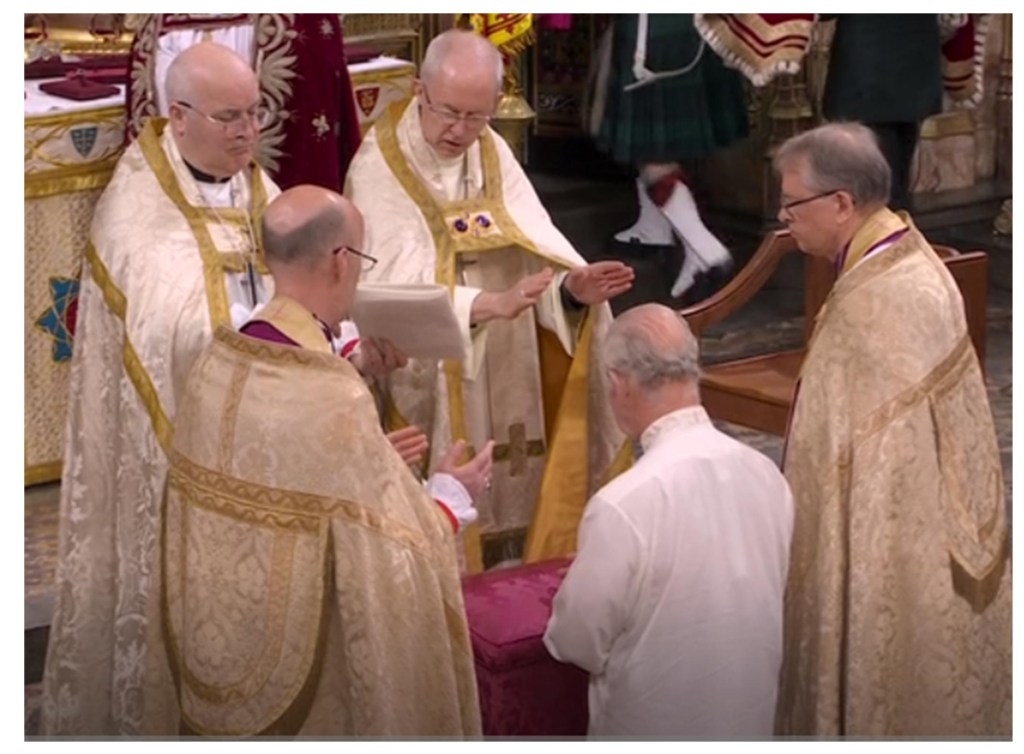
Coronation is an act of Ordination in much the same way that the Ministry of the Church is set apart to serve God and people.
The Crowning and anointing are sacred acts of being Chosen by God and set apart as all those who ministered to the King in that service to others.
Whilst there are differences in how that is done by the King, the Queen, the working members of the Royal Family, and all those who are ordained in some way, Archbishops, Bishops, Priests, Licensed ministers, all who have submitted to God through Baptism, the call to serve is the same.
The context for this is to be found in the marvellous reading from 1 Peter 2:1-10
This is an example of what the Moderator of the Church of Scotland said, of Scripture, Wisdom, Royal Law and one of the
Lively Oracles of God.
In this passage from 1 Peter Chapter 2: 1-10 is the text for all of us to be set apart as servants of the King of Kings.

In the context of the Ministry and Service of Jesus whom the writer of 1 Peter calls the Living Stone, who has been chosen and precious in God’s sight, we too are to be living stones who are also chosen and are precious to God.

When I read this, I think of all those times when I walked over the hills of the North! On rocky and not always distinct paths, I would come across Cairns, mounds of stones which were way marks, showing the uncertain traveller which way to go. They were a godsend and there is a custom that, if possible, you are to add a stone or pebble to the cairn. That way you will help to guide others.

I believe that when 1 Peter asks us to become Living Stones we are being encouraged to add our lives to the waymarks which lead people through this world to heaven.
We become these way marks through a life dedicated to God, consecrated to prayer, opening our hearts to the Lively Oracles of Scripture, learning from others who have laid waymarks for our own personal journey – those who have nurtured and encouraged our faith. Things which have built us up to be, as 1 Peter puts it, spiritual houses.

But the epistle goes further.
We are Consecrated, set apart, as a Royal Priesthood, which is another way of saying that, through our life as people Baptized by God, we have a particular calling to represent and serve God in the world.

We know that there is a cost to this Priestly ministry but also that Jesus has paid this cost.

In the Coronation Service we were reminded what this cost entailed.
In our Lord’s Coronation, he bore a heavy weight for us. His throne is the Cross. His Crown was made of thorns; His robe was seeped, in blood, his marks of Kingship were the wounds he bore on his body.
A very different Coronation indeed but through it we became people whom the writer of 1 Peter puts it:
A chosen race,
A royal priesthood, a holy nation and most of all:
God’s own people.

How marvellous is that!

Here is the Pledge and Promise of God to us.
Here lies the bedrock of our life of service.
Here is the spring of absolute joy, of hope, of love.

Here is the source of our energy to transform the world, starting with the people and places with whom and with which we are most nearly connected.

We are called and set apart by God for an amazing mission,
To proclaim the mighty acts of him (God) who called you out of darkness into his marvellous light.

We can do this because we are God’s people.
We are filled with God’s mercy and his love and because we receive God’s Grace, the outpouring of His very Being into us.

During the Eucharist, the Archbishop prayed
 that by the anointing of God’s grace, Charles  may be the Defender of Faith and the:
Protector of thy people; that, with him, we may learn the ways of service, compassion, and love; and that the good work thou hast begun in him
this day may be brought to completion in the day of Jesus Christ.

Note that –with Him,

In the verses which follow our reading from 1 Peter,(2:11f) there is an exhortation to behave in such a way towards others that through us they may see God at work and so glorify Him with us.

The alternative Collect for Easter 5 sums up both the ministry of King Charles and ours, and puts it in the context of our Lord Jesus Christ.
Risen Christ.

Your wounds declare your love for the world
and the wonder of your Risen Life.
Give us compassion and courage to risk ourselves
for those we serve, to the Glory of God the Father.
Amen

[Mr G]

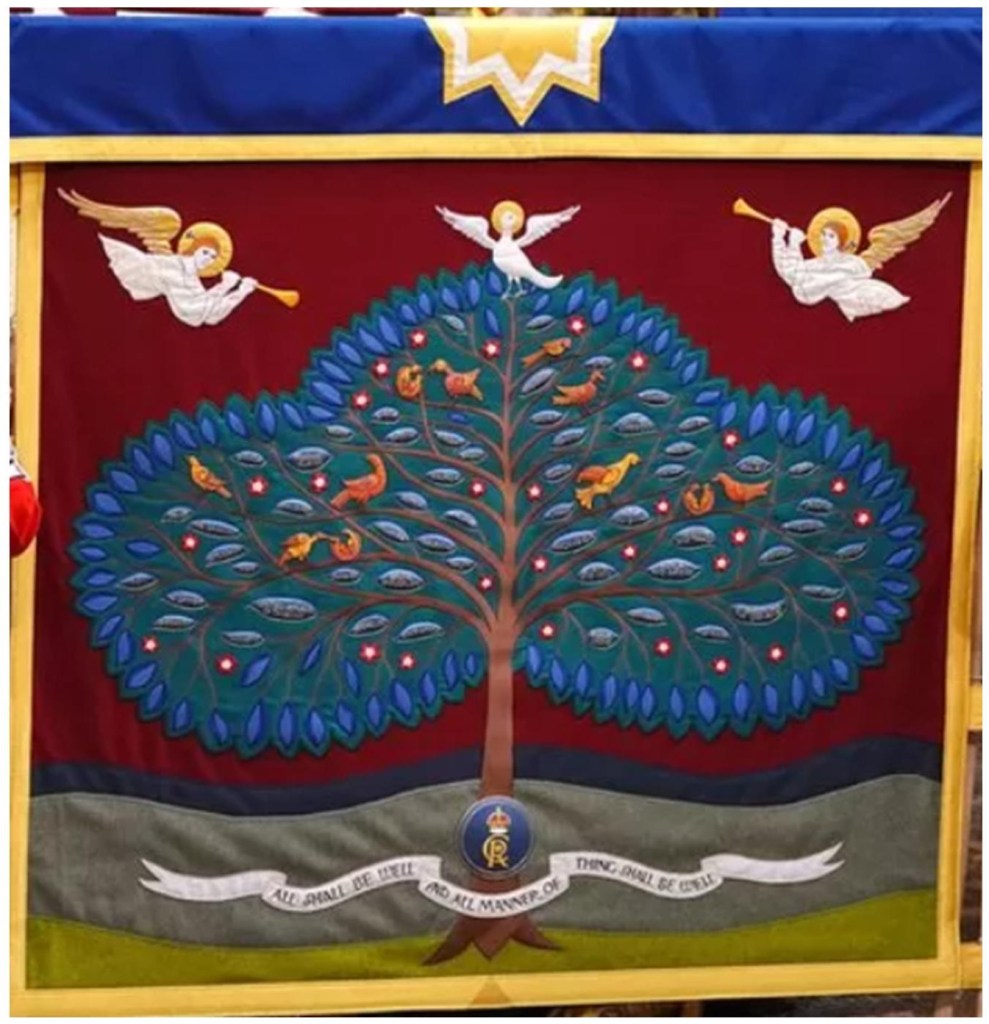
Anointing Screen, front. BBC