Tag: Jesus

By star and candlelight

Candles decorated by children at St Mary-at-Latton.(and below) Photos: Mr G

Every so often, astronomers astound us with yet another discovery in space. 
On December 11th we received news that NASA’s James Webb space telescope has captured an image of what our galaxy was like as it was forming. The telescope, the most powerful ever built, is orbiting in space free from hindrance by the Earth’s atmosphere. This makes its images more pure and more accurate.
The particular image that has excited astronomers shows 10 balls of stars of different colours which has led space scientists to liken it to baubles on a Christmas tree.
The real significance of the image is that it’s the first time it has been possible to witness the stars assembling to form a galaxy which holds clues of how our own galaxy, the Milky Way came into being.
It’s rather good that we have news of our Universe which is positive just when various sections of humanity are trying their hardest to destroy our bit!
Much more will be gleaned from this discovery which continues to add to the knowledge we have of our own universe. In many ways the Universe is a mystery but each new discovery adds to our enlightenment.
Perhaps in that respect it is mirroring God who created the Universe and even found time to create us! God is a mystery who constantly reveals himself to us especially, Christians believe, through Jesus Christ but also through our gifts, knowledge, skills and talents.

Sometimes God’s revelation is accompanied by some celestial event like a bright star. 
Writers in the Bible tell us of many constellations. Individual stars are mentioned. In the Book of Job there is a beautiful conversation between God and Job (in chapter 38) where God asks Job where he was when the Lord laid the foundations of the earth. The writer shows the depth of ancient knowledge when he asks whether Job can bind the chains of Pleiades or loose the cords of Orion. 
The star of Bethlehem referred to in Matthew’s Gospel as the one leading the Magi to the Christ child has also led many scientists into the realms of speculation.  As far as the Bible is concerned this is the star which heralds Christ’s birth.
The theme of light which is signified by such stars is central to Advent because it speaks to us of the expectation of God coming to light up the world with his new presence in Jesus Christ.  This is the Love of God beginning the process of transforming the world with light. 

Not surprisingly, when the Church leaders chose December 25th *** for our celebration of Christmas it was the time in the West at least, when the world is at its darkest.  It was also the time of the pagan Winter festival and early Christians preferred to overlay pagan religion with new Christian meaning. Sweeping pagan practices away would merely drive them underground.  Changing their meaning and adding new depth made for a more permanent and ready acceptance of the, then, new faith. Good missioners always start where people are before helping them into new understanding.
It may well be that the pagan solstice was subjected to a pincer movement because December 13th is the feast of St Lucy whose very name means Light (and from which we get the word lucid – to make clear) 
Lucy was a 4th century Christian who fell foul of an attempt by the Roman Emperor to re-establish worship of the old  gods. She was betrothed to a man who expected a decent dowry. Instead of which she gave her possessions to the poor.  The angry suitor denounced her to the authorities and she was put to death for her faith in 304AD.  Because her martyrdom was in December her festival quickly became associated with Christmas. 

Probably, the main reason why Lucy became associated with Light overcoming darkness is because the final act of torture was that her eyes were gouged out, plunging her into complete darkness physically. Yet the physical darkness was itself overcome by the brightness of her faith. She had within her the love and light of Christ and her enemies couldn’t quench that. That encouraged other Christians facing persecution. The light of her faith pointed believers to Jesus, the one true light who was coming into a darkened world with hope and new life.  Christ Jesus, who in the final book of the Bible is called the Bright Morning Star, fills all our lives with light. That is both the hope and the witness we must bear in a deeply darkened world.

Maybe we can look to the people of Scandinavia who understand more than most about darkness at the heart of Winter. St Lucie’s  day is an important feast not only because of her own overcoming of darkness but because of the physical darkness in Scandinavia at the time of the Winter Solstice ~ the darkest day of the year. In the old Calendar, December 13th, her feast day, was at that time. She became a symbolic example of light conquering darkness. This is why, in Scandinavia, the feast incorporates a celebration of light involving processions in which girls chosen in communities to represent the saint in wearing a crown of candles (possibly battery operated these days!) and accompanied by others including boys known as star boys.
This deserves an article of its own but the underlying reason is that St Lucy was light in a dark place and her faithfulness to God was an example from which others could draw strength and inspiration.
Never is this more needed than today!

The night treads heavily
in places unreached by sun,
the shadows brood
in the dark places of our world,
where human deeds are black.
St Lucy comes,
bearing lighted candles,
heralding the light of God,
the Christ-child who comes anew
at Christmas.

Let us be ready to greet Him
with the joyful light of goodness
and of peace.

[adapted by Mr G from a traditional song from Sweden)

*** The Orthodox Church follows a different Calendar and keeps Christmas on January 6th

[Mr G]

Remembrance is important

A Reflection from Piers Northam on Remembrance Sunday

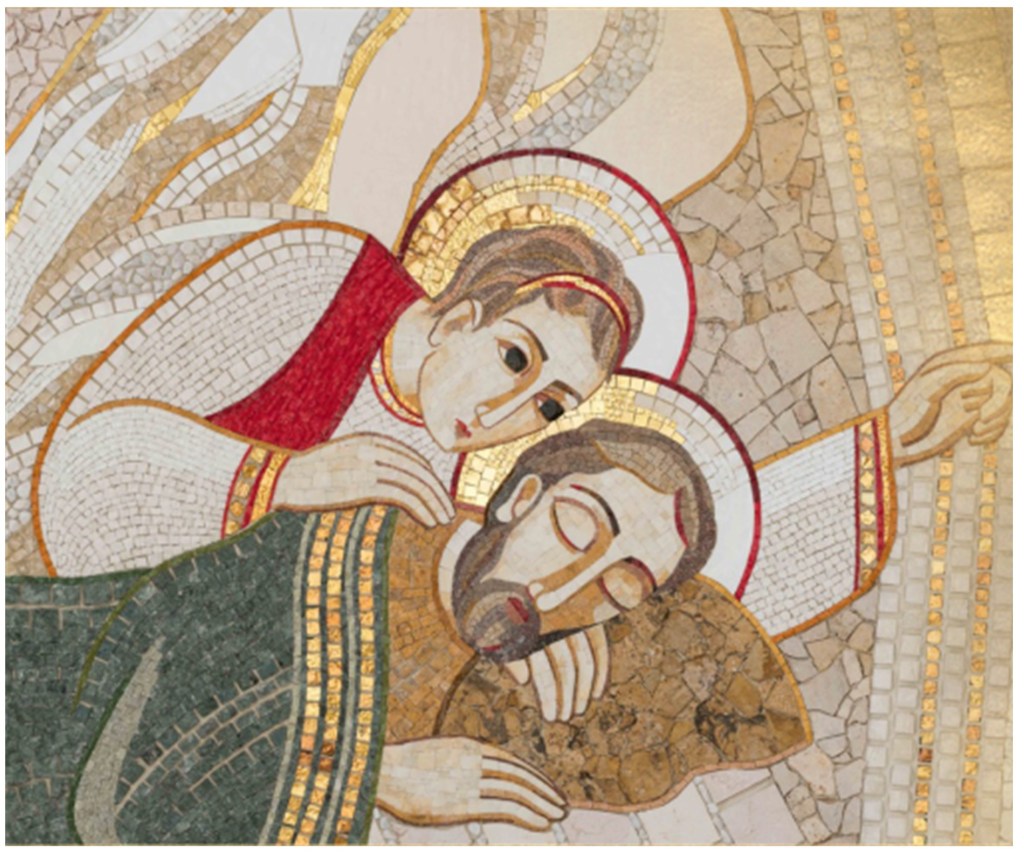
The beginning of St Mark’s Gospel tells of Jesus walking along the beach at the Sea of Galilee, calling his disciples, the fishermen Peter and Andrew, James and John.  Calling them to follow him and calling them to a life of service.  Ultimately, for many of his disciples, it would turn out to be service that would cost them their lives.

And on this Remembrance Sunday morning we remember those who have answered another call to service – in this case the service of their country – and who have given their lives in that service.

As I’ve reflected, this week, on what I might say on this Remembrance Sunday morning, I’ve been pondering on the difference between ‘memory’ and ‘remembrance’, and I wonder if we might take ‘remembrance’ to be the shared calling to mind and recounting of events or people that we don’t necessarily directly remember ourselves?  Certainly, if we take the Second World War, there is a sense that it is receding into history and that fewer and fewer people remember it first-hand and with that comes the danger that it will seem less and less ‘real’, less and less affecting.  And, of course, there have been many other conflicts since, that British forces have been involved in – Aden, Korea, the Falklands, Kosovo, Iraq, Afghanistan – all of which will be remembered by those who served and were involved, but which otherwise can also seem increasingly distant and less relevant. 

Yet on Remembrance Sunday each year we gather as a nation to remember; to recount the stories of war and the cost of war; to remember and give thanks for the sacrifice of those who gave their lives – or who had their lives irrevocably altered – hopefully, in the pursuit of peace and stability.  Remembrance and the wearing of poppies is also bound up in our sense of identity – one of the rare times in the year when so many of us, from all walks of life, are drawn together collectively to reflect and to remind ourselves of the horrors of war; of the ways that we can, as humans, descend so quickly into conflict and of the urgent and constant need to work for peace and never to be complacent.

Currently, as we look around the world, it seems as though the vital lessons of war and conflict have been entirely forgotten in some places.  Mr Putin blithely sends thousands of men to their deaths in an attempt to grab land and territory from the Ukrainian people; Mr Netanyahu – despite the historic imperative for remembrance of the horrors of the Jewish experience in the Second World War – rains bombs and missiles on thousands of defenceless civilians in Gaza and now in Lebanon.  It seems that, all too easily, we forget the human cost of war – or we forget what it was like to be on the receiving end of such aggression and begin to entertain the notion of meting it out on others.

All of which underlines the importance of gathering together to remember.  Of looking the cost of war in the eye and striving all the more conscientiously and urgently for peace.

Remembrance is important.

In our Tuesday housegroup, we’re currently doing a series of sessions where we’ve begun looking at and comparing readings from the Old and New Testament to see what they help us to understand about Jesus.  This last week we looked at the first Passover in Egypt when the Israelites, who had been living in slavery under the Egyptians, were given specific instructions about killing and eating an unblemished, year-old lamb and using its blood to mark the doorposts and lintels of their dwellings so that, when the Angel of Death came over the land in the final plague on Pharaoh and the Egyptian people, it would pass over their houses and the Israelites would be spared death – and subsequently would be able to flee the country and the years of slavery they had endured and so set out on their very long journey to the Promised Land.

The book of Exodus sets out the very particular instructions that the Lord gives to Moses and Aaron for the people and the Lord also says:

‘This day shall be a day of remembrance for you.
You shall celebrate it as a festival to the Lord; throughout your generations you shall observe
it as a perpetual ordinance.’

And, of course, that is what the Jewish people have done ever since – they have gathered around the family table each year to keep the Passover and to tell the story: to recount how, through the goodness and faithfulness of God, they were spared death and set free from their years of bondage and slavery.  The Passover story is a huge part of Jewish identity – a story that all Jews brought up in the faith will know.  A story that teaches them about the nature and the goodness of God.

And on Tuesday night we discovered some of the strong parallels between what happened at the Passover in Egypt and the story of Jesus’ Passion in Jerusalem.  Because of course, at the Last Supper, Jesus and his disciples were keeping Passover – they had gathered around the table in the upper room to remember; to recount their story and to share food for the journey and, in a new twist, Jesus gave them just that.  Not the traditional food of the Passover meal, but bread and wine: the body and blood of Jesus, the Lamb of God.  And what does Jesus say as he gives them the broken bread and the cup of wine?

‘Do this in remembrance of me…’[2]

The details of the ancient Passover were fulfilled in Jesus – he was the perfect, unblemished Lamb.  And the next day, as he was crucified, his blood was shed for us, marking not the posts and lintels of the Israelites’ doors but the wooden upright and crossbeam of the cross.  It was his blood that set us free from the slavery of sin and opened us up to everlasting life.  And so, we became a pilgrim people: the people of the Way – Christians from all over the world and down the ages, travelling towards God’s Kingdom.

So, in a sense, for us as Christians, every Sunday is Remembrance Sunday; every Sunday is a family Passover where we gather to remember what Jesus did for us on the cross.  In the eucharistic prayer that we will hear in a moment and in the creed that we say collectively, we recount the story of God’s saving and redeeming love for us in Jesus – of how he set us free from the limitation and slavery of sin and how he spared us from death and opened the gate of glory – the way to everlasting life.  And every Sunday we share the family meal – the food for the journey – the bread and the wine that we take in remembrance of Jesus, to nourish and sustain us.  And then we are sent out into the world – ‘to love and serve the Lord’ and to help the world to make its way into God’s Kingdom; to bring His Kingdom in…

You see, remembrance is important.

Amen.


[1] Exodus 12:14

[2] 1 Corinthians 11:24-25

[Piers Northam, Deacon at St Mary’s-at Latton]

For the beauty of the earth.

Langdale Pikes from Grizedale Forest, Lake District. Photo by Gill Henwood

My friend Gill Henwood has sent me the photo posted above. It is  a view of Langdale Pikes from Grizedale Forest, in the Lake District.
There is a certain broodiness about it with its different shades of light and dark which is rather in keeping with the extremities of weather at present in the UK.
The Lake District is a microcosm of our weather patterns and it is always wise, when walking in the Lakeland hills, to have a healthy respect for what Nature offers us. At one level we may call it fickle in that the conditions often change quickly. In another sense, it is a reminder that Planet Earth, and therefore its weather, is not something we can control. Sadly, we are messing things up with our human attempts at superiority over everything on earth.
The current preoccupation with the Northern Lights and with rare sightings of spectacular comets, along with other special things such as solar flares, remind us that these amazing displays from the cosmos are not of our making. They tell us, in fact, how small we are in the Universal scheme of things.
Unfortunately, the human race isn’t very good at learning lessons and applying them with humility to our borrowed and temporary life on earth. It was the poet T.S.Eliot who coined the phrase, humankind cannot bear very much reality so perhaps we shall continue to destroy the earth – and, of course, each other!

It would be good, therefore, if the human race might wake up to itself and accept that, as tenants with a life-span lower than many trees, a bit of humility might not go amiss.
As T. S. Eliot puts it in in his poem East Coker, “The only wisdom we can hope to acquire is the wisdom of humility: humility is endless.”

A large part of the lesson of humility can be found in contemplating the gifts God gives us through Creation. How can we not look at the scene depicted in the Gill’s photo above and be unmoved by what nature is trying to tell us about the Planet which is our home for the time being.
The light shimmering on the hills and the blue sky quietly folding itself around the clouds offers us a message of hope. It is just as true of a tuft of grass or a tiny flower pushing aside the tar of an urban footpath.
When the warmongers of the Middle East and  the Russian invasion of Ukraine come to an end, they will leave desolation but it won’t be long before a blade of grass or a microscopic flower spring to life.
Gill’s photo gives me hope. I have added a few words from a lovely hymn by Folliott Sandford Pierpont. He sat on a hill near Bath and was exhilarated by the beauty of creation which was laid out before him. Inspired by what he saw, he was filled with gratitude to God and he wrote his hymn in thanksgiving.

That too is another clue coming from Gill’s photograph ~ thanksgiving.
When we give thanks for Creation and for God who created it, we find ourself in a different place from lordship, conceit and self-centredness. In fact, thanksgiving, turns our attention towards others, towards providence and therefore towards God as Creator.
The photo is filled with the promise. of light and that is a source of joy and hope. If none of this means anything, then perhaps another thought might help – remember the Dinosaurs!

[Mr G] 14th October 2024

– Walter Rauschenbusch

The place where the Sun rises

photo: Gill Anderson.

This wonderful photo of a sunrise was sent to me this week by my friend, Gill Anderson.

With so much of our news shrouded in darkness, horror and misery, there  is something very joyful in this photo. It exhilarates and somehow, it reassures. Despite all the uncertainty we can take some comfort that the morning sun has, in the words of the writer of the biblical book, Ecclesiastes, ‘hurried to the place where it rises. (Eccles 1:5).

Its rays reflecting on the stillness of the waves, penetrate the darkness. The sky is full of promise, hope and expectation.
Pondering over the view, I have a sense that God is reminding us that in the words of the Prologue in the Gospel account of St. John (1:14), all Life is both a gift and intention of God – without him, nothing came into being, and what has come into being is life. This is a life which fills all people, though as we are seeing, that is not immediately obvious in so many different parts of our world. But St John insists it is so. Real life has come into being in Jesus, God’s divine Son, who is pure Light. For us, wandering around in darkness, St John tells us, The light shines in the darkness and the darkness did not overcome it.
As I looked at the light coming over the land in the photo, I just thought, we really do have to hold on to that.
Many of the media photos and news events show us graphically, places and people overwhelmed with the darkness of destruction – naming Gaza and Ukraine as just two places among so many. It’s so easy to become depressed and despairing when just a few men (it’s always men!) act against so many billions of people. Why are we letting this happen?

However, there is a way forward and hope tells me that despite all the suffering and pain, death and the spiritual destruction of innocent children, there will be justice and there will at some point be peace. There will be love again. This is my hope and the subject of so many of my prayers.

I must now reveal something very important about this photo.
My friend Gill Anderson took it, as I say, from her bedroom window. She was looking at the water which is actually, the Sea of Galilee.
She , her husband and fellow travellers were on a pilgrimage to the Holy Land. It became somewhat thwarted but they still managed to see some of the important sites held dear by Christians. She saw the Sea of Galilee but was unable to sit in a boat upon it which was a plan. Instead she was soon to travel to Jordan and relative safety and then home.
She did not then fully know that, not that many miles away, a very different dawn was enfolding. Hamas had worked its evil and the Israeli Defence Force had retaliated. We are still in the midst of that deep darkness which engulfs the Holy Land and also Gaza.

But there, at Lake Galilee, there was a sense of history too, and of association with what we Christians see as the heart of our Salvation.
For Galilee played a huge and significant part in both Old Testament and New Testament times. It was by its shores that Jesus chose his first disciples, four fisherman who fished in the waters there. By its shores, Jesus healed many people. He fed 5,000 on the foothills near the water. There, also, he cooked breakfast for his disciples after the Resurrection.  He was intimate with its moods especially when he stilled a storm which threatened his followers, whilst he, at home with every element, had a little sleep.
Most of all, he often prayed there.

Galilee was the backdrop for so much that became our Christian understanding of Salvation, eternal love and new life.
Might it become therefore a place where, drawing inspiration from this sunrise, we dare to place our hopes, our desires, our prayers, into a new dawn which will rise in the hearts of all those engaged in war, violence, deceit and meting out suffering on others. I believe we must pray for a better way of life for all as we work together to bring a new light, symbolized by this photo, to a broken and desperate world. The Light of Love.
In the words of the Prophet Isaiah, speaking not that far from Galilee:
The book of the Prophet Isaiah Chapter 9: verse 1 & 2.

But there will be no gloom for those who were in anguish.
In the former time he brought into contempt the land of Zebulun and the land of Naphtali,
but in the latter time he will make glorious the way of the sea, the land beyond the Jordan,
Galilee of the nations.
The people who walked in darkness have seen a great light;
those who lived in a land of deep darkness—
   on them light has shined

[Mr G. 1st November]

The Scripture quotations contained herein are from The New Revised Standard Version of the
Bible, Anglicized Edition, copyright © 1989, 1995 by the Division of Christian Education of the
National Council of the Churches of Christ in the United States of America,
and are used by permission. All rights reserved.