Tag: St Mary-at-Latton

Wheat & Tares

[a sermon preached by the Revd Piers Northam]

19 July 2026 – Trinity 7  
Matthew 13:24-30, 36-43

‘The wheat and the tares’

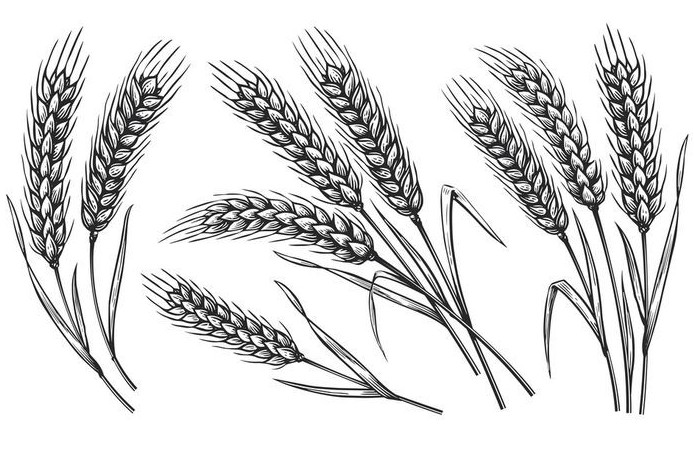
As the Lectionary takes us through Matthew’s Gospel, we come to the Parable of the Good and Bad Seed – or the Wheat and the Tares.  The gardening or farming theme continues – I suspect Jesus could well be a fan of Gardener’s World or Farming Today – so last week we had the Parable of the Sower where the Sower sowed seed extravagantly, broadcasting widely, so that it fell on a variety of different types of ground.  In today’s story however, Jesus focuses on the contrast between the good and bad seed; or between the wheat and the tares as some translations have it.

Historically and in biblical texts, a tare is a plant called Poison Darnel (or Lolium temulentum if you’re BBC TV Gardener, Monty Don).  The thing about this particular plant is that it grows to look exactly like wheat in its early stages – it’s pretty much indistinguishable – and of course that’s why the Master doesn’t want his servants to pull up the weeds, for in doing so they might pull up the wheat too.  And every grain, every seedling is precious to him.

Of course when the disciples later ask for the parable to be unpacked, Jesus explains that the field is the world, the sower is the Son of Man and he refers to the wheat as the children of the kingdom and the tares as the children of the evil one.  I have to admit, there’s a part of me that struggles with this, for I think there’s a temptation from this to assume that the world is simply divided into good people and wicked people, with the good ones destined for heaven and the baddies destined for hell.  Almost as if there’s no choice or agency in the matter.

But I think it’s a wee bit more complicated than that…  For a start the good and the bad are indistinguishable – the tares look just like the wheat: so much so that the workmen in the field would have a hard time telling them apart and might finish by uprooting the wrong ones.  What Jesus says is that the moment of sorting and judgement will come later.  And anyway, it’s not for us to judge, for there is only One who can judge and who can truly discern what lies in people’s hearts.
There’s a warning here – not to think that we can take a glance at someone and simply write them off as being what we might consider to be a bad seed.  I think anyone who’s experienced being marginalised at some point in their lives will have a sense of what it’s like to be on the receiving end of that.  Yet of course, in these polarised times, that’s what we’re constantly being encouraged to do, isn’t it?  To make judgements about others; to decide whether they’re in or out.  And if we don’t like the cut of their jib or the way they think or live their lives, then we’re encouraged to consign them to the fire, pronto.  But that’s not what the Lord of the Harvest would have us do.  No, he says, let them grow together…

And by the same token, it can be all too seductive to simply assume that we’re the good seed – that somehow, we’ve got it right and that we’re just fine and dandy as we are.  But again, I think we’re being invited to look deeper than that. 

Because as I pondered further on this story, it seemed to me that both the good and the bad seed can sit within each of us.  There are times when the fields of our hearts are full of ripening corn; when they are yielding good fruit for the kingdom.  But there are other times when the tares grow up and diminish the potential harvest.  When the Evil One gets to us and sullies the crop.  When we get seduced or distracted, or pulled away from God.

St Augustine, in a sermon on this parable, puts it rather beautifully:

“Listen, dearest grains of Christ; listen, Christ’s precious ears of wheat; listen, Christ’s dearest corn.  Take a look at yourselves, go back to your consciences, interrogate your faith, interrogate your love, stir up your consciences.  And if you discover that you are good grain, let the thought occur to you, ‘Whoever perseveres to the end will be saved.’ 

Any of you who, on shaking up their consciences, finds themselves among the weeds must not be afraid to change.  The command hasn’t yet been given to cut, it isn’t the harvest yet; don’t be today what you were yesterday, or at least don’t be tomorrow what you are today.”  [1]

‘You must not be afraid to change.’  Augustine is encouraging us to take a good look at ourselves and our motivations; to see where our hearts lie,  But he also sees in each of us the possibility to change.  For tomorrow comes with a new dawn. 

There may be times when we realise that the tares are taking over, but the Good News is that nothing is irredeemable with and through Jesus, for our God is the God of new beginnings and new life; of forgiveness and fresh starts; always ready to plant seed afresh in the fields of our hearts.  Perhaps that’s also why letting the two grow together is important – because in God’s economy, tares – through the power of Jesus – can become wheat.  There is the potential in all of us; none of us is a lost cause to our Father in heaven.

And finally, (because the more you ponder one of Jesus’ stories, the more viewpoints you discover…) we’ve thought about being the seed, but it’s also worth thinking about what sort of sowing we are doing.  How – and what – are we planting into other people’s lives?  Are we working for the Son of Man and planting seed that will yield a harvest; wheat with the potential to become the bread of life?  Or are we coming by night and sowing bitter tares in others’ fields?  When we pass judgement about people and spread negativity we’re sowing those tares; when we close our hearts and our minds to people, we’re sowing those tares.  We have to be vigilant to ensure that we’re always planting the good seed.

The raising and nurturing of plants is a long game.  Last week our preacher talked about how ‘much of God’s work happens beneath the surface.  Seeds spend a long time underground before anyone sees signs of life.’  And she went on to say that

‘God is often working beneath the surface long before we can see the results.  […] Our role is to cooperate.  […] Every act of kindness is tending the seed.  Every prayer is watering the seed.  Every act of hospitality is nourishing the seed.  […] we are cultivating the ground where God is already at work.’  [2]

Jesus calls us to sow good seed in our own lives and the lives of those around us; to beware being seduced by the Evil One into planting bitter tares; and to leave the final judgement to Him.

Amen.


[1] St Augustine – Sermon 73A on the Parable of the Wheat and the Tares

[2] Rachel Griffiths – sermon preached on the Parable of the Sower – St Mary-at-Latton 12 July 2026

Piers Northam teaches Interior Design at the Inchbald School of Design, London.
He is priest in The Church Of England and particularly serves at St Mary-at Latton- Harlow.

Easter Bright

Easter Bright ~ a poem for Easter by Peter Hellard-Malt.

This morning begins with a quiet frost
a carpenter sky, pale and ordinary
low expectations drifting in from Nazareth

By mid-morning, scattered light
gentle warmth moving among crowds
a chance of healing in open places
some may notice loaves increasing without explanation

Into the afternoon, conditions turn unsettled
authorities gathering like thick cloud
pressure dropping over Jerusalem
voices rising, thunder without rain

Evening brings a sudden storm
darkness at an unusual hour
curtains torn by unseen wind
one might say the forecast has gone quite wrong

Overnight, a deep stillness
he kind that feels like waiting
tombs sealed, hope folded away
no visibility, not even for seasoned prophets

But at dawn, quite without warning
a bright and unreasonable sunrise
stone rolled aside like morning mist
death giving way as if it were only weather

Outlook for the week
light continues, stubborn and uncontained
scattered appearances of joy
and a general lifting of all things once thought final

Pete Hellard -Malt
St Mary-at-Latton
Easter 2026

By star and candlelight

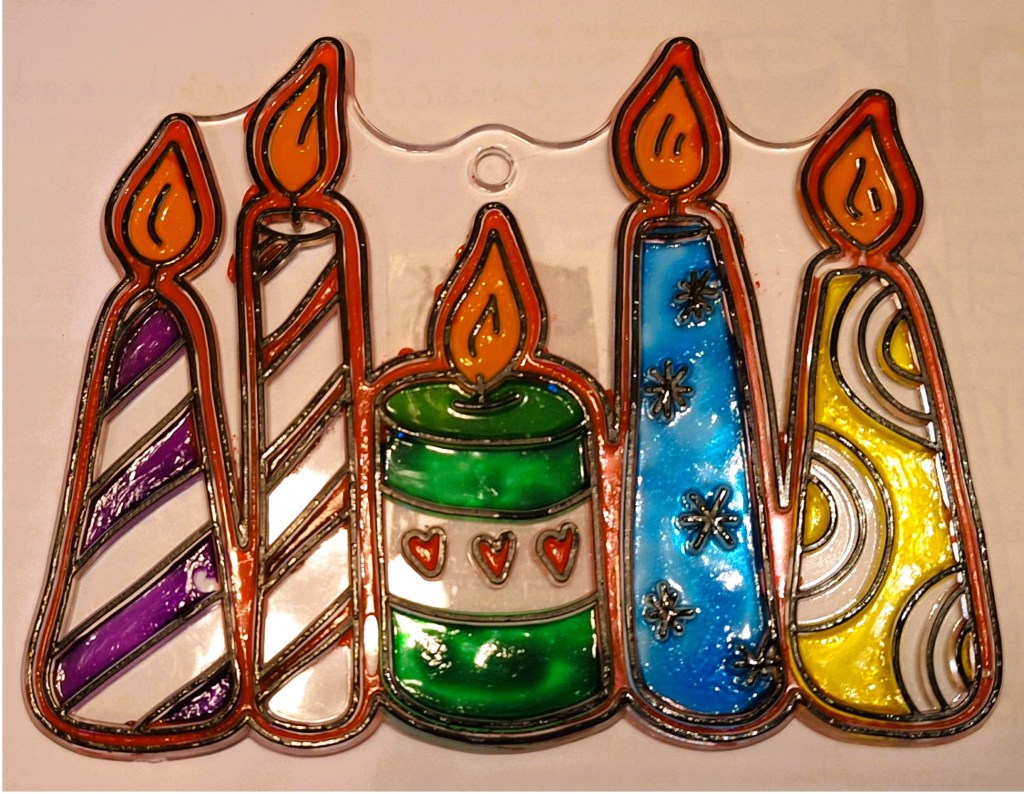
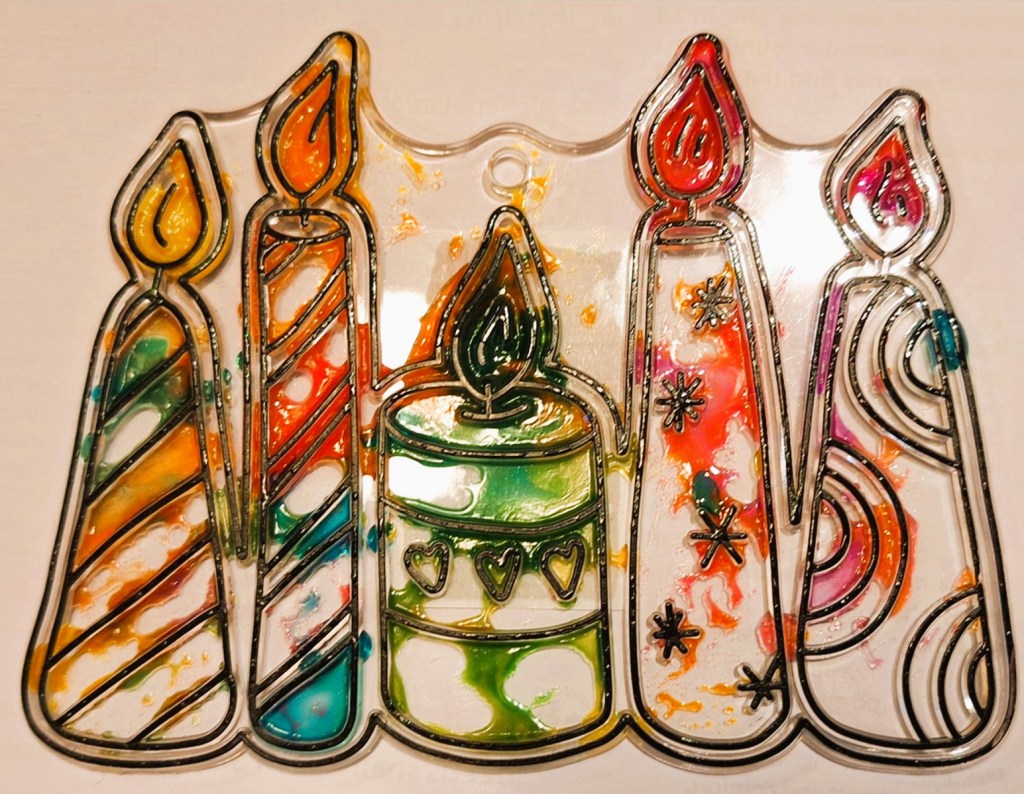
Candles decorated by children at St Mary-at-Latton.(and below) Photos: Mr G

Every so often, astronomers astound us with yet another discovery in space. 
On December 11th we received news that NASA’s James Webb space telescope has captured an image of what our galaxy was like as it was forming. The telescope, the most powerful ever built, is orbiting in space free from hindrance by the Earth’s atmosphere. This makes its images more pure and more accurate.
The particular image that has excited astronomers shows 10 balls of stars of different colours which has led space scientists to liken it to baubles on a Christmas tree.
The real significance of the image is that it’s the first time it has been possible to witness the stars assembling to form a galaxy which holds clues of how our own galaxy, the Milky Way came into being.
It’s rather good that we have news of our Universe which is positive just when various sections of humanity are trying their hardest to destroy our bit!
Much more will be gleaned from this discovery which continues to add to the knowledge we have of our own universe. In many ways the Universe is a mystery but each new discovery adds to our enlightenment.
Perhaps in that respect it is mirroring God who created the Universe and even found time to create us! God is a mystery who constantly reveals himself to us especially, Christians believe, through Jesus Christ but also through our gifts, knowledge, skills and talents.

Sometimes God’s revelation is accompanied by some celestial event like a bright star. 
Writers in the Bible tell us of many constellations. Individual stars are mentioned. In the Book of Job there is a beautiful conversation between God and Job (in chapter 38) where God asks Job where he was when the Lord laid the foundations of the earth. The writer shows the depth of ancient knowledge when he asks whether Job can bind the chains of Pleiades or loose the cords of Orion. 
The star of Bethlehem referred to in Matthew’s Gospel as the one leading the Magi to the Christ child has also led many scientists into the realms of speculation.  As far as the Bible is concerned this is the star which heralds Christ’s birth.
The theme of light which is signified by such stars is central to Advent because it speaks to us of the expectation of God coming to light up the world with his new presence in Jesus Christ.  This is the Love of God beginning the process of transforming the world with light. 

Not surprisingly, when the Church leaders chose December 25th *** for our celebration of Christmas it was the time in the West at least, when the world is at its darkest.  It was also the time of the pagan Winter festival and early Christians preferred to overlay pagan religion with new Christian meaning. Sweeping pagan practices away would merely drive them underground.  Changing their meaning and adding new depth made for a more permanent and ready acceptance of the, then, new faith. Good missioners always start where people are before helping them into new understanding.
It may well be that the pagan solstice was subjected to a pincer movement because December 13th is the feast of St Lucy whose very name means Light (and from which we get the word lucid – to make clear) 
Lucy was a 4th century Christian who fell foul of an attempt by the Roman Emperor to re-establish worship of the old  gods. She was betrothed to a man who expected a decent dowry. Instead of which she gave her possessions to the poor.  The angry suitor denounced her to the authorities and she was put to death for her faith in 304AD.  Because her martyrdom was in December her festival quickly became associated with Christmas. 

Probably, the main reason why Lucy became associated with Light overcoming darkness is because the final act of torture was that her eyes were gouged out, plunging her into complete darkness physically. Yet the physical darkness was itself overcome by the brightness of her faith. She had within her the love and light of Christ and her enemies couldn’t quench that. That encouraged other Christians facing persecution. The light of her faith pointed believers to Jesus, the one true light who was coming into a darkened world with hope and new life.  Christ Jesus, who in the final book of the Bible is called the Bright Morning Star, fills all our lives with light. That is both the hope and the witness we must bear in a deeply darkened world.

Maybe we can look to the people of Scandinavia who understand more than most about darkness at the heart of Winter. St Lucie’s  day is an important feast not only because of her own overcoming of darkness but because of the physical darkness in Scandinavia at the time of the Winter Solstice ~ the darkest day of the year. In the old Calendar, December 13th, her feast day, was at that time. She became a symbolic example of light conquering darkness. This is why, in Scandinavia, the feast incorporates a celebration of light involving processions in which girls chosen in communities to represent the saint in wearing a crown of candles (possibly battery operated these days!) and accompanied by others including boys known as star boys.
This deserves an article of its own but the underlying reason is that St Lucy was light in a dark place and her faithfulness to God was an example from which others could draw strength and inspiration.
Never is this more needed than today!

The night treads heavily
in places unreached by sun,
the shadows brood
in the dark places of our world,
where human deeds are black.
St Lucy comes,
bearing lighted candles,
heralding the light of God,
the Christ-child who comes anew
at Christmas.

Let us be ready to greet Him
with the joyful light of goodness
and of peace.

[adapted by Mr G from a traditional song from Sweden)

*** The Orthodox Church follows a different Calendar and keeps Christmas on January 6th

[Mr G]